admin
admin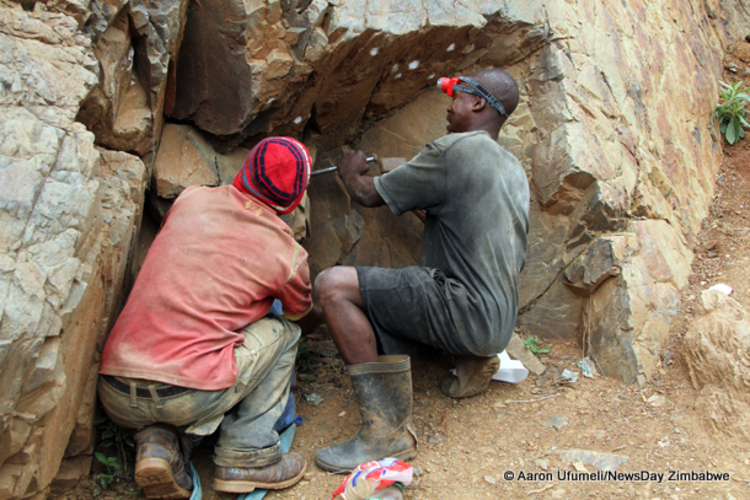
Reserve Bank of Zimbabwe Governor, Dr John Mangudya addressed the Great Dyke Investment Forum in Zvishavane last Friday. Below we publish his speech.
***
I am so happy with Zvishavane town, it looks so vibrant, very busy. You all look happy but I know that like most Zimbabweans, you can’t find anything positive to say about the economy.
You are full of negativity even when satisfied. Under such circumstances, faith would be little and sight says it’s difficult.
Let me start by talking about Isaiah 43:18-19. Are you Christians? If you look at those verses, they say forget the former things, do not dwell on the past.
See we are doing new things, we are making our way in the wilderness and making streams in the wetland. It’s not me saying that, the Bible is there, read it.
That is what we should do as Zimbabweans. We have to do things differently. We need to transform the economy differently. We have got the resources. If you look at this country, gold alone is almost 13 million to 15 million tonnes of proven gold deposits under the ground.
From 1980 up to this day, we have only mined 580 tonnes out of 13 million to 15 million, the rest is still underground. The economy is very rich, but the sight says we don’t have money. But the money is there underground and we need to put our energies on increasing production.
We want to change the narrative of this economy, I want to see production. If there is no production, the economy will never sustain itself. When there is no production, you cannot have foreign exchange, no employment, no fiscal space and it means we continue to import and there is no Buy Zimbabwe if we don’t produce.
If we produce, then we buy Zimbabwe.
Fellow citizens, let’s put our heads together to produce goods and services for our economy. It’s not an issue of currencies, no, it’s about production.
For the United States of America and the likes of China to be called big powers, it’s only about production, not because their populations are big such as four billion in China. It is just production.
In Zimbabwe, God gave us everything, from chrome to zinc, platinum, gold, coal, everything is here.
Let us put our heads together and produce, then we can sustain our currencies; whether it’s the US dollar, rand, anything; it does not come on foot, when we produce, the foreign currency just comes.
This verse that I have read, let’s go forward, if we spend more time dwelling on the past, nothing comes out. That verse is about transformation.
Why are we where we are today as an economy? It’s because we are facing challenges that need to be solved by Zimbabweans.
By the way, don’t expect third parties to help us other than ourselves. We are the people that make the difference, we should produce for Zimbabwe.
I have heard many people saying we want foreign investors, foreign investors don’t come here for free. They are looking for business, the purpose of business is business, not social; so they don’t come here for free.
Now, we are where we are now because of four reasons. Number one, when we dollarised the economy in 2009, four things went wrong. We over liberalised the economy, we over liberalised the capital account of the economy. Remember only four countries in the world are using the US dollar as means of exchange.
We said no controls, no limits on taking money out of the country, yet even in America, $10 000, you can’t even take it from their banks.
But here we said you can take anything you want. We know that investors don’t see this country as a good investment destination, as you know we have sanctions and we also have people who do not come here because they love us but because they love our money.
Those people who are outside come here to take our money because we don’t have a conducive doing business environment.
So we opened up the doors for people to come and get the money, that is why the externalisation of money is rampant. Smuggling of gold is also rampant.
People who smuggle gold and externalise money, you don’t even see them queuing for cash at banks, they don’t go there.
Number two, we were supposed to use a different currency as our medium of exchange. We were not supposed to use the US dollar as a reserve currency and not as an exchange currency. We should have used another currency that fluctuates against the US dollar, as a trading currency.
Now, we are using foreign exchange as a medium of exchange in a weak economy and think that the country will emerge.
I think we need to re-look at that history, if anyone in this room thinks that was good, we need to talk and talk very carefully.
Number three, we were supposed to have a comparator for benchmarking purposes so that we. . .because we are now using the US dollar, we are going to export our goods to South Africa, Zambia, how are other people going to export there?
Now we didn’t do that, when salaries in this country started going up faster than others, I don’t think that we can compete with South Africa, Zambia, Mozambique because we are a high cost production economy. And we can’t compete with others. It means that we have to change the way we do business.
As a result of those problems, we now have problems such as balance of payments deficit or current account deficit.
Our exports are less than imports, Zimbabweans are importing much more than we are producing by about $3 billion to $2,5 billion per year from 2009.
Money is just going out of the country without anyone bringing it back. This is why people are saying ‘where is the money?’
We also have a narrow fiscal space because most of the money, including in most companies, most of the money collected is going towards wages and salaries.
If that happens, it means there is no money for operations, capital projects and there is no employment and it means it’s a mammoth task, that was compounded by the drought as we had to import more grain and the appreciation of the US dollar against the rand, kwacha, etc, and the equation becomes difficult.
We need to change the game plan in Zimbabwe so that we have more exports, more employment, and more goods for ourselves as opposed to importing.
But production depends on good investment climate and good investment climate means good policy measures to attract investment.
When I came over here I realised that there are more mines and felt it was best to talk about measures that help the mining sector.
Artisanal miners, let’s work very hard, we are the ones who help Zimbabwe to earn foreign currency. All the gold that you produce comes to the Reserve Bank of Zimbabwe through Fidelity Printers (and Refiners).
All the minerals that are produced in this economy are necessary to improve the economy so we are there to support you. We are there to provide you with the necessary incentives for you to produce. If you look at our exports from 2009 up to now, they are not impressive.
We are not doing well as an economy.
If you look at gold, it is the only product, together with platinum, which are doing very well. Diamonds, no. Now what should we do to help miners?
We said in my Monetary Policy Statement last year, “let’s decriminalise” the sale of gold in Zimbabwe to Fidelity Printers so that people who are selling gold to Fidelity Printers are not arrested.
They are only arrested when they take it out of the country and we have agreed that we need to ensure that this measure is put in place. But I was told on arrival here that artisanal miners are still being arrested. I think it’s because one of our major problems in Zimbabwe message discipline (sic), communication skills.
What we are saying is let’s sell our gold to Fidelity Printers, one gramme, five grammes, 100 grammes. If we take it there, it means our foreign currency earnings will rise and we can import more maize, more fuel and chemicals.
Without foreign currency, we won’t buy anything.
So we need to ensure that we don’t arrest artisanal miners.
We are talking here about the ease of doing business so that artisanal miners can produce more gold. Without foreign currency, there is no country and we get it from exports.
This is why we are saying let’s incentivise those exporters so that they go back to the fields and produce more. Let them mine because that is where we get foreign currency.
We came up with policy measures in May (2016 export incentives through bond notes) and we are going to announce more measures next week (this week) with the aim of increasing confidence, trust.
We have noticed that this economy’s major missing component is trust and confidence so we are going to bring confidence.
In May we did a number of measures and we will come up with more next week (this week). The first measure we came up with in May was that foreign currency in Zimbabwe is scarce and said let’s use plastic money.
Why are we making that decision? It’s because right now we are abusing foreign exchange.
For instance, Mr (Winston) Chitando (the Mimosa Mine executive chairman) exports platinum and his money goes into a nostro account and from that account we import fuel. The money comes here and goes out of the country through externalisation and you know the people.
So we are saying when you export, bring foreign currency, instead of taking the currency back, let’s use plastic money so that the money circulates in the economy.
Now I see people at banks queuing for money and go to buy from OK Zimbabwe which will be next door. Why not just go and buy with your card from OK Zimbabwe?
Where the money comes from, it is not used in that way. Here we are a cash economy. Let us change the cash culture, don’t just want to possess cash.
You have your Ecocash, Telecash and bank card, why do you have to go and queue for cash? That spirit of wanting hard cash is bad and it should go.
We said let us not dwell in the past, let’s do things anew and dwell in the present. Why do you want to go to the bank to look for money?
We need to export much more to get the foreign currency.
The other measure, we also said foreign currency should be used appropriately. In other words we have an import priority list where banks support productive purposes, not to import water. We can’t import water, God should forgive us. I see things being imported into this economy.
We got into dollarisation by default, it is like staying in a house without windows, I don’t know who sang the song. When it comes to the economy, I am very serious and very sincere. I love the people of Zimbabwe and we are there to build the walls of Zimbabwe.
It is everyone’s duty to build Zimbabwe, not a one-man job. Artisanal miners extract their gold and bring it and we pay them and take care of their families.
That is why we are saying banks should fund productive sectors and grow the economy. We support the Buy Zimbabwe Campaign and even in America, they also have the Buy America Act, but here we just have an association that calls for the consumption of local goods.
We are educated people but I think now we have what is called paralysis-by-analysis as opposed supporting the country.
I get emotional when I talk about Zimbabwe because it is a good country but people just want to do strange things.
The third measure was also to put limits on getting money from the bank. Its international best practices. No country operates without withdrawal limits.
In America the limit for cash withdrawals is $500, Zambia is $400 equivalent of the Zambia kwacha and South Africa for those who have gone there, it’s R5000 from the ATM.
Here we said no limit.
You promote money laundering by so doing, which is against the international best practice. Zimbabwe is a member of the Financial Action Taskforce (FATF) on anti-money laundering and counter financial terrorism.
So we need to ensure that we are also compliant with the rest of the world, not more than US$1 000 or as the bank can afford. That is standard and I see people complaining, may be that is the education and they are always right and I am always wrong.
The fourth measure is that since this country depends on foreign exchange, lets also come with a measure to promote the exports. We said let’s put an export incentive or export bonus scheme to promote exports because Zimbabwe is not competitive when comparing with other countries.
We can’t devalue the currency, other countries such as South Africa and Zambia can devalue their currencies and we can’t depreciate it, hence the export bonus scheme using bond notes.
We are looking at the intrinsic value of the policy, which is to increase exports and foreign exchange into Zimbabwe.
If we don’t do that, people continue to smuggle gold so a bond note for example, its downside advantage is an anti-money laundering policy tool. It is an anti-capital flight tool, a production policy tool. The good part of it is that we are not forcing anyone, no.
The person who is not exporting does not get the bond note. It is a token of appreciation. We are only trying to preserve value of money so that it is not externalised.
So this program, we are still working on it and many people ask me, “When are they coming?” I have said it many times that they are coming end of October. I know people went through different times in 2007-2008, but we are saying times are now different.
In 2007, we had too much money chasing too few goods, that is inflation but how can an incentive of 5 percent on exports chase 100 percent. It’s lack of trust, but fear brings you misery. I said to many people, on the bond notes, the buck stops with me.
I don’t want to burden other people with my decisions. I will never point fingers at others but give us a chance to do what is right for this economy.
Mimosa for example, they are big companies and they get 2 percent export incentive, it is huge for them.
You may want to know where our exports come from, they come from tobacco (US$800m) followed by gold (US$750 million per year) and platinum (US$650 million to US$700 million per year).
Diamonds and ferrochrome also come in, so we have only five items that we are exporting which give us 80 percent of our money in the economy.
So if we need money we talk to people who are exporting, that is why we have the export incentive.
We are the people who should work and work hard for the country. If you look at Government, those of you who pay tax do so through RTGS but Government workers, even those from councils, are paid in cash.
Where would the money have come from? That is a mismatch, hence the call to use cards.
We are now going into the Monetary Policy Statement.
I said this is a good consultative meeting.
We need to promote production, so let’s remove all obstacles to production such as license fees, and on our part we will remove obstacles.
Artisanal miners we will pay on delivery of gold.
I am also going to talk to Minister Walter Chidhakwa and Minister Ignatius Chombo on the miners who are being arrested, which we want in our coffers.
So those issues I am going to take them up but I also want to ensure that all the other areas we didn’t cover, we are going to assist you.
If Botswana is surviving on diamonds why can’t Zimbabwe do the same? Let’s take the problems in the country as opportunities. All issues people talk about, I sympathise with you.
I understand the problems, I know everything that people are going through. But let us take bold, hard decisions and develop the country. This idea of wanting things that are simple we should leave. This is the time to make sacrifices, all of us, across the board.
Let me leave you with another verse, Galatians 6:9. Let’s not lose heart in doing good because in due time we will reap.
Transcription by The Sunday Mail Reporter Africa Moyo


 Online Reporter