Online Reporter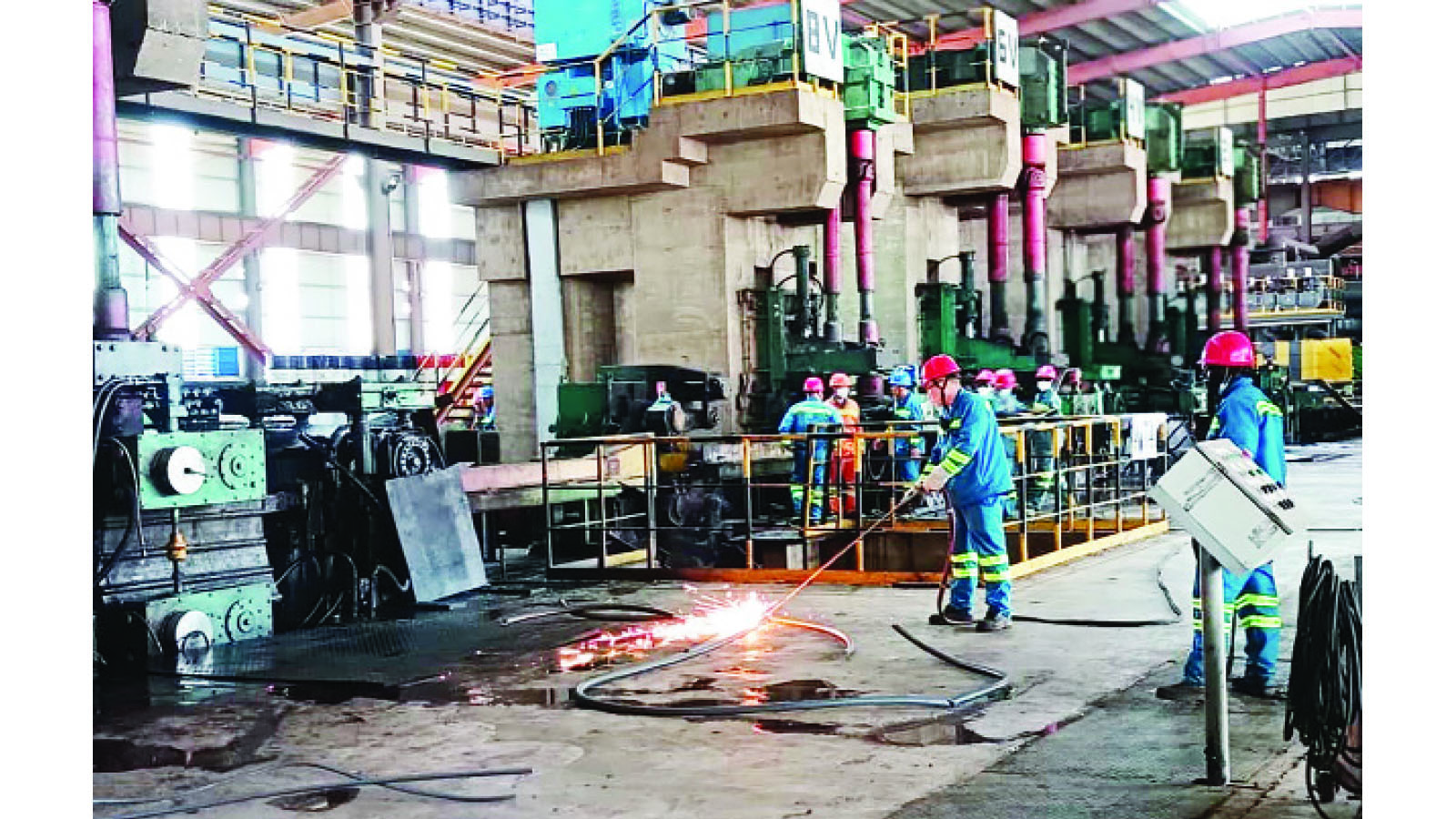
Richard Muponde-Zimpapers Politics Hub
EMPLOYMENT has always been one of the most powerful yardsticks of development.
Factories and industries across the globe are often remembered less for their machinery than for sustaining livelihoods and the communities they create.
In Zimbabwe, the Manhize Steel Plant in Chirumanzu, Midlands Province, is shaping up to become the country’s largest industrial employer, firmly aligning with President Mnangagwa’s philosophy of “Nyika inovakwa nevene vayo” (a nation is built by its own people).
The US$1,5 billion project, established in 2022 by Dinson Iron and Steel Company (Disco), a subsidiary of Tsingshan Holdings Group, is not only reviving Zimbabwe’s steel sector but also giving thousands of locals direct employment.
According to Information, Publicity and Broadcasting Services Minister Dr Jenfan Muswere, the company presently employs 2 000 skilled and unskilled workers, with locals being prioritised.
“At full operational capacity, the project is expected to create up to 25 000 direct jobs and 150 000 indirect jobs, making it one of the largest industrial ventures in the country,” Dr Muswere said.
This figure already makes Manhize the single biggest new employer in the Midlands Province, and its trajectory suggests it will dwarf the employment record of the once mighty Zisco Steel.
At its peak, Zisco employed 5 000 workers and sustained Redcliff. In contrast, Manhize is not only employing four times that number in its later phases, but is also building a new town of 30 000 residents, alongside a university and a foundries centre.
This goes beyond industrial activity, it is a direct investment in human development, education and social infrastructure.
The decision to employ locals from the surrounding Nyikavanhu Ward has been deliberate. Disco is ensuring that the people most affected by the project are its primary beneficiaries, both in terms of jobs and resettlement.
“The relocation of families within this geographic area has been done extremely well, with the building of modern houses and power units within the particular ward,” Dr Muswere confirmed.
This approach resonates strongly with President Mnangagwa’s insistence that Zimbabweans must build, own and benefit from their own economy. By tapping into local labour, Manhize is anchoring national industrialisation in community empowerment.
Globally, the model of steel plants transforming communities is well documented. In India, Tata Steel’s Jamshedpur plant, founded in 1907, led to the creation of a thriving industrial city that today houses over 700 000 people.
In the United States, Pittsburgh’s steel industry turned it into the “Steel City”, providing decades of jobs and urban growth.
Similarly, Germany, the Ruhr Valley’s steel and coal complexes transformed the region into one of Europe’s most productive industrial belts.
Manhize is positioning itself within this tradition, as a steel project that is not just about exports and production figures, but about reshaping the local social fabric.
The scale of ambition is enormous. Disco plans to produce 600 000 tonnes of steel in its first phase, rising eventually to five million tonnes annually.
Alongside raw steel, it will manufacture value added products such as pipes, wires, bolts, nuts,and rolled tubes. Revenues are projected to climb from US$10 million in the early stages to US$4.25 billion a year in the fourth phase.
Importantly, this will drastically cut Zimbabwe’s annual US$1 billion steel import bill, freeing foreign currency for other sectors while strengthening domestic supply chains.
For the local workforce, this means sustainable employment for decades. The plant’s iron ore reserves are estimated to last more than 200 years, effectively guaranteeing that jobs created today will span generations.
Unlike Zisco, which eventually collapsed due to underinvestment, Manhize is being integrated into regional logistics and energy frameworks to ensure long term viability.
A 50MW thermal power station is being built at the plant, supplemented by a high voltage 330kV connection from Sherwood. A railway line connecting Manhize to Mutare and Mozambique’s Beira port is being constructed to facilitate bulk exports, while new port terminals are planned to handle larger shipments.
This infrastructure development is not an abstract national gain.
It directly supports job security for Zimbabweans. A reliable power supply means uninterrupted production, which means sustained employment. A railway and port network ensures that products reach international markets efficiently, which translates to higher revenues and reinvestment into operations. In short, the jobs being created are not precarious, they are tied to a well-planned industrial ecosystem.
Critically, the emphasis on employing locals at every stage from construction to operations, sets a benchmark for foreign direct investment in Zimbabwe. Too often, communities near large projects are sidelined, watching outsiders take up jobs and reap the benefits.
Manhize reverses this pattern. By placing locals at the centre, it is showing how industrial growth can be inclusive and community driven. It is also creating a skilled workforce in Chirumanzu, with long term implications for human capital development in the region.
The contrast with Zisco is stark. Redcliff Township remains a reminder of both industrial glory and collapse, a town once buzzing with steel workers, now struggling with unemployment and decline. Manhize is rewriting that story. By employing more than four times Zisco’s workforce at full capacity and by creating a new township with modern amenities, it is demonstrating that Zimbabwe can not only revive but surpass its former industrial heights.
Of course, challenges remain. Steel plants worldwide have been criticised for environmental impacts, ranging from carbon emissions to water pollution. Manhize’s success will depend on its ability to balance industrial growth with environmental stewardship.
Governance and transparency in how jobs are allocated and how communities are engaged will also be key. But the early signs, from prioritising local employment to responsibly relocating families, suggest that lessons from the past are being heeded.
Ultimately, the Manhize steel plant is not just a project, it is a statement of intent. It is proof that Zimbabwe can build large scale industries anchored in local labour, aligned with national philosophies and connected to global markets. By employing 2 000 people already and targeting 25 000 direct jobs in the coming years, it is becoming the country’s largest employer in heavy industry, surpassing Zisco and setting a new benchmark for industrialisation in Africa.
Manhize embodies President Mnangagwa’s call to action, showing how a project built with local hands can serve both local communities and the national economy.
If it sustains this trajectory, Manhize will not only be Zimbabwe’s largest steel producer but also the country’s most transformative employer forging livelihoods, building towns and proving that a nation is indeed built by its own people.