

 Online Reporter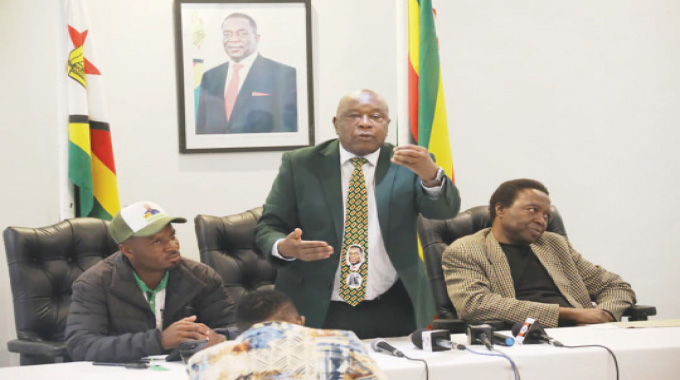
Gibson Mhaka, Senior Zimpapers Writer
BULAWAYO companies should fully integrate their operations with the massive US$1,5 billion Manhize Iron and Steel Plant in the Midlands, to boost industrial manufacturing gains and drive economic growth.
The move comes as plans are underway to create a dedicated budget to equip the city’s firms to meet international operating standards.
Once the country’s leading manufacturing hub, Bulawayo is set to reclaim its status under the Second Republic, which is aggressively pushing to fully integrate the city’s closed-down factories into the world-class steel value chain emerging from the Dinson Iron and Steel Company.
The operationalisation of the giant steel factory is one of the milestone strides achieved under President Mnangagwa’s administration, whose impact should energise Bulawayo’s industrial comeback, Zanu-PF spokesperson, Ambassador Christopher Mutsvangwa, said yesterday.
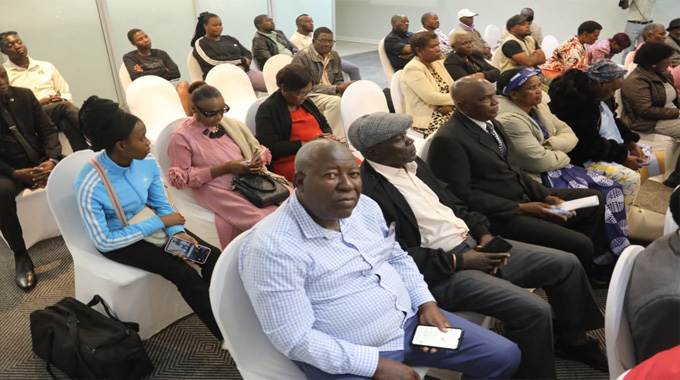
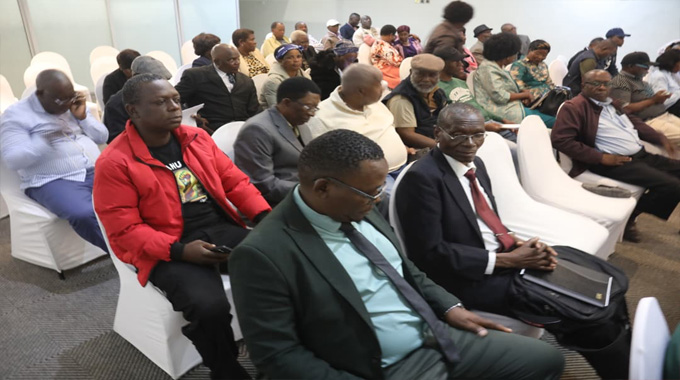
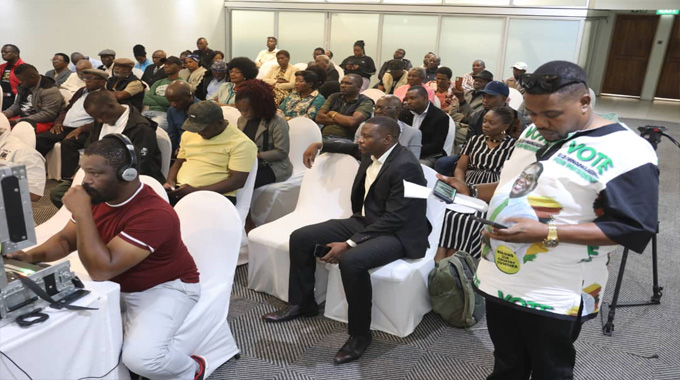
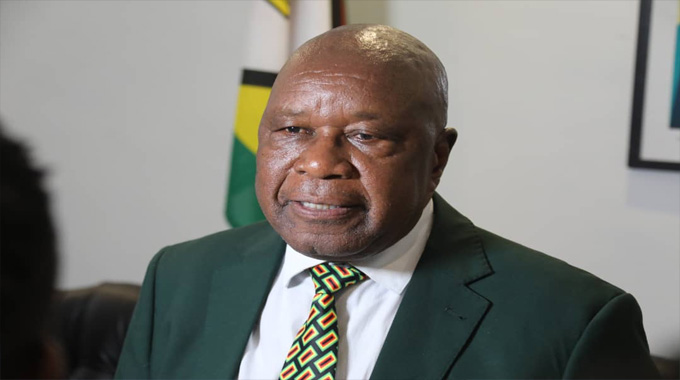
He was addressing the media at a hotel in Bulawayo to mark Unity Day, where he described Bulawayo as the “missing player” in the country’s economic resurgence, noting that the time has come to breathe life into its mothballed factories.
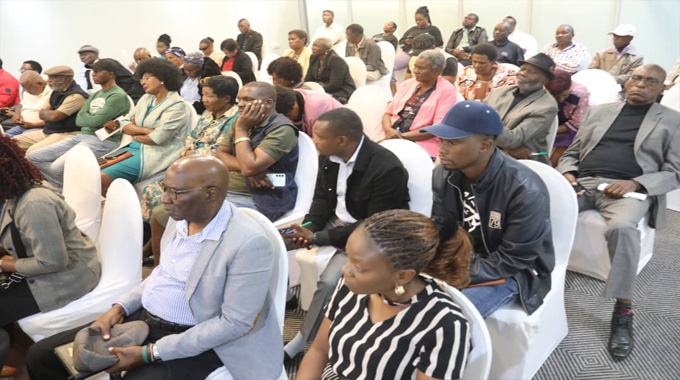
Amb Mutsvangwa said high-level consultations are already underway to secure a dedicated budget to revamp the city’s manufacturing infrastructure to international standards.
“Bulawayo is currently the ‘missing player’ in this resurgence. Its factories have not yet been fully integrated with the Manhize plant,” he said.
“This is why we consulted with the President (Mnangagwa), the Minister of Finance (Prof Mthuli Ncube), the Speaker of Parliament, and the Secretary-General of Zanu-PF.
“We have requested a dedicated budget to revamp Bulawayo’s factories to international standards, restore water reticulation, and repair the railway sidings and roads,” said Amb Mutsvangwa.
“The President loves this undertaking. He knows Bulawayo is going to have a second chance as a modern town that supplies world-class steel products to the global market. This is our trajectory.”
Cde Mutsvangwa said the revival of Bulawayo will be a direct consequence of the success of the Manhize project, which he described as the most modern steel industry in sub-Saharan Africa and beyond.
“The company producing steel at Manhize is ranked 254th globally; it is top-notch. The steel from Manhize is as good as, and sometimes better than, steel from Europe,” he said.
“With that steel, we will return to the town that was originally our manufacturing hub.”
Amb Mutsvangwa equated the importance of steel to the survival of a nation.
“Steel is to a nation what a healthy diet is to the human body. Without steel, a country cannot thrive.
“Anything that rises above this floor anywhere in the world requires steel. If a country possesses a modern steel industry, its future is assured,” he said.
Since the commencement of operations mid-last year, the Manhize steel plant has made significant strides in production, including beneficiation, as well as employment of over 2 000 people. The company is now producing steel in various forms, such as iron bars and deformed bars, supplying locally and exporting to generate foreign currency.
Official reports suggest that the firm is producing about 300 tonnes of steel per day, with an annual target of 600 000 tonnes.
The Manhize steel plant is one of the Tsingshan Group of China’s mining projects in Zimbabwe. It is one of the biggest investors with various other projects, such as Afrochine Smelting (Pvt) Ltd in Selous, Mashonaland West, which is into chrome smelting and Dinson Colliery (Pvt) Ltd in Hwange, Matabeleland North, which is into coke production.
Cde Mutsvangwa noted that the collapse of Zisco Steel in Kwekwe in the early 2000s had a domino effect that crippled Bulawayo’s downstream industries, which historically produced railway stock for the region.
However, he assured the nation that President Mnangagwa’s strategic approach, starting with energy self-sufficiency in Hwange, has laid the foundation for a comeback.
“Historically, when the colonial powers wanted a strong Rhodesia, they built Zisco Steel. When they wanted a weak Zimbabwe, they contrived to close it. Kwekwe collapsed because of Zisco, and by extension, Bulawayo, the downstream hub collapsed as well,” he said.
“Bulawayo’s factories became mothballed, they became empty shells, some now even used as places of worship.
“But the President has given Zimbabwe a second chance. The President wants to restore the vitality of Bulawayo as a modern steel town,” said Cde Mutsvangwa.
He emphasised that Zimbabwe has shifted the narrative from being a producer of colonial cash crops to a food-secure nation.
“Zimbabwe is now the only African country that has moved beyond growing only ‘fancy’ cash crops like tobacco and cotton without securing food for its own people.
“We no longer rely on the World Food Programme, we are no longer living season-to-season in a state of uncertainty,” said Amb Mutsvangwa.
Linking the industrial vision to Unity Day, Cde Mutsvangwa said economic prosperity is the ultimate catalyst for national healing and reconciliation.
“While the President addresses historical issues, it is far easier to achieve reconciliation when there is material well-being, when those who felt marginalised or whose futures were shattered by factory closures can see a path to prosperity,” he said.
He added that President Mnangagwa views Bulawayo as a “solid constituent” and is determined to see the city supply world markets once again, leveraging its disciplined and skilled labour force.
Cde Mutsvangwa also took the opportunity to celebrate the party’s recent electoral success in the city, following the victory of Cde Freedom Murechu in the Nkulumane by-election held last Saturday.
“It’s a milestone for our party to have a young leader wrestle a seat from his opponents in a fair national competition,” he said.


 Bongani Ndlovu