Online Reporter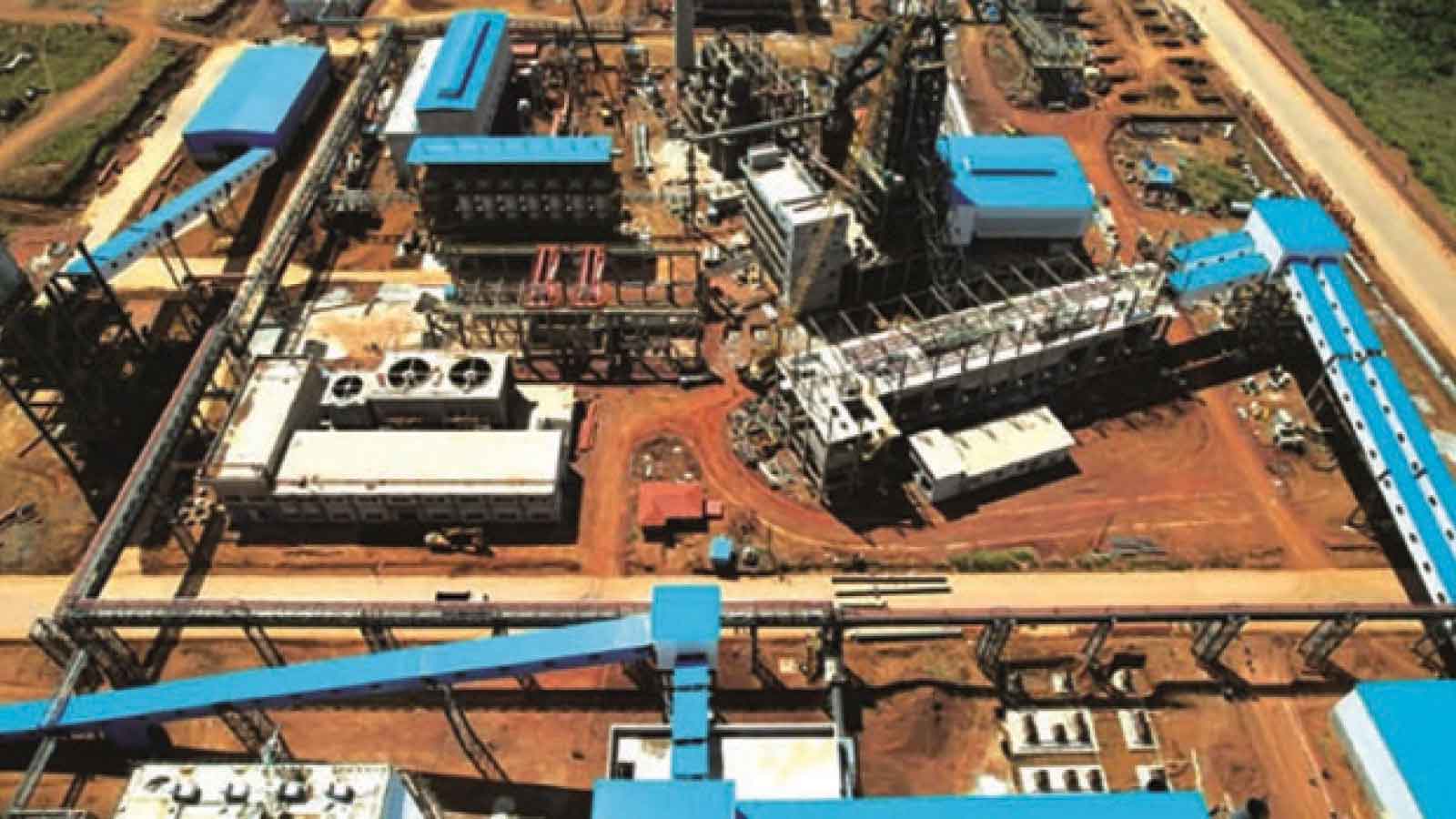
Oliver Kazunga-Features Writer
A VIOLENT wave of heat slams across the production floor as molten steel cascades into a giant ladle beneath a shower of sparks powerful enough to light the entire steelmaking hall.
Overhead, massive gantry cranes groan through thick clouds of steam, while workers in orange aluminised heat-work suits move swiftly between conveyor belts, rolling mills and control panels with military precision.
Sirens scream above the metallic thunder of machinery as another line of red-hot rebars snakes through cooling chambers before disappearing into loading bays where trucks wait endlessly for dispatch to Harare, Johannesburg and beyond.
The smell of burning metal and oil hangs heavily in the air.
This is not merely a factory — it is the sound of Zimbabwe rebuilding an industrial future once thought lost forever.
A recent visit to Manhize by this publication revealed the sheer scale of transformation taking place at the sprawling Dinson Iron and Steel Company complex near Mvuma in Midlands Province, where round-the-clock steel production is beginning to redefine Zimbabwe’s industrial ambitions and reshape the country’s export profile.
For close to two decades after the collapse of ZISCO, once the largest integrated steel plant north of the Limpopo in 2008, Zimbabwe endured one of the greatest economic contradictions in its post-Independence history.
The country possessed vast iron ore deposits capable of sustaining a major steel industry.
Conversely, Zimbabwe annually spent between US$400 million and US$500 million importing steel and related products needed to construct roads, bridges, dams, factories and homes.
Zimbabwe exported raw minerals and imported industrial supplies.
Entire downstream industries slowly weakened, with engineering firms struggling for raw materials. Foundries shut down; construction companies relied heavily on imported steel, while communities built around the old Redcliff steel economy sank into decline.
Then came Manhize; rising from nearly 3 000 hectares of Midlands scrubland near Mvuma, the US$1,5 billion Dinson Iron and Steel Company plant is beginning to reverse years of industrial collapse and reposition Zimbabwe as a regional steel producer once again.
According to the Minerals Marketing Corporation of Zimbabwe (MMCZ), the country’s value-added steel exports soared 254 percent to US$68,22 million in the first quarter of 2026, compared to US$19,25 million recorded in the corresponding period last year.
This signals the rise of a powerful new industrial export economy.
During the period under review, steel export sales reached 190 612 tonnes, representing a 150 percent increase in volume compared to 76 163 tonnes recorded during the same period last year.
Last year, steel export sales contributed US$92,1 million from 146 314 tonnes, representing a 450 percent spike in value compared to the previous year.
This positive growth trajectory comes as the country accelerates efforts to drive an export-led economy underpinned by value addition and beneficiation of its natural resources.
“This exceptional growth is directly attributable to increased production of value-added steel products and strong regional market demand.
“It is a compelling demonstration of what beneficiation delivers in practice,” MMCZ general manager Dr Nomsa Moyo said.
Standing beside the rolling mills at Manhize, where glowing steel bars race through automated cooling systems before being stacked for transportation, the scale of Zimbabwe’s industrial ambitions becomes unmistakably clear.
The plant feels less like a production facility and more like an industrial metropolis. Smoke rises from towering cooling stacks. Rail tracks cut across the vast complex, linking warehouses, furnace sections and dispatch zones.
Heavy-duty trucks rumble continuously across the yard, carrying steel products destined for regional export markets.
And inside the control room, giant digital screens flicker with real-time production data while engineers monitor furnace temperatures, rolling speeds and output levels around the clock.
At Manhize, Zimbabwe no longer merely digs minerals out of the ground.
The country is beginning to manufacture value, and the significance of this shift becomes even more striking when measured against the collapse of ZISCO at the height of hyperinflation in 2008.
At its peak during the 1990s, ZISCO produced about 1,2 million tonnes of steel annually and served as the backbone of Zimbabwe’s industrial economy.
Its collapse devastated entire sectors. Thousands lost their jobs. Engineering firms struggled to survive. Railways, manufacturing companies and foundries faced severe raw material shortages.
A former continuous casting department employee at ZISCO, Mr Crispen Zizhou, who is now employed by Dinson, still remembers the silence that followed the closure of the Redcliff-based steelworks.
“When ZISCO shut down, it felt like the whole town died.
“People lost jobs, businesses collapsed and many young people stopped believing there was a future in steel,” he said.
Mr Zizhou walked across the massive steel plant with visible pride.
“I never thought I would see Zimbabwe producing steel at this scale again,” he said.
“Young people are beginning to believe in this industry once more.”
Backed by Chinese investment and Government-backed Special Economic Zone incentives, Dinson commissioned Phase One of operations in 2024 with an annual target of 600 000 tonnes, which the company is already producing, comprising steel billets, reinforced bars, pig iron and wire rods.
At one dispatch bay, workers secure massive bundles of reinforcing bars onto waiting haulage trucks destined for construction sites across Zimbabwe and Southern Africa.
“We are exporting our steel while also supplying the local market.
“First and foremost, we prioritise meeting local market demand and then we move on to regional markets,” said the company’s project director Mr Wilfred Motsi.
Already, this shift is transforming Zimbabwe’s industrial economy, including sectors such as construction and infrastructural development, manufacturing, and the foundry sector.
Contractors who once waited months for imported steel deliveries are now accessing locally produced materials faster and more competitively.
“The availability of locally produced steel has helped lower building material costs and improved access to supplies, enabling projects to be completed faster,” said Construction Industry Federation of Zimbabwe (CIFOZ) chief executive officer Mr Martin Chingaira.
Regional demand is also strengthening Zimbabwe’s position as South Africa, traditionally one of Africa’s dominant steel producers, imported large volumes of steel products in 2025 amid rising infrastructure demand and supply constraints.
According to data from the South African Revenue Service, the South African Iron and Steel Institute (SAISI) indicated that in 2025, primary steel imports into South Africa, excluding stainless steel, wire and rail, reached a record high of an estimated 1,56 million tonnes.
This was mainly due to higher imports of semi-finished steel products such as slabs, billets and blooms, which surged by over 514 percent to 195 723 tonnes.
A truck carrying steel from Manhize can reach Johannesburg within days, instead of the weeks required for imported Asian shipments arriving through ports.
“The fact that South Africa is now importing steel from Dinson demonstrates the competitiveness of the company’s products,” said Mr Chingaira.
The most important story unfolding at Manhize lies beyond exports.
Across Zimbabwe’s industrial centres, engineering workshops, fabrication firms and foundries that had stagnated for years are slowly returning to life as access to billets and pig iron improves. Innovicore Engineering director Mr Darlyington Kugara, whose company produces small-scale mining equipment, said the revival of local steel production is a game-changer for small-scale mining engineering firms, because steel is one of their most critical raw materials.
“The availability of locally produced billets, reinforcing steel and other steel products from Manhize creates opportunities for local fabrication of mining equipment, processing plants, mill stands, tanks and structural components.
“This can significantly strengthen Zimbabwe’s mining supply chain and support industrialisation through local content development,” he said.
Zimbabwe Institute of Foundries chief executive officer Mr Dosman Mangisi said:
“The impact of the Dinson project is already being felt through exports, product quality and competitive pricing.
“It is creating momentum across downstream industries that depend on steel products as key raw materials.”
The Government views steel revival as central to its broader beneficiation strategy aimed at retaining more mineral value within the domestic economy.
In recent years, authorities introduced policies encouraging local processing of minerals, including lithium, chrome and iron ore, as Zimbabwe intensifies its industrialisation agenda under Vision 2030.
Thus, steel is increasingly becoming one of the clearest examples of beneficiation moving from policy papers into real industrial production.
Major challenges still remain.
Steel manufacturing is highly energy-intensive, and long-term competitiveness will depend on reliable electricity supply, efficient rail systems, modern logistics infrastructure and continued industrial skills development.
Industry experts also warn that Zimbabwe must now deepen downstream manufacturing to maximise the full benefits of the steel value chain.
Economist Mr Luxon Zembe said in an interview recently:
“Without major reforms in electricity generation and rail logistics, Zimbabwe risks producing steel at costs above global competitors.”
As dusk settles over the Midlands, flames continue to dance above the steel plant while another convoy of trucks loaded with Zimbabwean steel disappears onto the highway towards regional markets.
For years, Zimbabwe exported iron ore and imported finished steel.
Now, deep inside the blazing heart of Manhize, the country is forging something far greater than metal. It is rebuilding an industrial identity once believed lost to history.