Online Reporter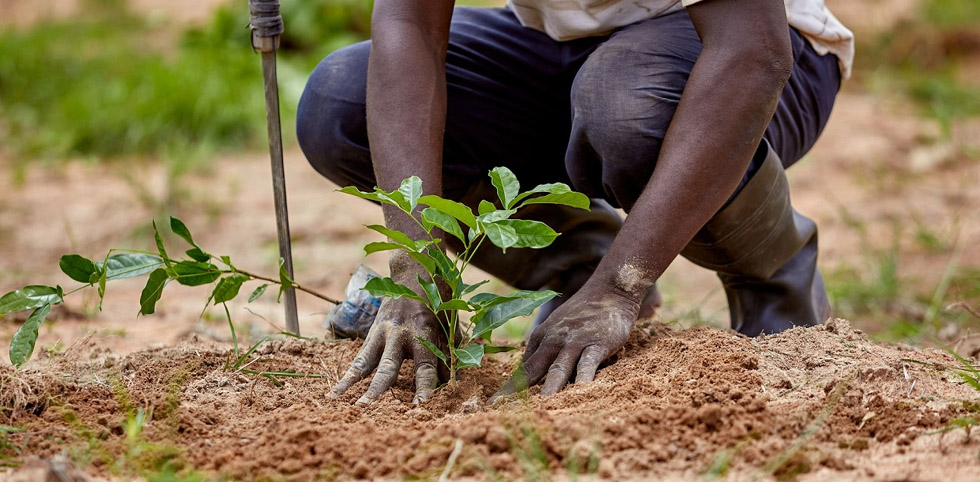
Lovemore Kadzura
Post Reporter
MANICALAND has shifted gear in its fight against rampant deforestation, which is threatening to wipe forests, cause desertification and other unwanted climatic changes by planting seven million trees this year.
Speaking on the sidelines of a tree-planting event at Mahara Village in Mutare Rural on Wednesday, Forestry Commission provincial manager, Mr Philip Tom revealed that this year alone, the province has planted seven million trees, and remained hopeful of reaching the set target of eight million trees.
He added that deforestation is particularly intensive in the tobacco-growing areas of Makoni, Mutare, Mutasa and Nyanga districts, where farmers are still using indigenous trees like musasa, mutondo and mupfuti to cure the golden leaf.
A community woodlot with 1 600 mubve trees was set up in the village, which is experiencing a high rate of deforestation due to tobacco farming.
“Manicaland is a tobacco-growing region and tobacco farming thrives on firewood for curing the crop. This has caused a lot of deforestation and destruction. We have an annual target of 8 million trees, and to date we are at 7 million, and we are likely to achieve this target because we have received some significant rains. As long as we are receiving the rains, we will continue to plant indigenous and exotic trees.
“We are establishing community plantations as an effort to mitigate the effects of tree cutting. Our target is that every village will have its own plantation where they will harvest for tobacco curing. We want to devolve further to individual homesteads. Every farmer who grows tobacco must have a plantation at their plots. This is also provided for in the statutes and must be adhered to,” said Mr Tom.
Village head, Mr Tonderai Ndagurwa, of Mutanda 2 said due to tobacco farming, the area has registered unprecedented deforestation targeting indigenous trees.
He called for tight monitoring of tobacco companies that are not providing exotic wood to their contracted farmers.
“We are calling on farmers here to establish exotic woodlots to use in curing tobacco. Tobacco has changed the economic fortunes of this area and lifted people out of poverty, but at great expense to the environment. There is need to strictly monitor the operations of contracting companies so that they adhere to set guidelines of providing their farmers with approved wood.
“Each season, trees are disappearing in forests and mountains. As traditional leaders, we are doing all we can to protect our natural resources for the future benefits of generations who will come after us. Commercial interests must be pursued responsibly. As traditional leaders, we fully embrace the reforestation activities being pursued by Government,” said Mr Ndagurwa.
Tobacco contracting companies have formed an entity, the Sustainable Afforestation Association (SAA), aimed at addressing the deforestation associated with their business activities. They are setting up gum tree woodlots across the country on land provided by farmers, communities and local authorities.
Environment, Climate and Wildlife Minister, Dr Evelyn Ndlovu said the country is losing 262 000 hectares of natural forest each year, and called for a proactive response to address the situation before it escalates.
She was represented by the Director of Wildlife and Forestry in her ministry, Mr Tanyaradzwa Mundonga, at the event.
“The deforestation rate in Zimbabwe is still alarming, and we need to take part in the fight against deforestation. The Forestry Research Centre estimates the rate of deforestation to be 262 000 hectares per year, with the major drivers being tobacco curing, expansion of land for agricultural purposes, veld fires, settlement expansion, firewood demand, charcoal making, brick moulding and mining activities. Let us join hands in curbing deforestation, as it is not only the Forestry Commission’s responsibility. Forest ecosystem restoration will only succeed if everyone plays a part and revives damaged forest ecosystems,” she said.
Minister Ndlovu said Government has introduced the Tobacco Wood Energy Programme, whereby farmers are given fast-growing eucalyptus seedlings for free by the Forestry Commission.
“We therefore urge tobacco farmers to register and be part of the programme. We do not want a situation whereby we will not be able to grow tobacco because we no longer have any fuel to cure the golden leaf, which is of paramount importance to our economy,” said Dr Ndlovu.
Minister of State for Manicaland Provincial Affairs and Devolution, Advocate Misheck Mugadza said deforestation poses a threat to the provincial economy and called upon tobacco farmers to collaborate with authorities to curb the wanton destruction of natural resources.
“Our province is endowed with unique vegetation types that are rarely found elsewhere in the country. The medium-altitude rainforests are rich reservoirs of biodiversity and genetic resources and must be safeguarded for present and future generations.
‘‘Forests contribute significantly to the provincial economy and remain central to our aspirations as we march towards the attainment of Vision 2030. The greatest threat confronting our forests today is deforestation, and the challenge is particularly pronounced in tobacco-growing districts and peri-urban areas,” said Minister Mugadza.