admin
admin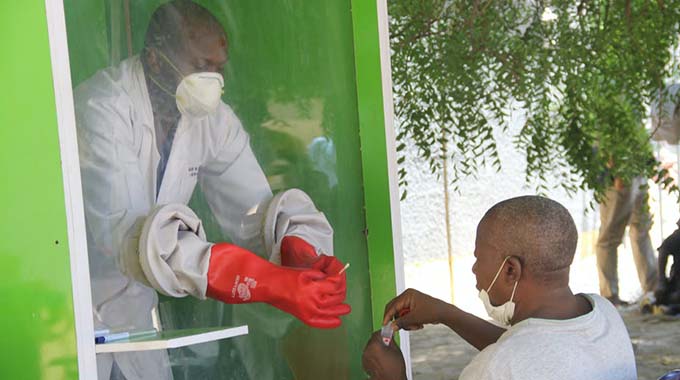
Rumbidzayi Zinyuke Manicaland Bureau
As the country continues to record a rise in local transmission of Covid-19, Manicaland province is faced with a contact tracing dilemma due to limited resources.
On Tuesday, 146 local Covid-19 infections were confirmed, driving the total number of Covid -19 positive cases to 4 221. Of this figure, 3 128 people were infected within Zimbabwe.
Manicaland has so far reported a total of 199 cases with 116 of them being local transmissions.
Contact tracing is the process of identifying, assessing, and managing people who have been exposed to a disease to prevent onward transmission.
Provincial medical director Dr Simon Nyadundu said contact tracing for the local cases was proving to be a challenge as some of the contacts were located in different areas making it expensive to follow up on them.
“When President Mnangagwa launched the National Response Strategy for Covid-19, there were some assumptions which were in that document. For contacts, the assumption was that one case would have five contacts but unfortunately with the local cases, we have had contacts as high as 34 for some. This is the reflection of the resources we would require to follow up all those 34 people because they are not in the same geographical area,” he said.
There have been several reports of people who have evaded the rapid response teams and quarantine, only to test positive later after they have travelled to other districts.
With all quarantine and isolation centres located in Mutare for accessibility by the health teams, Mutare City council has also raised concern over the unsustainable costs they are bearing for contact tracing and at designated isolation facilities.
Currently 74 of the cases in Manicaland are in Mutare with the majority clustered within Chikanga suburb, which has since become the hotspot for Covid-19 in the city.
“There is reduced compliance to laid down Covid-19 prevention behaviours by residents which has given rise to an increase in local transmission. Residents have not heeded the call to continue wearing face masks and continued hand hygiene even among their relatives. We have challenges of fuel and vehicle shortages making rapid response, contact tracing and surveillance difficult,” council said in a situation report issued yesterday.
Council said contact tracing and surveillance remained underway with 372 contacts currently under surveillance.
However, due to the fuel challenges, council said surveillance was being done over the telephone, a measure which might not be as effective.



 Online Reporter