Online Reporter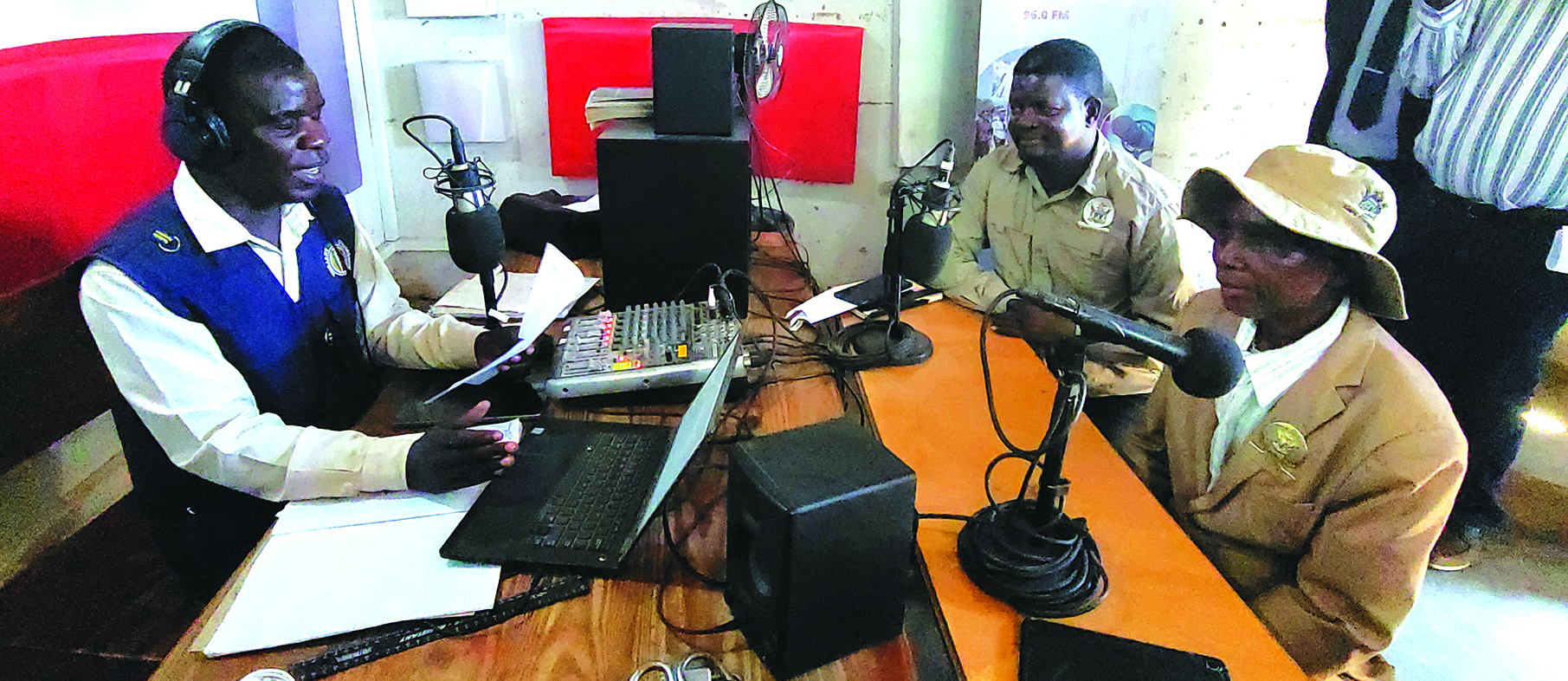
Ray Bande
Senior Reporter
MANICALAND has taken a significant leap forward in expanding radio broadcasting transmission access, achieving an impressive 81 percent coverage, surpassing the national average of 77 percent.
This demonstrates the province’s commitment to bridging the rural-urban digital gap.
As part of Government’s thrust to close the digital divide, 48 multi-purpose communication towers are being constructed across the country.
These towers, integral to the Zim Digital Tool Programme, enable communities to access broadcasting signals, and also provide mobile phone network services.
A newly completed tower in the remote Garahwa area of Chipinge South Constituency has brought a significant improvement to local villagers. Previously, they relied on Mozambican mobile phone networks, such as Mobicel, and had no access to local radio stations transmission.
This development is a crucial step towards achieving Government’s target of 85 percent broadcasting transmission access by year-end.
As Manicaland continues to lead the way in closing the digital divide, communities across the province are poised to benefit from enhanced connectivity and access to information.
During a tour of the Ndau Community Radio Station in Garahwa, near the Mozambican border, Chief Director in the Ministry of Information, Publicity and Broadcasting Services, Mr Jonathan Gandari said a vibrant community radio project is already underway.
His statement confirmed that Government is moving forward with its initiative to enhance community radio services across the country.
“Government, as ably led by President Emmerson Mnangagwa, under the Second Republic, is determined to close the rural-urban digital divide through the provision of digital devices and network to marginalised communities. Our wish as Government is that the people in Harare and all other urban centres throughout the country get the same content with people in rural or once marginalised areas. This dovetails into the national philosophy, as espoused by His Excellency, President Mnangagwa, that no place and no person must be left behind in the national development discourse.
“To that end, we will be constructing 48 multi-purpose communication towers at different sites across the country. This is under the Zim Digital Tool initiative that is meant to give all communities in Zimbabwe access to broadcasting transmission as well as mobile phone networks. In fact, this is a project that is already underway as evidenced by one of the towers that has been completed here in Garahwa Village of Chipinge South Constituency,” said Mr Gandari.
In an interview on the sidelines of the Ndau Community Radio Station tour, Transmedia Corporation chief executive officer, Engineer Adonia Mashosho shared updates on the country’s broadcasting transmission access.
Engineer Mashosho said approximately 77 percent of the country’s geographical area is currently covered.
Manicaland has achieved an impressive 81 percent transmission access, surpassing the national average.
The national target is to reach 85 percent transmission access by year-end.
“As a country, we are at around 77 percent geographically in terms of broadcasting transmission access. We are aiming at getting at 85 percent by the end of this year. Realistic initiatives meant to achieve this target are already underway. We are committed to leaving no person and no place behind in terms of participation in national development discourse,” said Engineer Mashosho.
Engineer Mashosho said the establishment of a multi-purpose communication tower has helped locals in the Garahwa community and surrounding areas to access Zimbabwe mobile phone networks.
“We all know that people in this area used to buy Mozambican mobile phone lines because the local network signal was not accessible. Therefore, the establishment of this tower enabled us to invite mobile phone network providers to bring connectivity to folks in this area so that they access local networks such as NetOne and Econet as well as radio signals for them to effectively participate in the national development discourse,” he said.
Mr Gandari also hailed the progress made in the establishment of Ndau FM, which he signed out as an outstanding project among the existing community radio stations owing to its unique use of solar power in its operations.
“We are happy that Ndau FM is unique in its set up from all other community radio stations that we have, in that it is the only one which is fully solarium powered without any alternative sour e of energy. This is an encouraging set up, given the country’s thrust to rely more on clean energy sources,” he said.
He underscored the importance of community radio stations in the revitalisation of cultural heritage through engaging content, and said prospective players in the broadcast industry will soon be invited to submit applications for licences as Government continues opening up the airwaves.
To date, the country has 14 community radio stations.
“Government will soon be availing an opportunity for prospective players in the broadcasting sector to apply for community radio station licences. Government, under the Second Republic, has made a deliberate move to open up the airwaves to enable full participation of all citizens in the national development discourse. This is also aimed at enhancing our cultural and social heritage as Zimbabweans through languages used in these community radio stations.
“So far, we have 14 community radio stations apart from the existing national State owned and private radio stations. We will soon be availing more opportunities in that sector by inviting applications for those with potential to participate in radio content production as well as broadcasting services,” said Mr Gandari.