Online Reporter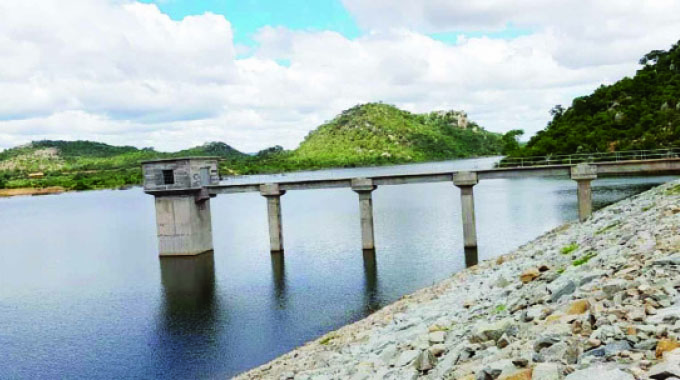
Lovemore Kadzura
Post Reporter
MANICALAND Province has identified irrigation development and expansion, together with value addition of agricultural and mining products, as priority projects under the Rapid Results Initiatives (RRI) 100-Day Programme for 2026.
These initiatives are expected to stimulate economic growth, create employment opportunities, and uplift the living standards of citizens.
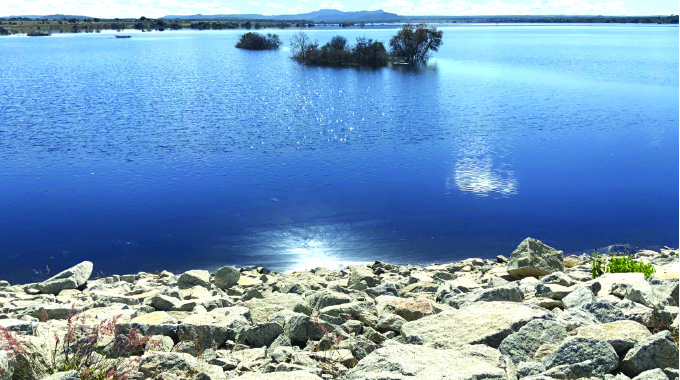
Although the province is endowed with abundant water resources, many dams remain underutilised, with some irrigation schemes lying idle or in need of revitalisation to reach full production capacity.
At the same time, most agricultural and mining outputs continue to be exported in raw form, depriving Manicaland of potential revenue streams and job creation opportunities.
Provincial authorities are now determined to harness these resources to boost food production, strengthen value chains, and significantly transform the provincial economy and the welfare of communities.
Speaking during the Technical Validation Workshop on the RRI 100-Day Programme for 2026, the Secretary for Manicaland Provincial Affairs and Devolution, Mr Abbiot Maronge, emphasised the province’s focus on key water bodies such as Marovanyati Dam (Buhera), Muchekeranwa Dam (Makoni), and Osborne Dam (Mutasa/Makoni) for expansive irrigation development.
“It is anticipated that a number of projects will be taken on board under the Rapid Results Initiative. In Manicaland, our focus will be on irrigation development, which requires expansion. We are going to ensure that dams such as Marovanyati, Muchekeranwa, Osborne, and others are fully utilised for irrigation. The province also needs to expand its value addition capacity. We produce a wide range of raw materials, including sugarcane, cotton, and horticultural products, and we are working with the private sector to develop industrial capacity to add value to these products,” he said.
Mr Maronge further highlighted that these projects will be coordinated by the Office of the Minister of State for Manicaland Provincial Affairs and Devolution, ensuring close monitoring, community participation, and alignment with President Mnangagwa’s mantra of “leaving no place and no person behind.”
This approach is expected to strengthen the implementation of devolution and decentralisation of development.
He also noted that previous 100-day cycles had yielded significant successes, including the completion of provincial registry offices, revitalisation of irrigation schemes, and increased private sector investment in value addition.
“We have seen the 100-Day initiatives bringing us massive developmental results across all sectors. Of particular significance is the completion of the Mutare Provincial Registry offices, which was done under that initiative. We also saw a number of irrigation schemes such as Romsely in Makoni, Cashel Valley, in Chimanimani, and Chibuwe-Musikavanhu (Chipinge), among others, being completed.
“Some business projects, such as the Mega Market Flour Milling Plant, Hauna Processing Plant, and several others, have been commissioned. We have no doubt that this initiative has achieved desirable results, which have transformed the lives of our people in the province,” he said.
Secretary for National Monitoring, Evaluation and Learning, Ms Fananai Madambi, said the Government is coming out in full force and with precision to undertake high-impact projects that are meant to uplift the lives of ordinary citizens, as espoused in the Vision 2030 agenda.
“It should be noted that President Mnangagwa has been unequivocal that the Rapid Results Initiatives 100-Day Cycle programme is not a procedural requirement, but a decisive call to action. Cabinet Circular No 24 of 2018 is explicitly clear that Government is moving with urgency, precision and discipline to deliver high impact and citizen-centred programmes and projects.
“President Mnangagwa challenged Government machinery to demonstrate that, within every 100 days. Accelerated progress is possible and Vision 2030 is not aspirational rhetoric, but a liveable and visible reality for the citizenry. Strategic national infrastructure projects, such as the historic Trabablas Interchange, expansion of the R.G Mugabe International Airport, and commissioning of Hwange Units Seven and Eight, which added 600MW to the national grid, have been undertaken. There has also been expanded ICT connectivity through the rollout of new base stations across the country.
“New health centres, clinics, hospitals, and health posts, including in Mutasa District, reflect investment in health delivery. Magistrates’ courts have been constructed across provinces, reinforcing access to justice and strengthening governance. Food security has been increased through new irrigation schemes and dam construction. These achievements are not abstract, they are proof that lives are being uplifted, communities are being strengthened, and trust in Government continues to grow. As we enter the most critical phase of our Vision 2030 journey, we must deepen our resolve, sharpen our institutional effectiveness, and strengthen the systems that drive policy through delivery,” she said.
Ms Madambi, however, noted that there are still some areas that need improvements, and warned ministries, departments, and agencies (MDA) against being complacent in implementing projects.
“These include submission of low-quality and low-impact projects lacking transformative potential, limited or delayed resource mobilisation, procurement bottlenecks, and compliance challenges.
“There is also weak coordination between central and sub-national tiers of Government, and prioritisation of routine, low-risk projects merely to secure favourable performance ratings. There is also the resubmission of already completed projects and recurring delays in submission of programmes and projects,” she said.
Ends.