Online Reporter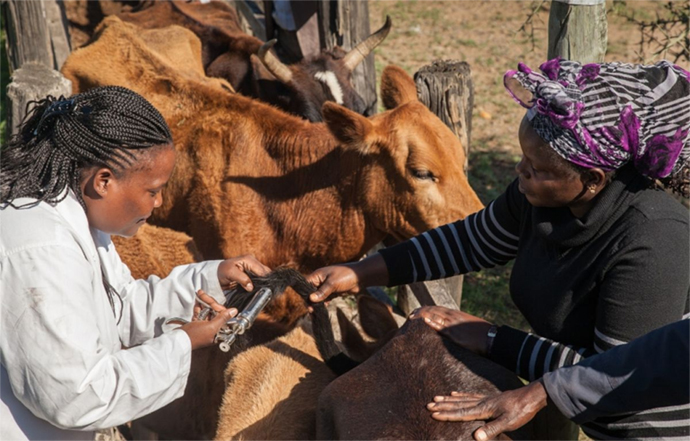
Lovemore Kadzura
Post Reporter
GOVERNMENT – through the Department of Veterinary Serves (DVS) – is distributing chemicals and tick grease in Manicaland to contain the spread of theileriosis, also known as January Disease, which is threatening the provincial herd as cattle are succumbing to it, particularly in communal areas that have gone for months without dipping.
The province has already lost hundreds of cattle worth thousands of dollars to theileriosis – a ruthless tick-borne disease caused by irregular dipping – this farming season, dealing a lethal blow to thousands of communal farmers’ livelihoods.
The losses could be even greater as some cattle deaths go unreported.
Four notorious tick-borne diseases – theileriosis, heartwater, babesiosis and anaplasmosis – are blamed for a high percentage of cattle diseases and deaths in the province.
However, theileriosis, or January disease, remains the biggest threat in the country, wreaking havoc even outside the usual peak rainy season.
The highest number of cattle deaths is usually recorded between January and March when the tick population in pastures is high, but when dipping is strictly enforced and adhered to, animal health significantly improves.
The DVS has now taken a tough stance to promote weekly cattle dipping in a bid to control the spread of the tick-borne disease.
Manicaland Provincial Veterinary Director, Dr Takunda Chikaka said Government has started distributing dipping chemicals and officers are applying the Bolvac vaccination in hotspots with positive results being recorded in those areas as deaths have been contained.
Dr Chikaka added that they have so far vaccinated 12 000 cattle, and intensified awareness campaigns educating farmers on the need to regularly dip and vaccinate their livestock as a preventative measure.
“Our response to January disease is through an integrated tick and tick-borne disease control strategy where we are dipping, applying Bolvac vaccination and also resistance testing. Currently, we are in the process of receiving dipping chemicals and so far we have managed to disburse to Makoni and Buhera districts. We are anticipating more deliveries to the rest of the province.
“Bolvac vaccination has been ongoing and we have been targeting the hotspots within the province, especially Mutare, Makoni, Nyanga and Chimanimani. Our staff are on full force on the ground vaccinating cattle. We are in the process of managing the outbreak. We have also made efforts to carry out awareness campaigns in every district – our staff have been instructed to share knowledge, especially when it comes to control strategy, what farmers are expected to do and the drugs to use to manage the outbreak. All districts have been affected – we have various dip tanks that have been placed under quarantine. Farmers are also encouraged to observe the quarantine orders and avoid movement of cattle until the quarantine orders are lifted,” said Dr Chikaka.
There have been calls for tight monitoring of farmers, particularly those from communal areas, as some of them do not stick to dipping calendars and rarely vaccinate their livestock – transgressions blamed for the outbreaks of diseases.
Headlands livestock farmer, Mr Raymond Sakutukwa said Government should come up with punitive measures on farmers who do not dip their cattle as their actions affect others.
“Our neighbours are communal farmers and some of them do not dip their cattle, yet they let them stray into our farms. This exposes livestock of farmers who adhere to dipping and vaccination regimes. Stringent measures should be taken against farmers who do not follow laid-down procedures. Livestock is very important and integral to agribusiness success and must be protected,” he said.
The DVS has also enlisted the services of traditional leaders and the police to compel farmers to dip their cattle every week. A farmer who refuses to avail their cattle for dipping will be breaking the Animal Health Act, which was promulgated in 1960.
The Animal Health (Cattle Cleansing) Regulations (1993) also makes it mandatory for farmers to avail their cattle for dipping whenever the Department of Veterinary Services deems it necessary, and those who do not comply are liable to prosecution.
The regulations stipulate that no person shall fail or refuse to comply with a lawful instruction to dip their cattle.
Dipping is a broad spectrum method of parasite control that can control scab, ticks, lice, blowfly, and keds with one product. Methods of dipping cattle include spray race, pour-on, hand spraying and belly baths. A plunge dip is a construction that allows complete immersion of livestock in a liquid that contains a parasiticide.
This ensures that the animal is completely submerged in the chemical on areas such as inside the ears and under the tail where ticks are found.