malvernmugadzikwa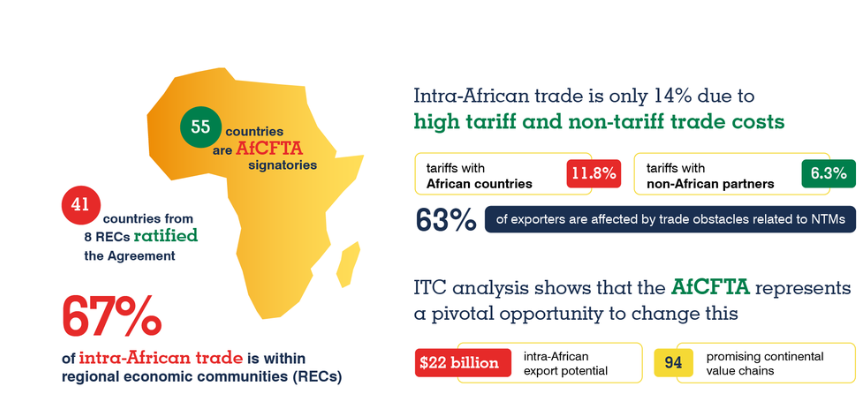
Michael Tome
Business Reporter
ONLY a third of the large firms in Zimbabwe say they are ready to fully exploit opportunities under the African Continental Free Trade Area (AfCFTA).
This emerged at a meeting held in Harare last week by local industry players and regulators to examine the readiness of local companies to compete in the vast market created to promote intra-Africa trade.
Statistics show that about 33 percent of Zimbabwe’s large firms, 38 percent of medium-sized companies and 33 percent of small entities are ready to face all forms of external competition arising from the intra-Africa trade pact.
Notably, 50 percent of local firms, 48 percent of medium-sized companies and 18 percent of small-sized entities say they are not ready to face competition in AfCFTA.
As a result, local industry players have since implored the Government to move swiftly to address outstanding ease of doing business issues in the country to give them an edge over external competition.
Major challenges reportedly limiting the local industry’s potential to compete against the continent’s best were cited as high production costs stemming from the cost of capital and power, as well as the lack of affordable credit.
The perceived risk of investing in Zimbabwe due to the illegal sanctions imposed on the country by Western countries comes with a high premium on lines of credit from lenders. This results in a higher cost of capital for businesses, as they have fewer funding options and have to rely on more expensive domestic and international sources.
Part of Zimbabwe’s power grid is outdated and suffers from frequent breakdowns and load shedding. This forces many companies to rely on expensive backup generators, significantly increasing their operational costs.
Also worrying is the dominant use of the US dollar, an overly strong global currency that experts fear makes products from Zimbabwe more expensive compared to those from jurisdictions with softer currencies. This presents the prospect that, while there are opportunities for Zimbabwean producers to exploit in the vast AfCFTA market, it could present even bigger threats in the form of strong competition for jurisdictions and entities that are not well prepared.
Its largest trade partners currently are South Africa, the United Arab Emirates and Zambia. Analysts contend that embracing the new local currency, Zimbabwe Gold (ZiG), is a critical factor in enhancing the competitiveness of the local industry, as AfCFTA gathers momentum.
Several African countries have deposited their proposed tariff offers for ratification under AfCFTA.
Zimbabwe signed and ratified the AfCFTA agreement for industry tariff liberalisation, and is expected to submit a schedule of tariff concessions, where it agreed to liberalise 90 percent of goods (Category A) in the first five years; then 7 percent (Category B) in the next 10 years; followed by Category C, where there will be no liberalisation.
The country has a total of 6 606 tariff lines, 5 956 of them in Category A and the balance in Category B.
Category A, which comprises non-sensitive products, constitutes 90 percent of Zimbabwe’s tariff handbook, while Category B (sensitive products) will constitute 7 percent.
Zimbabwe could benefit significantly from AfCFTA given its robust potential in the manufacturing, horticulture and mining sectors.
According to the World Bank, the country has a strong competitive advantage in key areas like agriculture, mining and tourism. The Bretton Woods institution regards Zimbabwe as a highly competitive market in several value chains, including agriculture and agribusiness.
The Competition and Tariff Commission’s senior investigating officer, Mr Tawanda Katsande, said some industry players had shown hesitation regarding AfCFTA given their lack of competitiveness with regional firms. He said continued use of archaic and high energy-consuming machinery by many local industry players was limiting the competitiveness of the domestic industry. Energy-efficient alternatives that effectively address the issue of soaring electric bills are now available on the market.
“Zimbabwe is currently facing operational challenges and as industrialists, we should come up together and sort out those challenges so that we become sharp when competing in AfCFTA. As a country, we should invest in efficient production processes to keep up with the technology so that your electricity bill comes cheaper because old machines consume a lot of electricity,” said Mr Katsande.
He added that AfCFTA was not only about exporting but also having access to some cheap raw materials that were subject to high tariffs in the past.
Mr Katsande called upon the relevant authorities and the private sector to ensure a workable macroeconomic environment that reduces the cost of production locally, particularly regarding the availability and affordability of electricity.
“There is going to be increased competition in Zimbabwe because of the USD. We are now reluctant about the USD while other countries are hungry for it. Goods are going to come here even at a lower cost so that they can access the greenback.”
Buy Zimbabwe chief executive Mr Alois Burutsa said the country needs to have a holistic approach in dealing with issues affecting the competitiveness of the local industry.
“All our policies should speak to each other; our ministries’ policies should be coherent, creating an ease of doing business environment. Government should streamline some of the inhibitive tariffs that are in place. We should all come together and see how we can make our companies competitive. We should come up with one document that speaks to the competitiveness of Zimbabwean products,” said Mr Burutsa
Economist Dr Reneth Mano said it was amiss that Zimbabwe was not yet ready for the intra-Africa trade pact, whose advocacy started over five years ago.
“We should be a bit organised. The local industry should be more hands on in terms of production, and act according to the urgency we face in the first phase of AfCFTA. Industry’s input has to be more explicit and integrated at every stage. Let us engage and build capacity so that we maximise the benefits of AfCFTA,” said Dr Mano.
AfCFTA is a broad trade pact entered into by the signatories of the Africa Union (AU).
It encompasses the free movement of people, goods, services, infrastructure and technology development across the continent. It also involves cooperation among customs authorities over product standards and regulations, as well as trade facilitation, which will make it easier for goods to flow through Africa’s borders.
AfCFTA is the world’s largest free trade area, bringing together the 55 countries of the AU and eight regional economic communities to create a single market for the continent with a combined gross domestic product of an estimated US$3,4 trillion and a market size of 1,7 billion people.



 Online Reporter