admin
admin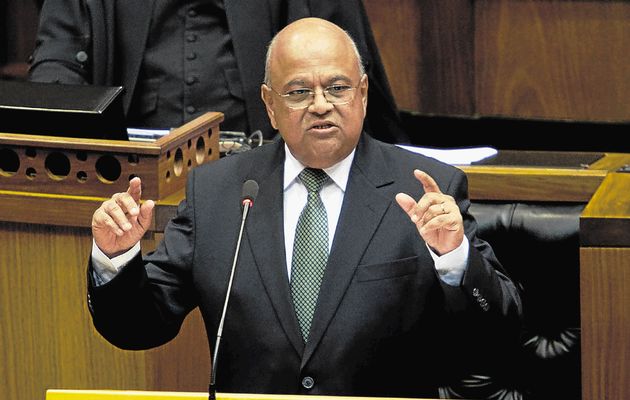
JOHANNESBURG — Markets yesterday welcomed Jacob Zuma’s reinstatement of a respected former finance minister, a rare political reversal that exposed the South African president’s vulnerability ahead of local elections and the race to succeed him. South Africa’s currency, the rand, rose around 5 percent to 15,10 against the dollar yesterday after Zuma said Pravin Gordhan would return as finance minister, a post he held from 2009 to 2014.
Gordhan’s reappointment came after a frantic few days which began with the unexpected dismissal of Nhlanhla Nene as finance minister last Wednesday. Nene was succeeded by David van Rooyen, a little-known parliamentarian who lasted just four days in office. His appointment sparked widespread outrage and a slump in the rand to a historic low of more than 16 to the US dollar.
The yield on two-year local-currency government bonds fell to around 8 percent as prices rose yesterday, from around 9 percent on Friday. The yield was 7,6 percent before Nene’s dismissal. “I’m relatively familiar with the terrain we have to work with and its challenges,” Gordhan said yesterday at a press conference — after the ministry’s spokeswoman had introduced him, mistakenly, as Nene.
“Our government is acutely aware of the financial impact this has had on those who are invested in our economy,” the minister continued. “Our humble appeal is ‘for you’ to work with us as we continue to build a resilient economy and a better life for all South Africans.”
However, despite the mini-rally following Gordhan’s appointment, investors said the rand and South African bonds were unlikely to recover further to levels seen before Nene’s departure.
“The damage ‘from the turbulence in the finance ministry’ is done. You’re in a country where you can expect such moves — that’s never reassuring,” said Viktor Szabo, a senior investment manager at Aberdeen Asset Management.
Zuma acknowledged that he had given in to the condemnation of investors and political opponents, who called the series of changes in the finance ministry indicative of his reckless management of an economy in turmoil.
“I have received many representations to reconsider my decision,” Zuma wrote late Sunday of his decision to return Gordhan to the treasury.
“As a democratic government, we emphasise the importance of listening to the people and to respond to their views.” Meanwhile, faith in Zuma’s stewardship of Africa’s most sophisticated economy has evaporated as annual growth slides toward 1 percent and public debt creeps up.
This month, Fitch Ratings cut South Africa’s debt to a notch above “junk,” or speculative-grade, status and Standard & Poor’s Ratings Services lowered its debt outlook to negative from stable. — WSJ.



 Online Reporter