admin
admin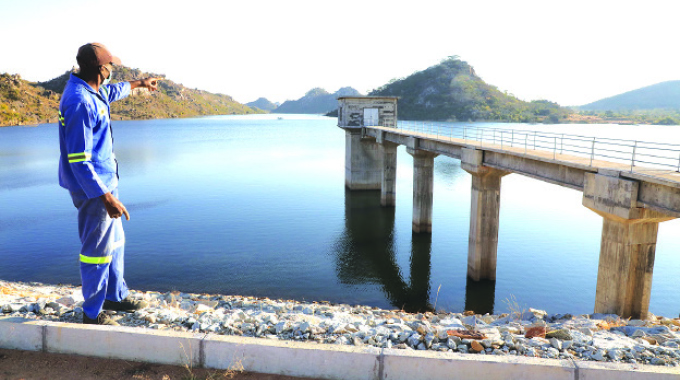
Rumbidzayi Zinyuke-Senior Reporter
Marovanyati Dam does not only have great significance to the economic development of Buhera, but it also has a big social and cultural value to the communities in the district.
Buhera was one of driest districts in the country with average annual rainfall of between 650 and 700 mm. For decades, most of its rivers would run dry months before the rain season began and even after the rains, flow would be minimal.
Mwerihari remained the only river that would trickle life giving precious water down to the thousands of households in Buhera.
But because of the minimal flow, most people had to rely on either boreholes or small holes dug where the rivers used to flow known as mufuku, for household use and their livestock.
“Mwerihari is the biggest river in Buhera, it is the one source of water that we always knew would not dry out as we were growing up. Although the river would only have pockets of water here and there, it would never completely dry out. We would sometimes dig out small holes in the river so that our livestock could have water,” said Mr Nicholas Zinhanga from Murambinda.
Villagers say the construction of Marovanyati Dam has helped to keep the water flowing in Mwerihari, giving Buhera life.
One year after the completion of Marovanyati Dam, Mwerihari has not dried up.
Instead, it is giving more water than it has ever done in decades.
Mr Zinhanga was one of the many locals contracted to work on the construction of the Dam. He says he is happy that he played a major role in building something that has given life to his home area.
“I am a builder and we worked with the Chinese contractor on this Dam. I know so much about it and I can tell you that Buhera will never dry up again. This Dam will never overflow. It is strong and even if we are to receive more rain than we did last year, it will never give in. For the first time in decades, Mwerihari is still flowing months after the rains stopped,” he said.
Marovanyati is named after one of the three mountains surrounding the Dam.
Standing majestically to the North West, there is Marovanyati Mountain, Dukutira Mountain to the north and Bwenje Mountain to the South. Many other smaller mountains surround the gigantic reservoir.
Three rivers feed into the dam, the biggest of which is Mwerihari. Just a few kilometres upstream, Dzarova River flows into Mwerihari and converges with Nyaurungu flowing from the South.
“Dzarova and Nyaurungu rivers used to dry up completely in the past, but since the dam was built, the two rivers are still flowing. We have many villages that rely on the two rivers and they are now happy because they do not have to walk long distances to Mwerihari for water,” said Mr Zinhanga.
Buhera District Development Coordinator Mr Freeman Mavhiza said the Dam was changing the lives of people in the district for the better.
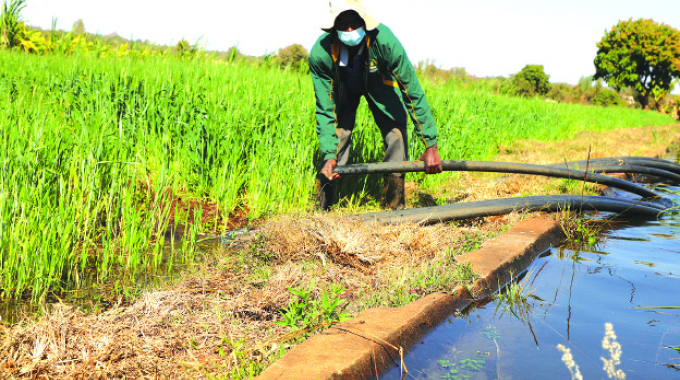
“With Marovanyati dam in place, we are assured of water supply and this will definitely improve productivity and the livelihoods of thousands of families. We are expecting to see increased agriculture productivity as well as the industries,” he said.
Marovanyati Dam has storage capacity of 50 million cubic metres and gets its water from Mwerihari, which has an annual flow of 182 million cubic metres.
Experts say the dam will always have adequate capacity to meet demand which is expected to surge to 600 mega-litres by 2030.


 Online Reporter