Online Reporter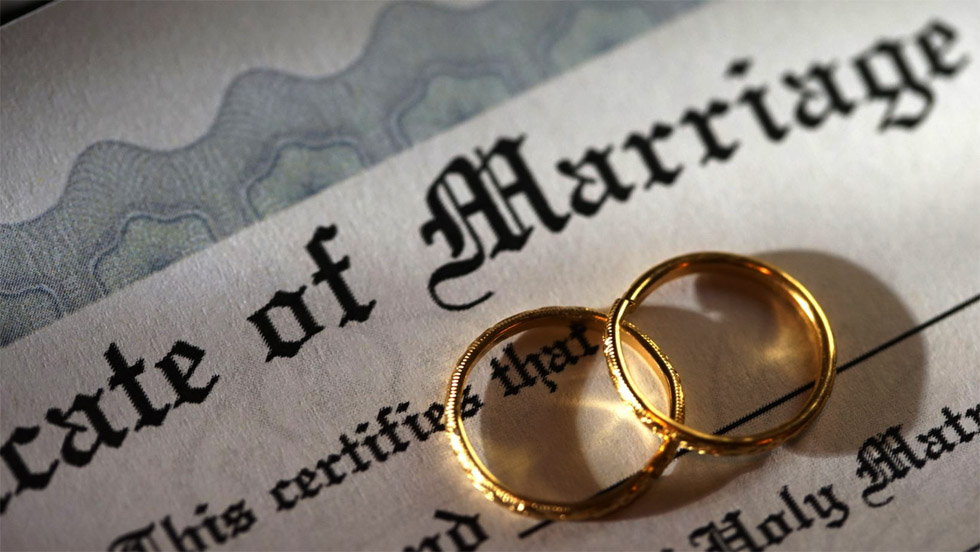
Trust Maanda
Legal Position
MARRIAGE matters in estate planning.
The way you run your life now prepares you for how your beneficiaries will find it easy to benefit from your assets after your death.
How easy it will be for the widow or widower, and to some extent, your children, to inherit your assets, where you die intestate, will depend largely on the type of marriage you have with your wife.
The type of marriage you get married determines the laws that apply to how your estate will be distributed upon your death.
Your marriage therefore should be a factor in estate planning. If you are married in terms of the civil marriage which is not potentially polygamous, you cannot get legally married to another spouse.
In a marriage like that where the man dies intestate, it is easy for a widow, on production of the marriage certificate, to prove that she is the sole surviving spouse of the deceased even if other women claim to have been his other wives.
Depending on the circumstances of each case, generally our laws of inheritance recognise all the marriages as valid for inheritance.
Where you die intestate, the law makes provision for who should inherit what property from your estate. If you do not plan who will inherit your estate, the law will do that for you.
If you do not apportion to your beneficiaries who should inherit what from your estate, the law will decide that for you, with results you may have never intended.
The distribution will be done in terms of what the law provides for in the event of an intestate distribution.
A surviving spouse has a right to inherit matrimonial home and household goods and effects where the spouse dies intestate.
In order to prove that one was a spouse of the deceased, there are certain things that must be proved to show the existence of a marriage.
Depending on the marital status and type of marriage, proving oneself to have been a spouse of the deceased may be difficult in certain circumstances, especially where the marriage was not registered.
This is the reason why there is need to be acquainted with the marriage laws and the rights that flow from each type of marriage, because depending on the type of marriage, certain requirements must be met to prove the eligibility of the beneficiaries and to the property they can inherit.
Parties to a marriage out of community of property are legally entitled to own and dispose of property in their individual capacities.
In Zimbabwe, marriage is out of community of property. It means that each spouse can own property in their personal names.
The property owned by a spouse is not regarded as jointly owned by the parties to the marriage by virtue of the marriage.
Spouses are equal partners, each with the capacity and freedom to hold and dispose of property independent of the other.
Marriages in Zimbabwe are out of community of property. Spouses in a marriage out of community of property are legally entitled to own and dispose of property in their individual capacities. The import of a marriages out of community of property is that a spouse can own, in his or her personal capacity, movable and immovable property.
A spouse who owns an immovable property registered in his or her name, be it the house used as the matrimonial home, has the right to dispose of it by will to any person he or she chooses.
A marriage contracted according to customary law shall be regarded as a valid marriage for the purposes of inheritance notwithstanding that it has not been solemnised, but such a marriage shall not be regarded as valid for purposes of inheritance if when it was contracted either of the parties was married to someone else in accordance with the law under which persons are not permitted to have more than one spouse.
This means that a customary marriage which occurs after a civil marriage of one of the spouses has come into existence is not valid. This is for the obvious reason that the civil marriage is monogamous and admits of no other marriage.
However, the status of marriage of their parents does not affect the children’s right to inheritance from their father’s estate.
This is so because the Constitution of Zimbabwe is very clear on the rights of children and that any matter concerning them should be on the application of the notion that the best interests of the children are paramount.
If you want to plan for what happens to your estate, you must choose what type of marriage you want because it will have a bearing on your estate when you lay in your grave.
TRUST MAANDA is a legal practitioner and a partner at Maunga Maanda And Associates. He writes in his personal capacity. He can be contacted on +263772432646