Online Reporter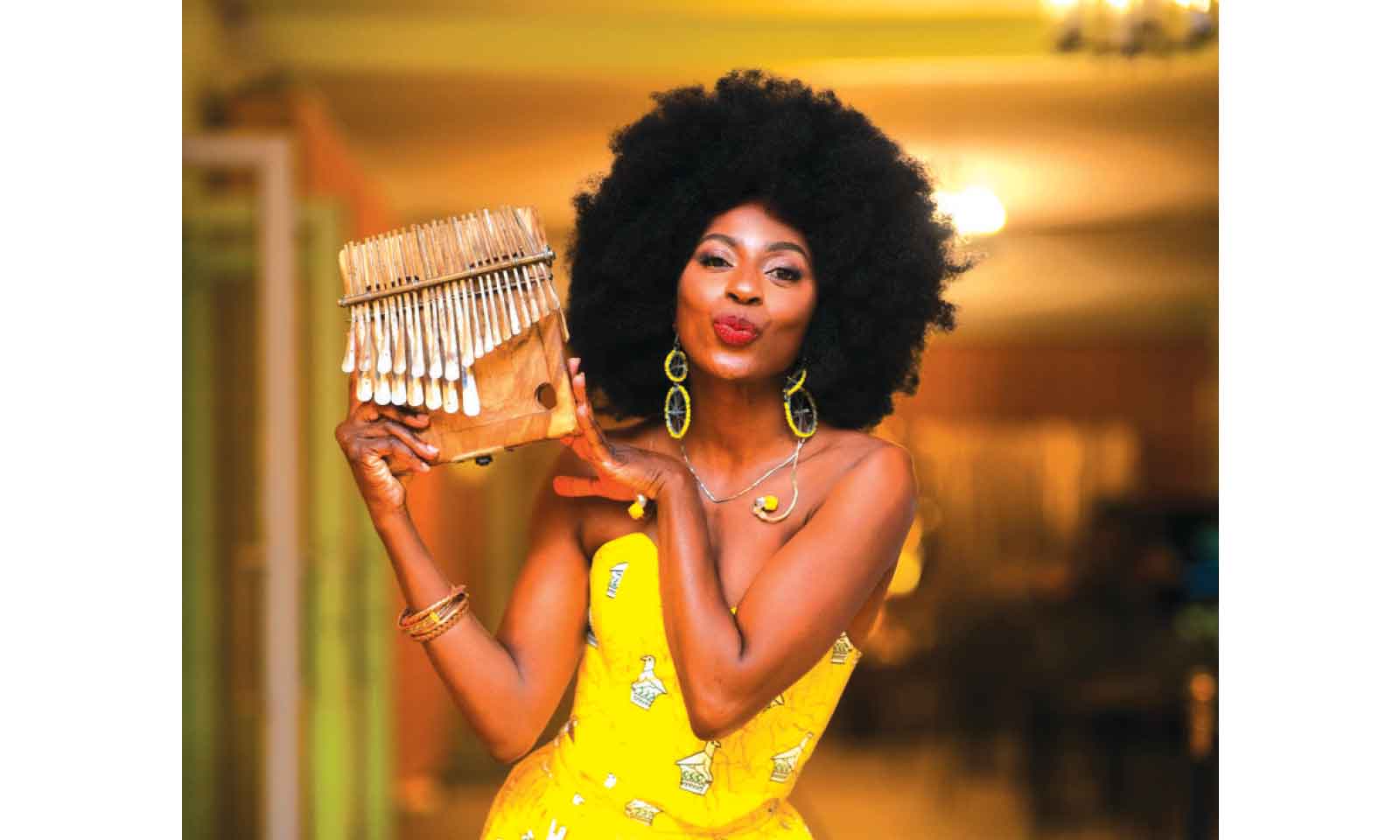
Zvikomborero Parafini
When Hope Masike stepped onto the stage in Norway and Sweden to launch her new collaborative album Moyo with Monoswezi this week, she was not simply performing music — she was carrying Zimbabwean stories across continents.
Fourteen years after first meeting the Scandinavian musicians who would become her collaborators, Masike describes the project as “very musically liberating” — a journey that has grown into a distinct sound known as Afro-Nordic.
Masike, a Zimbabwean mbira virtuoso and cultural ambassador, is part of a band that stretches across borders made up of Hallvard Godal on saxophone and clarinet (Norway), Putte Johander on bass and guitar (Sweden), Calu Carlos Tsemane on percussion and guitar (Mozambique), and Erik Nylander on drums (Sweden).
Together, they form Monoswezi — a collective whose sound has come to be known as Afro-Nordic.
“My solo work and what I do with Monoswezi are very different,” she explains. “My solo music is more mbira-sound-based. Monoswezi’s sound is Afro-Nordic — a fusion of Zimbabwean mbira with Mozambican sounds and Scandinavian jazz.”
The result is music rooted in tradition yet unafraid to expand. While grounded in Zimbabwean and Mozambican musical heritage, the collaboration has evolved into something more fluid — “very jazzy, highlife, electro-feel but remaining absolutely African and Nordic,” she says.
The partnership traces back to 2011, when Masike travelled to Norway through an exchange programme formerly known as Fredskorpset.
Tasked with teaching Zimbabwean music and collaborating with Norwegian musicians, she met Hallvard Godal, who was forming a cross-cultural band.
“We experimented, liked what we heard, and audiences loved the unique mix,” she recalls. “Fourteen years later, the collaboration lives on.”
That longevity, she says, has required openness. Differences in interpreting time signatures — a subtle but profound musical distinction — initially posed challenges.
But rather than seeing cultural differences as obstacles, the group leaned into them.
“We appreciate our differences not as threats but as opportunities to create something unique.”
The album’s title track, Moyo, holds particular personal significance.
On it, Masike recites the Moyondizvo totem poem — a homage to her lineage.
“Obviously the title track, Moyo, has the most personal meaning for me,” she says. “I pay homage to my people.”
Though written collaboratively — with Swedish bassist Putte Johander composing the music and Masike adding melodies and lyrics — the song pulses with ancestral grounding.
It is, at its heart, about love. “This album is about love,” she says. “I hope audiences connect with the love from vaera Moyo and Zimbabwe at large. As they say, ‘We need more love in this world.’”
She describes cross-cultural collaboration as enriching, expanding her musical vocabulary and worldview.
“Learning new music approaches adds unique tools to a musician’s toolbox,” she says. “It has taught me to be more tolerant and appreciative of cultural differences.”
She calls the sound they have created rare. “Afro-Nordic music experiments aren’t too thick on the ground,” she notes, adding that the friendships formed “between the sun and the cold” have been just as rewarding as the music itself.
As Masike prepares to launch the album in Norway and Sweden, her intention remains simple yet powerful.
“I want my performances to comfort, heal, bring warmth and hope,” she says. “If you leave my concert feeling this way, I am fulfilled.”
Masike says her music continues to evolve through interaction with other cultures — incorporating new rhythms and vocalisations. Beyond music, she is also preparing to release a new book, her fifth, though this one departs from her previous poetry collections.
And while she remains rooted in mbira — “it remains my favourite instrument to play on stage” — her listening tastes span from Mbuya Stella Chiweshe’s Mbira Trip to American R&B singer K. Michelle.
If she could summarise the album in three words? “Love. Art. Power of life.”
With Moyo, Hope Masike and Monoswezi are not simply blending continents. They are building a bridge — one mbira note at a time.