admin
admin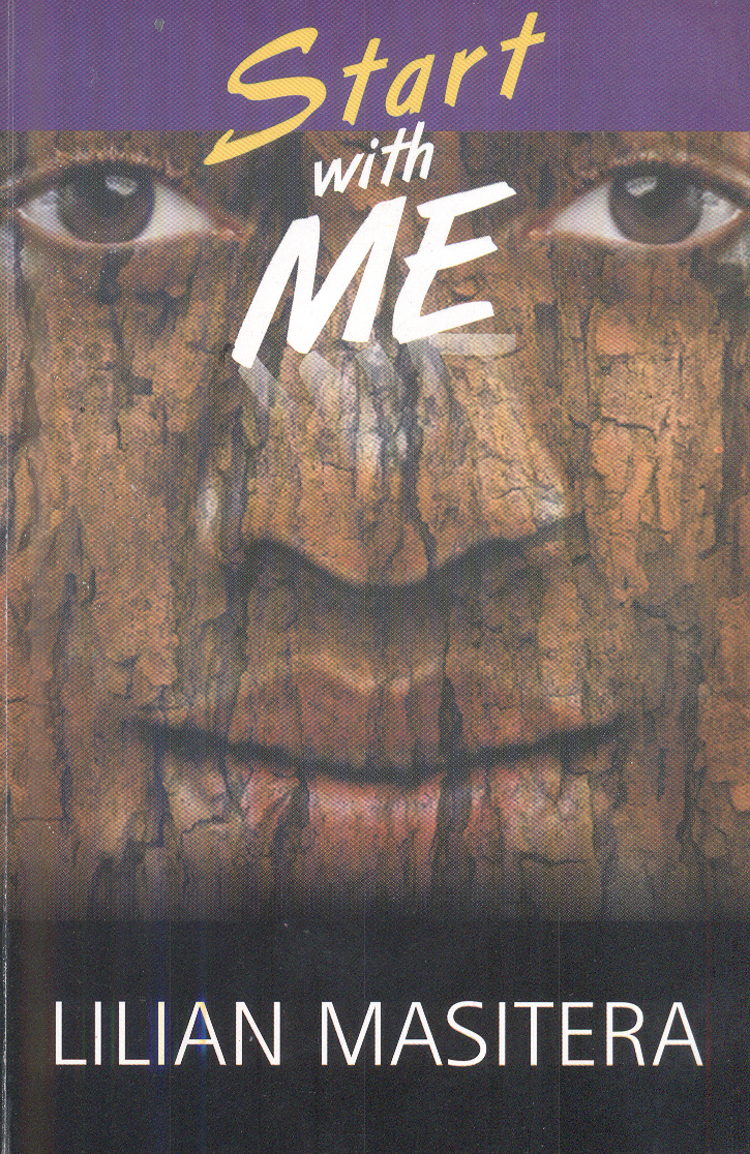
IN the traditional African household, a girl is often brought up believing that marriage, bearing children and doing house chores are her purposes in life.
Education is in some cases deemed unimportant as it has nothing to do with finding a hubby.
Needless to say, these are perceptions that are constantly being confronted, with new boundaries persistently being pursued.
Pushing those boundaries is Lilian Masitera.
Her book “Start with Me” takes a plunge into the depths of typical Zimbabwean families and the values which they live by, interrogating issues of marriage women’s roles.
Fusing humour with insight, Masitera skilfully enjoins the reader to question age-old stereotypes.
In Edna and Rudo, Masitera has created two contrasting characters who are connected by blood and separated by their world views.
The two sisters live in separate realms despite having been brought up with the same family values, signifying how personal choices can define lives. Edna “chooses” to be a victim, drinking from the cup of her father’s unpalatable concoction of early early marriage and thereafter living as a slave to the husband.
This is not to say Edna has given up on life: she is a hard-working woman who wants something better for her children.
The living conditions she endures are captured thus; “The air inside the cabin was hot and still. Edna mopped her brow.
Everywhere sweat flowed: under her armpits, down her neck, spine and groin. Afraid that she might dry up into biltong, alive, Edna crawled out of the makeshift door of the scrap iron hut.”
The heat radiates from the pages in these passages, capturing the undesireable conditions of both the weather and the social situation.
Edna’s older sister, Rudo, is an educated, successful and happily married woman who does not give much truck to what society says of her lifestyle choices. She is the mirror of the “emancipated” woman, armed with knowledge and blessed with independence.
On the other hand, Edna believes children are the cornerstones of marriage – which sits at odds with the reality of the circus that is the family of three children that she grew up in.
Rudo, maybe as some sort of psychosocial reaction to the circus she grew up in, thinks children are not the be all and end all of marriage and happily lives in childless union.
And children can become victims of their parents’ baggage, as seen when Edna’s daughter is faced with becoming a drop-out because her husband decides she should stop working even though she takes care of the dead beat.
I could write another book on all the nuggets that are the building blocks of this gripping novel.
Suffice to say, the story is fast-paced with shortcomings easy to overlook because of the compelling authorship.



 Online Reporter