admin
admin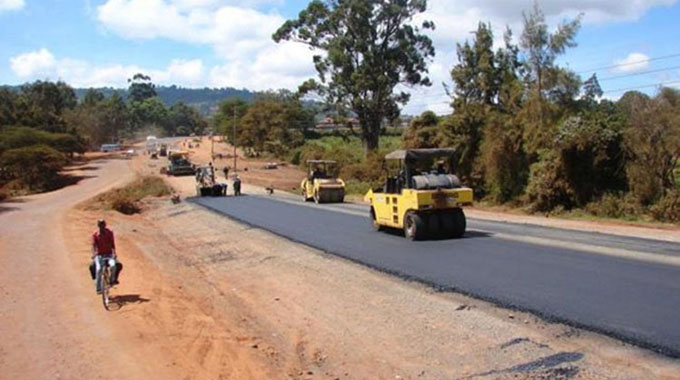
Nqobile Tshili-Bulawayo Bureau
MASSIVE roadworks are underway in Matabeleland North after the Government allocated $554 million to the province under the Emergency Road Rehabilitation Programme (ERRP).
Hundreds of locals across the districts have benefited jobs that have since been created.
Local authorities and the District Development Fund (DDF) are the project implementers.
From the allocated $554 million, road authorities have received $58 million so far.
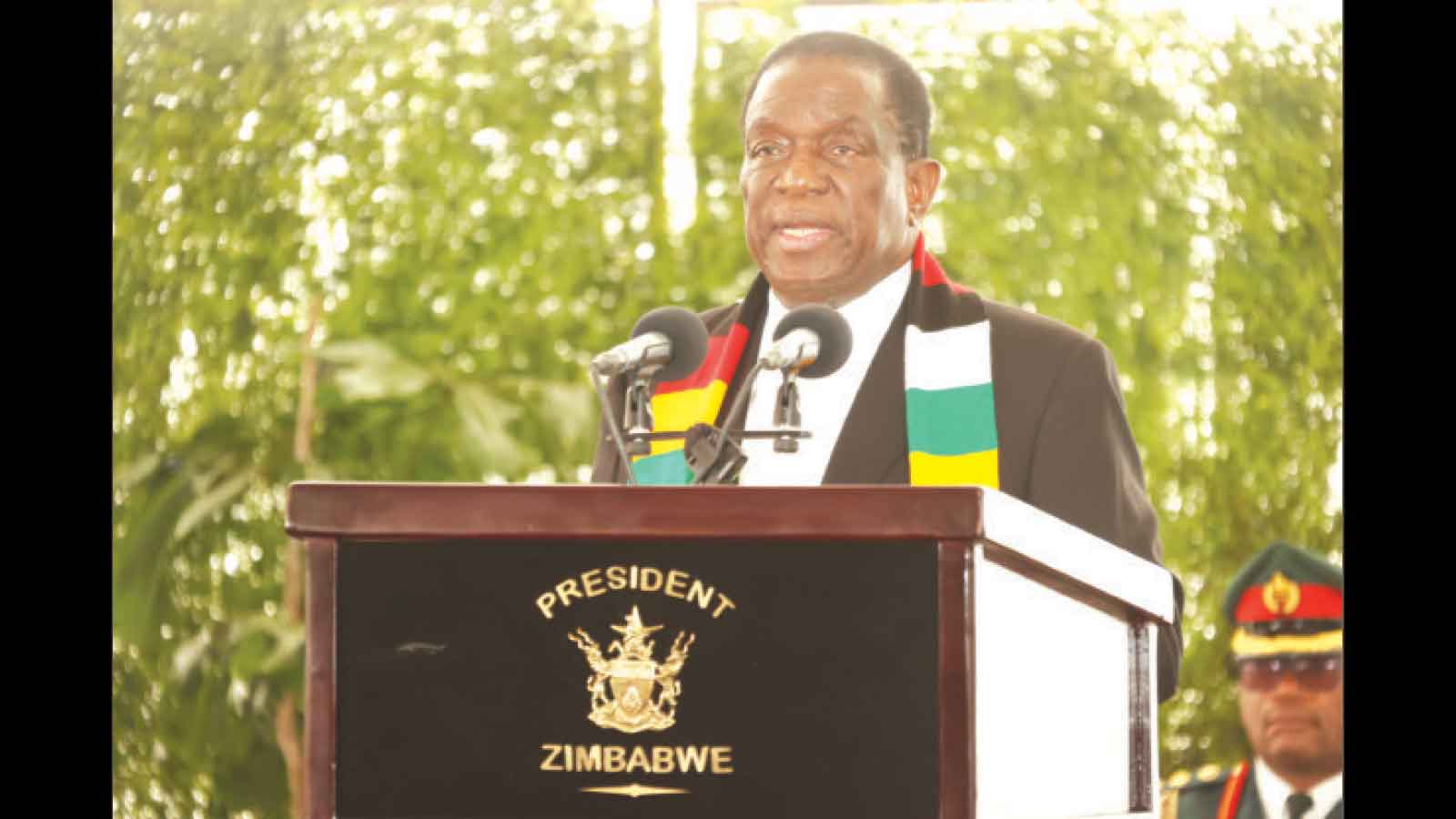
President Mnangagwa launched the ERRP in April after rains damaged most of the country’s roads in the 2020/21 rainy season.
The ongoing rehabilitation works include pothole patching, resealing and regravelling of some of the major roads in the districts.
Road authorities are expected to wrap up most of the road rehabilitation projects before the rainy season starts.
In an ERRP status report for Matabeleland North that Chronicle is in possession of, construction works are progressing relatively well across all the local authorities in the province.
The report shows that the provincial capital, Lupane Local Board was allocated more than $65 million and so far, approximately $8 million has been released.
The local board is expected to gravel some of the roads while it is at 82 percent completion of the routine maintenance of its roads.
Victoria Falls City Council was allocated $105 million and $12 million has been disbursed to the local authority.
Road maintenance works are ongoing in the city which has requested a further disbursement $9 million after providing acquittals for completed works.
Government’s policy is that for accountability purposes funds are only disbursed when road authorities have completed acquittals proving completion of previous works.
Government has also allocated $118 million to Hwange Local Board (HLB) with $2 million having been disbursed to the local authority.
The allocated funds have been used in patching potholes, resealing of roads, clearing of storm drains among other routine road maintenance programmes.
Nkayi Rural District Council (RDC) was allocated $82 million and $5 million has been disbursed while neighbouring Bubi RDC received more than $2 million from its $31 million allocation.
The report shows that Tsholotsho RDC was allocated $24 million and $2,8 million has been disbursed. The RDCs are mainly regravelling, resealing and clearing vegetation near their major roads while resealing some of them.
On the other hand, the DDF is expected to conduct spot gravelling of 222km of selected roads in the province and has covered 26 percent of the works.
It is also expected to reshape or regrade 1346km and has since covered 500km, translating to 33 percent completed works.
On the other hand, DDF is expected to conduct 350KM drainage structure repairs and has completed 256km which is equivalent to 73 percent of the works.
DDF is also expected to conduct pothole filling, vegetation clearing and open drainages in selected roads.
Local authorities have commended Government for funding the ERRP project.
Responding to questions from Chronicle, Bubi RDC chief executive officer Dr Patson Mlilo said most of the roads in the district had been badly damaged and the ERRP was a timely intervention.
“First and foremost, I would like to thank and acknowledge the good work being done by the Government to introduce the ERRP. It’s a wonderful programme and it will benefit Bubi as almost all our roads were in bad shape.
“It gives us an opportunity to clear the bush on them, grade them, spot gravel and put some drainage on them.
“The programme has allowed us to employ close to 700 people thereby creating employment and improving local economic development as people are made financially liquid,” said Dr Mlilo.
“Public transport can now travel to remote areas that were not accessible. Also, the fact that residents are seeing their council doing service delivery works means they are likely to have trust in it and pay their tariffs.”
He said failure to access fuel in local currency as some contractors were demanding payments in forex are some of the challenges that they were facing.
“Fuel for plant and equipment is only available in US dollars whereas the council has local currency only. Contractors want their payments in US dollars or local currency converted using unofficial (black market) exchange rate which is too high,” he said.
HLB public relations officer Mr Dumisani Nsingo said the ongoing ERRP programme has significantly improved the road network in formerly Hwange Town.
“The reseal at Chibondo low-density suburb’s Dingani Road has improved traffickability. Before work was carried out the road was littered with potholes and cracks making it difficult for motorists to manoeuvre. Roadside vegetation clearing at a bend along Baobab Drive and Independence Road respectively has improved road visibility to motorists and this can reduce the risk of accidents,” said Mr Nsingo.
He said storm water drainage clearance could avert flash floods in the future.
Matabeleland North Provincial Affairs and Devolution Minister Richard Moyo said the province was relatively satisfied with road construction works being implemented.
He said there is however a need to address issues to do with access to fuel which was affecting road rehabilitation works.
“In most parts of the province, the ERRP is moving very well and communities are satisfied with works being done. But in areas such as Hwange among other RDCs, there is a fuel problem that is affecting the project. They have no access to fuel in local currency as they do not have Central Mechanical Equipment Department (CMED) which supplies fuel in other areas. We cannot depend on private service stations as most of them do not want to provide fuel in local currency in bulk,” said Minister Moyo.
He said there is a need for the Ministries of Transport and Infrastructure Department and Energy and Power Development to work closely so that road rehabilitation works are not affected by fuel shortage.



 Online Reporter