Gibson Mhaka-Zimpapers Politics Hub
THE Second Republic’s response to the devastating hailstorms that struck Masvingo Province demonstrates the importance of a people-centred Government that places the protection of lives, restoration of livelihoods and recovery of essential services at the heart of its national development agenda.
When disaster strikes, the true measure of leadership lies not merely in expressions of sympathy, but in the ability to mobilise resources, coordinate emergency interventions and provide practical assistance to affected communities.
In Masvingo, the declaration of a State of Disaster by President Mnangagwa and the subsequent emergency measures announced by Government reflect a recognition that citizens facing calamity need timely, organised and compassionate intervention.
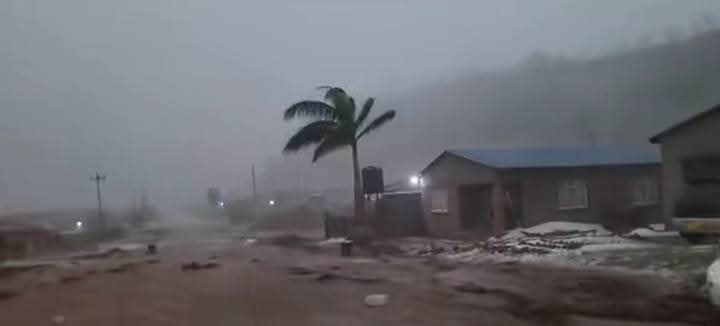
The hailstorms that struck the province on October 6, 2026, left a trail of destruction across homes, schools, health facilities, agricultural projects, business premises and critical infrastructure.
The scale of the damage presents a formidable challenge, requiring an urgent response that protects vulnerable households while laying the foundation for long-term recovery.
According to a report presented to Cabinet by the Minister of Local Government and Public Works, Cde Daniel Garwe, approximately 17 000 houses and 8 500 rooftops were affected.
Five health centres, 29 schools, five tertiary institutions and Government offices and housing units also sustained damage.
The disaster disrupted electricity supplies, water and sewer services, business operations and other essential public utilities. Agricultural production was affected, while 2 060 market stalls serving more than 6 000 traders were also damaged.
These figures illustrate the extent to which a natural disaster can threaten livelihoods, interrupt children’s education, compromise healthcare delivery and undermine economic activity.
They also explain why Government intervention must extend beyond immediate relief to encompass rehabilitation, reconstruction and measures that help communities withstand future emergencies.
Against this background, President Mnangagwa’s declaration of a State of Disaster is a welcome development.
It provides an important framework for coordinating assistance, mobilising resources and directing attention towards the needs of affected communities.
The declaration also signals that the destruction in Masvingo is not simply a local inconvenience to be left to individual households to overcome.
It is a national concern requiring collective action, with Government taking responsibility for coordinating the response alongside local authorities, the private sector, development partners and civil society.
The Second Republic has consistently emphasised a development approach centred on citizens and the principle that no one and no place should be left behind.
Such commitments acquire practical meaning when public institutions respond to the immediate needs of people whose homes, livelihoods and access to essential services have been disrupted.
The dispatch of 90 tonnes of mealie-meal and 90 tonnes of rice to assist vulnerable households is one such intervention.
Food assistance is particularly important for families whose earnings have been interrupted and whose resources may have been depleted by the destruction of property.
The support is intended to reach 6 711 vulnerable households, including elderly people, persons with disabilities, child-headed households, children and chronically ill persons.
Prioritising these groups is essential because their circumstances can make recovery more difficult without targeted assistance.
Equally significant is the deployment of 40 social workers to provide psychosocial support, complemented by faith-based organisations.
Disasters leave more than damaged buildings in their wake; they can also cause distress, uncertainty and emotional trauma, particularly among children and families who have lost their homes or possessions.
By incorporating psychosocial assistance into the response, Government is acknowledging that recovery must address both material needs and human wellbeing.
The rehabilitation of public infrastructure is another important component of the intervention. Government has reported that 33 damaged Government houses are being renovated, with the remaining 15 expected to be completed within a week.
Electricity supplies to affected health facilities, including Masvingo Provincial Hospital, are also being restored.
These measures matter because health facilities, schools and public utilities are essential to the functioning of communities.
Restoring them helps residents regain access to services while reducing the risk that the initial disaster will trigger further social and economic difficulties.
The replacement of damaged telecommunications infrastructure, solar installations, computer laboratories and electricity-support systems at educational institutions is similarly important. Schools and colleges must recover not only their buildings but also the infrastructure required to support learning and administrative operations.
Government’s call for fair pricing of building materials is another welcome intervention. Reconstruction inevitably increases demand for roofing materials, cement, timber and other essential supplies.
Unreasonable price increases during such a vulnerable period would place additional pressure on families already struggling to rebuild.
The appeal for fair pricing should therefore be accompanied by cooperation among suppliers, traders, local authorities and relevant regulatory institutions to ensure that reconstruction materials remain accessible and that affected residents are not exploited.
However, the scale of the destruction means that emergency assistance must be sustained beyond the initial response.
Damaged homes need durable repairs, farmers require support to restore production, traders need to resume operations, and schools must be rehabilitated so that learners do not suffer prolonged disruption.
The activation of a Command Centre at the Masvingo Civic Centre provides an important coordination mechanism. Effective coordination will be crucial in identifying outstanding needs, avoiding duplication of assistance and ensuring that available resources reach the most affected communities.
The Whole-of-Government and Whole-of-Society approach outlined in the response is therefore appropriate. Government institutions, businesses, development partners, churches and community organisations each have a role to play in mobilising resources and supporting recovery.
Ultimately, the Masvingo disaster presents an opportunity to strengthen preparedness, improve early-warning systems and reinforce the country’s capacity to respond to climate-related emergencies.
The Second Republic’s response will be judged not only by the emergency measures announced, but also by their implementation, the speed of recovery and the lasting support extended to affected families.
For now, the declaration of a State of Disaster, the mobilisation of food supplies, the deployment of social workers and the restoration of essential services represent important steps towards protecting citizens and rebuilding affected communities.
A Government’s responsibility to its people becomes especially visible in times of hardship. By placing emergency relief and recovery at the centre of the Masvingo response, Government has demonstrated its commitment to standing with citizens when they need assistance most. The priority now is to sustain that commitment until affected communities can rebuild their homes, restore their livelihoods and return to normal life.