Online Reporter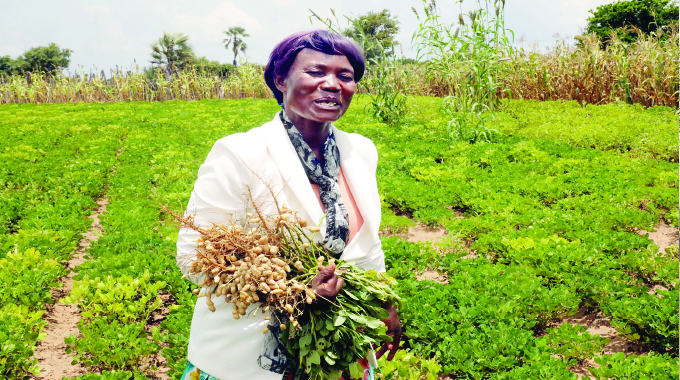
Peter Matika, [email protected]
THE Government has expressed satisfaction that smallholder farmers in arid and semi-arid regions have dedicated more land to small grains this year, with Matabeleland North province anticipating a bumper harvest.
This shift to small grains reflects a growing understanding among farmers, who are now adopting sustainable agricultural practices in response to climate change. Small grains, such as sorghum and millet, thrive even with limited rainfall, making them ideal for arid and semi-arid regions.
During a field day held on Wednesday in the Tshitatshawa area of Tsholotsho District, the Government expressed optimism that small-scale farmers, often working with limited resources, are on the verge of making a significant impact in the fight against hunger in their communities.
“Farmers in arid and semi-arid areas have long faced the challenge of unpredictable weather and limited resources. However, the Government’s latest initiative aims to empower these ‘agricultural warriors’ by providing them with the necessary tools, training, and support to harness the potential of small grains,” said Mr Leonard Munamati, acting chief director of Agricultural and Rural Development Advisory Services (Ardas), speaking on behalf of Dr Obert Jiri, permanent secretary in the Ministry of Lands, Agriculture, Fisheries, Water and Rural Development.
The host farmer, Mrs Sitshengisiwe Ndlovu-Moyo, used Pfumvudza/Intwasa to grow pearl millet and other small grains.
“This is what we are encouraging farmers from this region to do. We have seen an increase in volumes of traditional grains compared to maize, which is as it should be, given the erratic rains often received in the province,” said Mr Munamati.
He said farmers in the region are encouraged to use Intwasa/Pfumvudza to conserve moisture so that they can harvest even in drought years.
“The main principle of Intwasa/Pfumvudza is conservation agriculture, which emphasises minimal soil disturbance, permanent soil cover, and crop rotation,” Mr Munamati said.
Under the Pfumvudza/Intwasa initiative, farmers cultivate small plots and use mulch to conserve moisture and protect the soil from erosion.
Pfumvudza/Intwasa has been hailed as a transformative method of cultivating crops, especially by small-scale farmers, facilitating a transition from subsistence to commercial farming due to its simplicity and effectiveness.
Mrs Ndlovu-Moyo said she has been using the Pfumvudza/Intwasa method to grow crops for the past few years and has recorded good harvests.
She stressed the need for the community to work together and share ideas on how to boost production.
“When we support each other as farmers, we are investing in our future,” said Mrs Ndlovu-Moyo.
She acknowledged that while challenges remain, the commitment to nurturing traditional crops offers a beacon of hope for many families.
“We are experiencing changes in the weather due to climate change. As farmers and people of this region, we have to come together and implement what we have been taught. For many families in arid and semi-arid areas, the struggle with food insecurity is an everyday reality,” said Mrs Ndlovu-Moyo.
She said small grains are drought tolerant and thus offer a sustainable solution to the persistent food shortages despite the climate change being experienced.
“I have grown sorghum for years, but this year I expect a bumper harvest due to the good rains,” said Mrs Ndlovu-Moyo.
She called on the Government to train farmers in sustainable and smart agriculture to guarantee food security, even in arid regions.