Chronicle Editor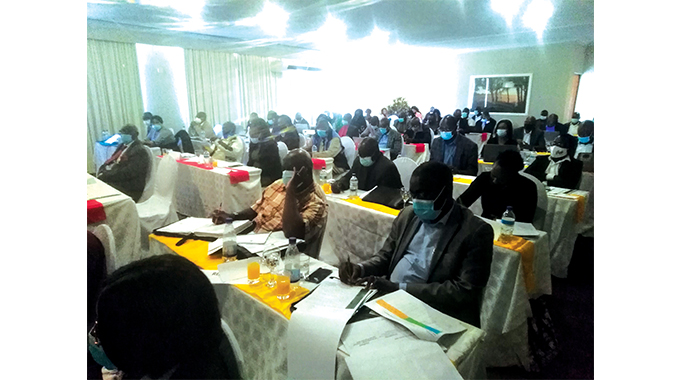
Leonard Ncube, Victoria Falls Reporter
MATABELELAND North province has the potential to transform into Zimbabwe’s lead province in terms of development if its natural resources and human capital are fully exploited.
The story of Matabeleland North is that of a person whose feet are in water yet he or she is thirsty judging by lack of development on the ground.
People in this province that boasts of natural resources such as coal, gold, tin, tungsten methane gas, timber and wildlife among other resources, have been complaining about perceived marginalisation of the province.
The province has just two big towns which are Hwange and Victoria Falls as its capital Lupane town is in its infancy.
Matabeleland North has Zimbabwe’s biggest game park in Hwange and is home to the Victoria Falls, one of the Seven Wonders of the World.
Victoria Falls city, the country’s prime tourist destination, has been designated a Special Economic Zone.
Matabeleland North province is key not only to Zimbabwe but to five Sadc countries that make up the Kavango-Zambezi (Kaza) Transfrontier Conservation Area constituted by parts of Angola, Botswana, Namibia, Zambia and Zimbabwe.
Projects that are being implemented include the expansion of Hwange Thermal Power Station’s Units 7 and 8, the Gwayi-Shangani Dam and Batoka Hydro Electric Power Scheme which will be starting soon.
The province, however, remains one of the least developed areas in the country in terms of major infrastructure and the general standard of living of the people despite these vast natural resources which rake in millions of dollars.
Lack of a development action plan has been the reason for the province’s failure to transform the available natural resources into revenue which can catapult it into a vibrant economic hub.
The provincial leadership is convinced that the implementation of the Devolution of Power Policy by the Second Republic led by President Mnangagwa has given the province the impetus to speed up development.
The provincial economic blueprint aims at improving the livelihoods of the general citizenry in the rich province in terms of availability of resources but poor in terms of quality of livelihoods according to the latest ZimVac report.
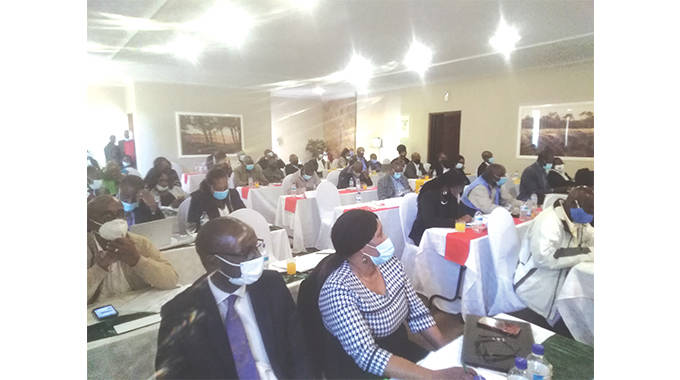
A cross-section of stakeholders are meeting here for a four-day workshop whose main aim is to craft a five-year Provincial Economic Development Plan that will guide the province in implementing Government policies and determine the type of investment needed in line with National Development Strategy 1 (NDS1), a fiscal and macro-economic compass for economic development from 2021 to 2025.
Government has adopted a Devolution and Decentralisation policy which seeks to have decentralised decision making by provincial councils in line with the country’s Constitution.
The country is also pushing a three-phased vision whose ultimate goal is to see an Upper Middle-Income economy by 2030 and this started with the Transitional Stabilisation Plan (2018-2020), NDS1 (2020-2025) and the follow-up NDS2 (2026-2030).
NDS1 has 14 national priorities and each province is expected to formulate its own Provincial Economic Development Plan (2021-2025) as a localised blueprint.
Officiating at the occasion here, Matabeleland North Minister of State for Provincial Affairs and Devolution Richard Moyo said President Mnangagwa wants each province and council to become dynamic economic hub that is capable of luring investors to exploit the available natural resources.
He said the blueprint which will be finalised at the end of the workshop on Thursday will be a reflection of the aspirations of the people of Matabeleland North as it will be guided by the province’s resource endowments.
“Following the launch of NDS1 by President Mnangagwa all the country’s 10 provinces were directed to craft their provincial economic development plans. Under the Devolution Agenda all provinces will be competing to grow their economies and their Gross Domestic Product.
This task is a challenging one as the plan that we will come up with will determine the type of investment that we will attract to our province, this plan is expected to transform the province into an export-led economy that is driven by the private sector.
“Matabeleland North is endowed with vast natural resources. An attractive provincial development plan is the first step in our endeavour to be the best and there is nothing that can stop us from being the lead province,” said Minister Moyo.
He challenged the stakeholders and technocrats to undertake projects that are visible and have a positive impact on the people’s lives in line with Vision 2030.
These projects should be guided by natural endowments and should be in the various sectors that include infrastructure development, mining, water resource development, agriculture, tourism, energy, information communication technology, manufacturing and housing among others to lay a foundation for the growth of the provincial Gross Domestic Product (GDP).
Victoria Falls Mayor Councillor Somveli Dlamini said the province has a number of interconnected resources which can sustain the province if fully exploited.
“When farming is intensified our own farmers will supply our hotels, mines and other big companies. On the same note it is imperative that we cast our focus on working towards our shared vision for the province. Victoria Falls being home to tourism attractions should remain steadfast in pursuing opportunities that increase tourist arrivals,” he said.
In attendance are provincial heads of various Government departments and line ministries, traditional leaders represented by Chief Shana who is chairman of Chiefs Provincial Assembly, local authorities, parastatals, private sector and academics from tertiary institutions.
The Ministry of Local Government and Public Works and Ministry of Finance and Economic Development are spearheading the programme which envisions to tap into the Devolution Agenda being implemented by the Second Republic.
The province has identified provincial priorities and then formed thematic working groups whose mandate will be to craft development matrices leading to the final draft to be availed on Thursday.
The nine thematic areas are Food and Nutrition Security chaired by the Ministry of Ministry of Lands, Agriculture, Water, Fisheries and Rural Resentment, Infrastructure and Utilities chaired by the Ministry of Transport and Infrastructural Development, Economic Growth and Stability chaired by Ministry of Mines and Mining Development, Health and Well-being chaired by Ministry of Health and Child Care, Moving the economy up the value chain and Structural Transformation chaired by Industry and Commerce Ministry, Housing which will be chaired by Ministry of National Housing and Social Amenities, Human Capital Development chaired by the Ministry of Primary and Secondary Education, Environmental protection, climate resilience and natural resources management chaired by the Environmental Management Agency and Governance and Devolution chaired by Ministry of Local Government and Public Works and Cross- Cutting Issues chaired by Ministry of Youth, Sport, Arts and Recreation.
Director for Strategic Policy Planning, Monitoring and Evaluation in the Ministry of Local Government, Mrs Elina Karwi and Mr Charles Mujajati who is director Economic Planning and Modelling in the Ministry of Finance and Economic Development are helping the province in crafting the document.
Mr Mujajati said most provinces are prioritising economic growth and he implored the stakeholders to come up with ways of stabilising their provincial economy.
Mrs Karwi said the development plan should not leave out persons with disability as the thrust of NDS1 is to leave no one behind. — @ncubeleon.



 Online Reporter