


 Online Reporter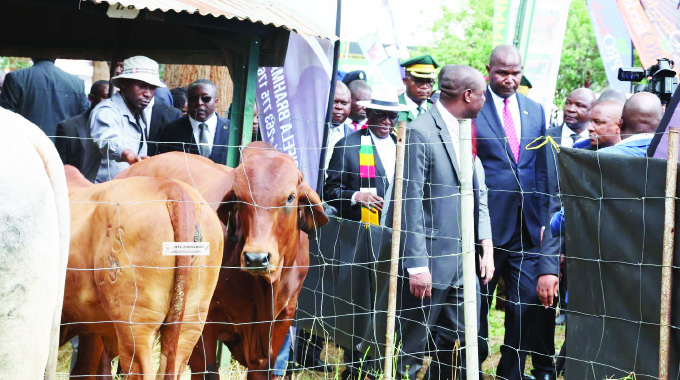
Nqobile Bhebhe, Zimpapers Business Hub
MATABELELAND South is fast solidifying its position as Zimbabwe’s premier livestock breeding hub, propelled by a combination of natural advantages, hardy indigenous breeds, and a new wave of young tech-savvy farmers who are transforming the sector.
Traditionally recognised as the cattle heartland of Zimbabwe, Matabeleland South’s semi-arid landscape has long proven unsuitable for large-scale crop production.
Yet this same terrain, though dry and unforgiving, is a perfect cradle for livestock farming.
Hardy breeds such as Nguni and Brahman cattle graze freely on resilient pastures, thriving under conditions that reflect generations of indigenous farming wisdom.
Now, a generational shift is unfolding across the region.
λYoung farmers are stepping forward, blending traditional ranching techniques with cutting-edge technology and turning livestock rearing into a science-driven future-focused enterprise.
λFrom mobile livestock tracking to structured breeding programmes, these young entrepreneurs are raising the bar.
λArtificial insemination, veterinary mobile services, and genetics monitoring are no longer novelties, they are becoming standard practice on progressive farms.
This transformation has been catalysed by government-backed youth empowerment initiatives, private sector partnerships and training programmes offered through agricultural colleges.
The impact is tangible. Young livestock breeders from the province have recently outshone their peers at top national platforms, including the Zimbabwe International Trade Fair (ZITF) and provincial shows, clinching awards for excellence in animal health, genetics, and presentation.
One standout example is Mr Mthandazo Nkolomi who leads Sifela Brahmans at Hamden Farm in Gwanda. Although relatively new to pure genetics breeding, he began in 2019 and Mr Nkolomi is already making waves in the livestock industry.
“We started with stud breeding in 2019 at Hampden Farm in Gwanda and our impact in the sector has been felt. We do our own silage to mitigate pasture challenges and in the past two weeks, we have developed two pits,” said Mr Lingani Masuku who is Mr Nkolomi’s farm manager.
“We have entered the technology space at the farm; we have a tracker for all beasts, we have 118 and last year we sold 44. We monitor every movement on mobile and that reduces chances of stock theft, which is rampant in many parts of Gwanda.”
Mr Masuku said the venture is capital intensive and anyone who wants to venture into stud breeding should invest money in order to have quality breeds.
“We track everything; genetics, growth rates, calving intervals. Technology gives us the ability to predict and improve. We do not just leave it to chance anymore,” he added.
Their efforts paid off at the recently held ZITF exhibition, where Sifela Brahmans received high praise from judges and fellow breeders.
“Winning at ZITF will certainly change everything for us. At every show we exhibit, be it at the Gwanda Agricultural Show or in Harare, we scoop prizes.
“It boosts our confidence and shows that we are on the right track. It also shows the older generation that young people are serious about taking this industry forward,” said Mr Masuku.
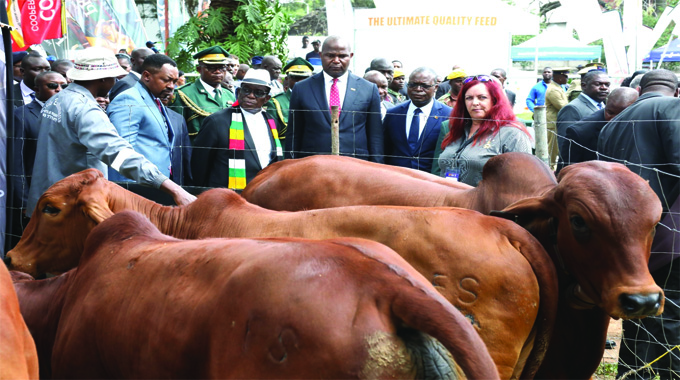
He said they were energised by Vice President Kembo Mohadi’s visit during ZITF who marvelled at their work and was impressed with the quality of livestock from Gwanda.
“Vice-President Mohadi took time to have a conversation with me at the stand. He was surprised that such a quality breed is produced in Gwanda.”
The high profile visit did not end with VP Mohadi.
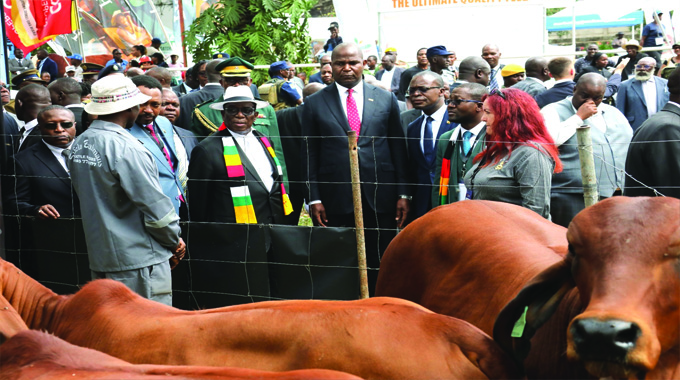
President Mnangagwa and his Mozambican counterpart, President Danial Chapo also spent time at the stand.
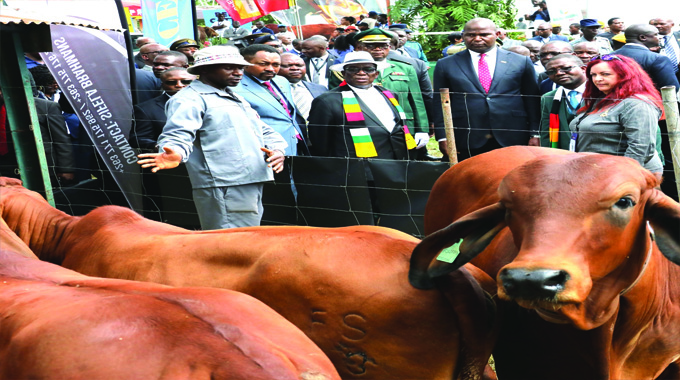
“President Mnangagwa showed keen interest in the livestock. He asked which part of Gwanda we are based and the challenges we face. I highlighted the issue of land constraints, we are on a 35-hectare piece of land which is small for the size of project we are undertaking. We were happy that President Mnangagwa interacted with us,” said Mr Masuku.
He highlighted several other challenges that affect their operations. Erratic rainfall, dipping water tables, and limited access to affordable financing continue to constrain progress, he said.
In response, local authorities and development partners have begun investing in critical infrastructure such as dip tanks, feeder roads, and training programmes that are helping smallholder and emerging farmers scale their operations.
According to the Ministry of Lands, Agriculture, Fisheries, Water and Rural Development, livestock remains a vital income source for two-thirds of rural households and is essential to the inclusive growth of the agriculture sector, national food security, and economic development.
Matabeleland South’s cattle herd, currently standing just above 630 000, has recently shown resilience despite last year’s drought-related loss of 19 000 animals.
The Government expects the livestock industry to reach a US$3,4 billion valuation by year-end, buoyed by a national push for improved productivity through artificial insemination, fodder production, and vaccine development.
As the region looks ahead, the innovation, drive, and adaptability of its young farmers signal not just a livestock resurgence, but the beginning of a broader agricultural renaissance in Zimbabwe, one led by the bold vision of a new generation.


