dyton mupawaenda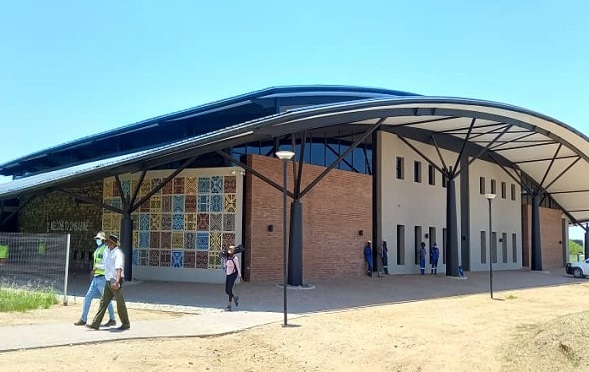
Kuda Bwititi
Political Editor
THE Second Republic has over the past five years been unrelenting in its bid to improve the livelihoods of Zimbabweans.
There has been tremendous headway across all sectors of the economy, including agriculture, mining, construction, transport, communications, manufacturing and social services.
All the country’s 10 provinces have benefited immensely from various projects, leading to the transformation of lives and better standards of living for the people.
Starting this week, The Sunday Mail will profile developments that have taken place across the provinces, as highlighted in a voluminous document titled “Compendium of Projects”, compiled by the Office of the President and Cabinet.
This week, in recognition of national hero and former Vice President Dr John Nkomo, whose 24th anniversary death commemorations were held yesterday, we commence with Matabaleland South, where the late nationalist hailed from. Yesterday, ZANU PF First Secretary and Presidential candidate in the 2023 harmonised elections President Mnangagwa headlined a star rally in the province where Dr Nkomo was born.
The province has recorded outstanding achievements in all its seven districts, which are Matobo (where Dr Nkomo was born, in the Kezi area), Bulilima, Beitbridge, Mangwe, Umzingwane, Gwanda and Insiza.
Matabeleland South’s main economic activities include mining, citrus production and livestock.
The province has over 800 development projects that were implemented by the Second Republic, with 523 completed while 277 are ongoing.
Beitbridge Border Post
The major highlight has been development of the Beitbridge Border Post, arguably the region’s busiest land port of entry.
There have been astounding developments made at the border, including upgrades at immigration counters and light vehicle clearing points, as well as improvements in staff houses.
These efforts have resulted in smooth flow of goods, as well as vehicular and human traffic between Zimbabwe and South Africa.
In the past, Beitbridge was known for its frustrating congestion that caused considerable inconvenience to bus operators, truck drivers, other motorists and ordinary people crossing into the country.
It was common for people to spend long hours at the border, as queues meandered, creating a haven for corruption and chaos.
However, both human and vehicular traffic now flow smoothly at the border, even during the busy festive season when tens of thousands of people return home for the Christmas and New Year holidays.
“I am happy with the new border setup, which has seen traffic being permanently separated into commercial, buses and private cars,” one traveller, Mr Shelton Zviitwa, confided to this publication in December last year.
“Things have improved for the better and I am looking forward to arriving in my village on time to celebrate the Christmas and New Year holidays. Today, we were cleared in less than an hour compared to previous years, where we would spend up to 24 hours,” he said.
An average of 20 000 travellers can be cleared per day, compared to the previous daily capacity of 9 000 people.
A total of 220 flats were also built in Beitbridge to ease accommodation challenges in the town.
Water and infrastructure
The Second Republic sought to expand irrigation development and water harvesting through several dam construction projects in Matabeleland South. The dams constructed include Tuli-Manyange.
Tuli Manyange Dam is poised to put an end to water woes and food insecurity, challenges that have plagued the province for decades.
With a holding capacity of 35 million cubic metres upon completion, the dam is expected to provide raw water for irrigation and boost food security in the province, where the effects of climate change have been taking a toll on communities.
A total of 44 boreholes were rehabilitated in the province, leading to irrigation support for over 1 200 hectares for enhanced agricultural production, and water supply to communities that are presently facing challenges.
People have benefited immeasurably from these water infrastructure projects, particularly through the irrigation schemes.
A case in point is the Tshikwalakwala Irrigation Scheme in Beitbridge district, where the irrigation system was mechanised. The scheme has solar plants that can generate more than 129 kilowatts of power.
The solar plants can result in the irrigation of up to 1 000 hectares, yet the scheme had been lying idle for 15 years, before work to revitalise it commenced in 2019.
Currently, the Tshikwalakwala Irrigation Scheme has over 100 plot holders under it, with most of them being females. These farmers are growing crops such as maize, soya beans and wheat. The projects are transforming their lives through the good returns they are realising.
Also in Matabeleland South is the Richaw Solar plant, touted as one of the biggest renewable solar projects in the country and the Southern Africa region. The project has the capacity to generate 5 megawatts for Matabeleland South
Mining, research and innovation
Construction of an engineering laboratory and innovation complex at Gwanda State University is set to boost mineral beneficiation and exploration initiatives as the country moves towards attaining a $12 billion mining milestone this year.
Also, expansion of the Caledonia Mining Corporation’s Blanket Mine was completed. The project employs about 2 000 people, while gold production soared to 80 000 ounces per annum. The 2022 production figure represents a 19 percent increase, from the 67 476 ounces produced in 2021.
In the past, many areas in Matabeleland South struggled to get internet connectivity. However, countless areas — as well as schools and clinics — are now linked to the internet.
Some of the connected areas are Bonjeni, Esigodini, Glengrey, How Mine, Longfield, Mlomoliwoto, Munkula, Mvuthu, Nsezi, Sacred Heart, Sihlengeni, Sikhoveni, Swazi, Tshalimbe, Sigola, Shale, Sacred Heart, Shale, Sihlengeni, Mzinyathini, Mpisini, Mvuthu, Silobi, Matshetshe, Sikhoveni, Mzinyathi, S Dula Mawabeni, Mbizingwe, Mawabeni and Mvuthu High School.
Road construction and rehabilitation
There is no doubt that, in terms of road rehabilitation, the Harare-Beitbridge Highway upgrading — where about 500 kilometres have been rehabilitated from the border town to the capital — is a stellar project.
However, there has also been massive development of grassroots roads. A total of 101 feeder access roads were rehabilitated in Matabeleland South, stretching hundreds of kilometres.
For example, 19 kilometres have undergone gravelling, while bush clearing, grading and repair of drainage structures have been done for over 200km in Gwanda district. Along Matobo district’s Matankeni-Tudi Road, motorised grading has been done on 20km, drains opening was carried out on over 10.5km, while verge clearing and gravel patching were achieved for over 25km.
Health
Principally funded by devolution funds, several clinics and hospitals are being built or refurbished to improve the quality of healthcare and reduce the distance travelled by residents to get treatment.
At Gwanda Provincial Hospital, there has been extensive renovation of the maternity ward, the Central Sterile Services Department walkway, rehabilitation centre, canteen, and the casualty and administration departments.
Other health institutions that have been upgraded include Lady Stanley Rural Hospital in Bulilima, Plumtree District Hospital in Mangwe, Beitbridge District Hospital, Umzingwane District Hospital and Insiza Hospital.
Education
There has been rehabilitation of more than 100 primary and secondary schools in the province. These developments include the construction or reconstruction of classrooms, new teachers’ quarters and new hostels for boarding schools.
Under the schools digitisation programme, learners are also benefitting from new information and communication technology (ICT) equipment like projectors, tablets for infant classes and mini laptops for junior classes.
There are 16 community information centres across Matabeleland South and most of these are located at or close to schools.
In addition, there are over 81 ICT labs established at schools for improved quality of education, under a programme implemented jointly by the Ministry of Primary and Secondary Education; and that of ICT, Postal and Courier Services.
Decentralisation of passports
Under the Ministry of Home Affairs and Cultural Heritage, there has been decentralisation of passport services to Beitbridge district.
People from the area no longer have to travel to Harare or Bulawayo to access the travelling document. Related to this, completion of the Insiza District Registry is work in progress, in line with Government’s thrust to decentralise access to national registration documents.
The projects in Matabeleland South are too many to mention.
It is clear that the ZANU PF Government, under President Mnangagwa, has all hands on deck to improve the quality of people’s lives.



 Online Reporter