Online Reporter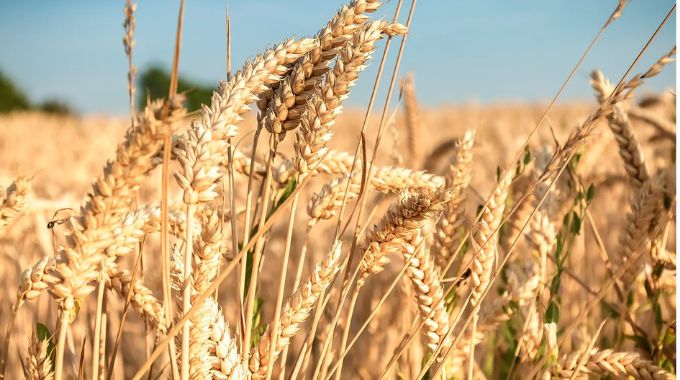
Nyasha Simbisai
HARVESTING of the early-planted winter wheat crop has begun, with more than 300 tonnes already reaped from 41 hectares in Matabeleland, the Ministry of Agriculture, Mechanisation and Water Resources Development has revealed.
Farmers planted 130 316 hectares of wheat this season, surpassing the national target of 125 000 hectares by more than 5 000 hectares. The bulk of the crop is reported to be in good condition across the country.
According to the latest Agricultural Development Advisory Services (ADAS) weekly report, 41 hectares had been harvested by Monday, yielding 300,3 tonnes in the first phase of the harvesting season.
“A total of 130,316ha of winter wheat have been planted, with the crop generally reported to be in good condition across the country. Wheat harvesting has started and 41ha have been harvested to date,” read the report.
Matabeleland North accounted for 40 hectares of the harvested area, producing 300 tonnes at an average yield of 7,5 tonnes per hectare, while one hectare harvested in the communal sector in Manicaland yielded 0,3 tonnes.
“Harvesting in Matabeleland South has been delayed by drizzle, which increased moisture levels. Top-dressing should be completed by booting, while adequate irrigation must be maintained during heading to prevent moisture stress and protect yield potential,” read the report.
ADAS advised farmers and the public to promptly report quelea breeding and roosting sites as well as disease outbreaks.
Meanwhile, wheat field days are continuing across provinces and districts, supported by Early Warning, Early Action (EWEA) advisories aimed at encouraging the timely adoption of recommended farming practices.
This year’s wheat hectarage represents 104 percent of the national target, with six of the country’s eight wheat-producing provinces exceeding their respective targets.
Mashonaland West leads with 36 237 hectares planted against a target of 35 000 hectares, followed by Mashonaland East with 25 850 hectares against 25 000 hectares and Mashonaland Central with 25 476 hectares against a target of 25 000 hectares.
Manicaland planted 16 375 hectares against a target of 15 000 hectares, while the Midlands put 13 567 hectares under wheat against a target of 12 500 hectares.
Masvingo planted 5 302 hectares against a target of 5 000 hectares, Matabeleland South recorded 4 603 hectares against 4 500 hectares, while Matabeleland North planted 2 906 hectares against its target of 3 000 hectares.
Attention is now shifting from crop establishment to protecting the standing crop and ensuring timely harvesting, particularly as wheat planted during the main May window enters the critical grain-filling and maturity stages.
Wheat planted between May 1 and 15 is now at the hard dough stage and faces a very high risk from quelea birds, while crops planted between May 16 and 31, which make up the largest planting window, are at the soft dough stage and face peak vulnerability.
Early-planted April wheat, now at hard dough to maturity stages, also remains exposed to high to very high quelea risk, although susceptibility declines as harvesting progresses.
The latest surveillance report shows new quelea outbreaks concentrated in Mashonaland West, Mashonaland East, Mashonaland Central and the Midlands.
Authorities are implementing targeted control measures, including drone application of Fenthion 640 ULV, while manual scaring, netting and the use of repellents remain options, particularly for smaller wheat fields.
Farmers and communities have therefore been urged to immediately report quelea breeding and roosting sites, as well as crop disease outbreaks, to enable rapid intervention before significant grain losses occur.
The winter wheat harvest is a key component of Government’s broader food security strategy.
The Strategic Grain Reserve (SGR) currently holds 269 603,30 tonnes of grain, including 67 895,61 tonnes of wheat.
Government plans to build a dedicated 600 000-tonne Strategic Grain Reserve by October 2027, drawing supplies from the 2025/26 summer harvest and the 2026 and 2027 winter wheat seasons.
With harvesting now underway, the focus has shifted to safeguarding every tonne still in the fields through timely harvesting, effective pest control and sound post-harvest management to ensure the expanded wheat crop translates into grain delivered to national and commercial markets.