Online Reporter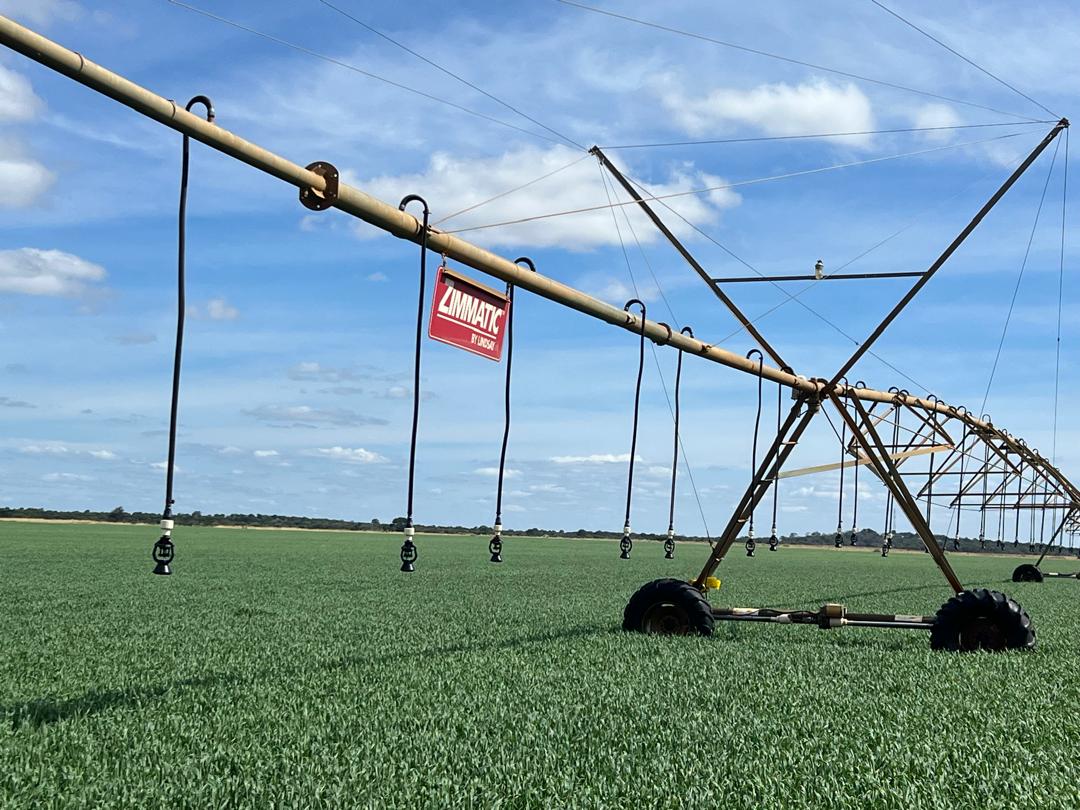
Sukulwenkosi Dube-Matutu,[email protected]
MATABELELAND South Province has exceeded its winter wheat planting target after putting 4 602 hectares under the crop against a target of 4 500 hectares, continuing a steady growth trend in wheat production over the past three years.
The province planted 3 648 hectares last year, up from 3 005 hectares in 2024 and 2 554 hectares in 2023, reflecting increasing participation by both commercial and smallholder farmers in winter wheat production.
Major contributors to the province’s wheat hectarage are ARDA Ngwizi in Mangwe District and ARDA Antelope in
Maphisa. Recently rehabilitated irrigation schemes across the province have also played a key role in boosting production.
Among them are Midlo and Masholomoshe irrigation schemes, which were rehabilitated under the Green Climate Fund Programme.
Matabeleland South Provincial Agricultural Development and Advisory Services (ADAS) director, Mrs Shupikai Sibanda, said the department continues to provide technical support to farmers to enhance productivity. She said most of the crop across the province is currently at the vegetative and tillering stages.
“Wheat production is going on well with most of the crop at tillering and vegetative stage. We had a target of 4 500 ha but we managed to surpass it and get up to 4 602 ha. I can safely say that we did well as a province because farmers delayed in harvesting their maize crop because of excessive rains that were received during the rainy season, which caused farmers to delay in preparing for wheat farming.
“Farmers, however, worked tirelessly and our officers were hands on and closely supervising farmers in order to meet the deadline. Through collective effort we were able to meet our target,” she said.
Mrs Sibanda said the abundant rains received during the summer season would provide residual moisture that is expected to support the wheat crop throughout its growth cycle.
She said assessments conducted across the province indicate that the crop is in good condition and showing promising prospects.
Mrs Sibanda said a number of irrigation schemes that had previously been lying idle are now actively contributing to wheat production.
She added that farmers received inputs on time under the Presidential Input Scheme, which helped the province to achieve and exceed its target.
“The uptake of winter wheat production in the province has improved over the years and we’re proud of what we achieved this year. We’ve more individual farmers taking part in wheat production as well as small holder gardens.
“As a department we made it a point that we encourage all farmers who have reliable water sources to take part in wheat production. Farmers are encouraged to continue and adopt best agronomic practices so that their crop performs well,” said Mrs Sibanda.
She said agricultural business advisors have been working closely with farmers, providing monitoring and extension support to ensure optimal crop performance.
Mrs Sibanda said training programmes have also been rolled out across the province to reach as many farmers as possible. She encouraged producers to deliver their wheat to the Grain Marketing Board upon harvesting.
Wheat production has increasingly become a key pillar of Zimbabwe’s agricultural sector, contributing significantly to both national food security and economic growth.
As the country’s second most important cereal crop after maize, wheat plays a critical role in narrowing the gap between food demand and supply, while supporting agro-industrial development and reducing dependence on imports.
Nationally, farmers have planted a record 126 394 hectares of wheat this year, exceeding the target by more than 6 000 hectares and raising prospects of surpassing the projected harvest of 662 500 tonnes.
The achievement is expected to further reduce Zimbabwe’s wheat import bill, strengthen food security, conserve foreign currency and cushion vulnerable communities against potential food shortages ahead of the anticipated El Niño-induced 2026/27 summer cropping season.