Online Reporter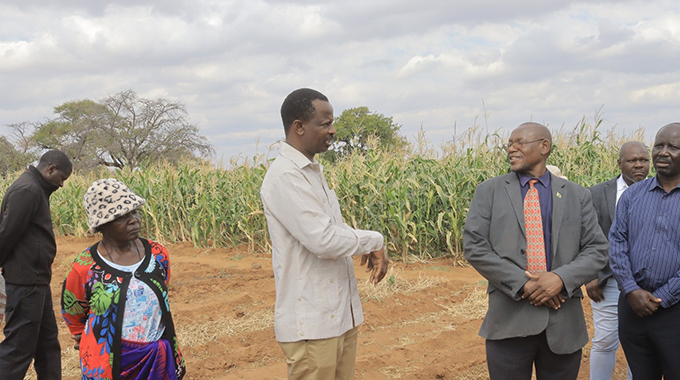
Sukulwenkosi Dube-Matutu, [email protected]
MATABELELAND South’s winter wheat production is on track to more than double this year, with the province targeting over 21 000 metric tonnes, up from last year’s 11 000 metric tonnes.
This season, farmers planted 3 648 hectares, surpassing last year’s 2 554 hectares. Among the top performers are Mankonkoni Irrigation Scheme farmers in Ward 19, Gwanda District, where 39 members are cultivating wheat.
The scheme’s chairperson, Ms Kiliboni Ndlovu, said they have 3,8 hectares under wheat at the booting stage, with an expected yield of about six tonnes per hectare.
“We are expecting a bumper harvest as we received inputs on time. We have started preparing the land so that we can put four hectares under maize. Our irrigation also has vegetables, onions, chillies, sugar beans, green pepper, tomatoes and onions under production,” she said.
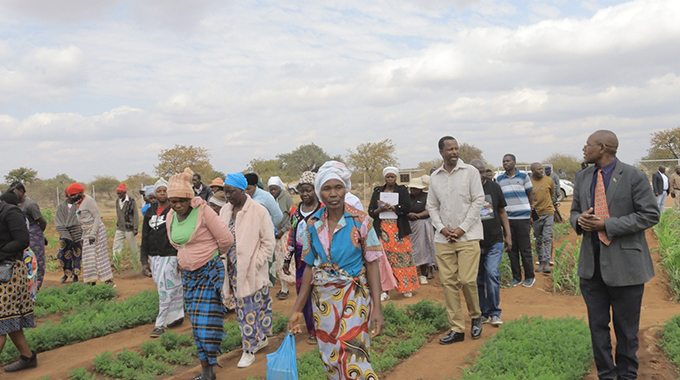
Major contributors to the provincial target include Arda Ngwizi with 578 hectares and Arda Antelope with 588 hectares. Recently rehabilitated irrigation schemes such as Midlo and Masholomoshe, upgraded under the Green Climate Fund Programme, have also boosted output. Harvesting is expected to begin mid-September.
Agriculture Advisory and Rural Development Services (Ardas) provincial director Mrs Shupikai Sibanda said the province exceeded its wheat production target of 3 500 hectares due to strong farmer uptake, which saw the province achieve 3 648 ha.
“The uptake of winter wheat production in the province has improved over the years and we are proud of what we achieved this year. We have more individual farmers taking part, as well as smallholder gardens,” she said.
Mrs Sibanda attributed the success to timely input delivery under the Presidential Input Scheme and sustained extension support.
“As a department, we made it a point to encourage all farmers who have reliable water sources to take part in wheat production. Farmers are encouraged to continue and adopt best agronomic practices so that their crop performs well. We are looking forward to contributing to 600 000,” she said.
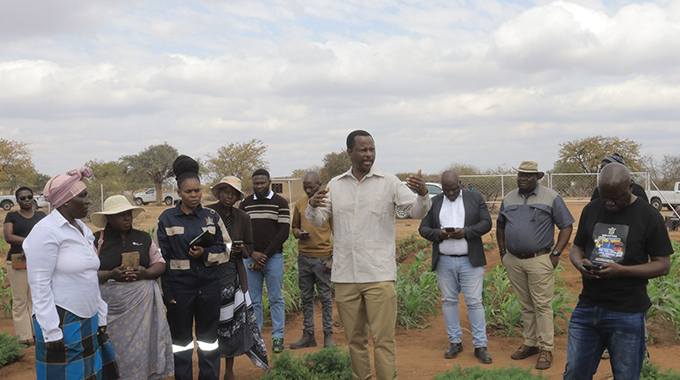
Mrs Sibanda said extension workers have been actively monitoring crops and training farmers to adopt best agronomic practices. Farmers have also been urged to deliver their wheat to the Grain Marketing Board upon harvesting.
Wheat production has become a cornerstone of Zimbabwe’s agricultural economy, second only to maize in importance. It plays a critical role in closing the gap between a growing population and food supply, while supporting agro-industrial development.
The Government has set wheat self-sufficiency as a strategic goal, targeting production levels of 360 000 metric tonnes annually. Last year, Zimbabwe surpassed this requirement, achieving a record 563 961 tonnes, attributed to timely input supply, supportive policies and improved access to financial services for farmers. —@DubeMatutu