Online Reporter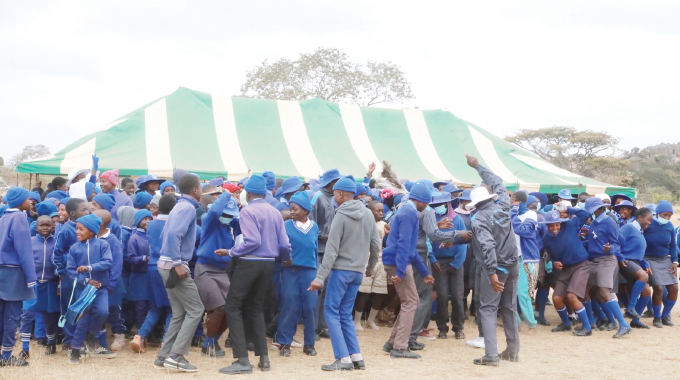
Raymond Jaravaza, [email protected]
Gogo Maria Mlandu of Ward 18, Bazha Village in Matopo, Matobo District, wouldn’t have believed it a year ago: that by July 2025, their local secondary school would be fully solar-powered, benefitting over 300 pupils and 16 teachers.
For decades, she had come to accept that access to electricity was a distant dream for pupils at Bazha Secondary School, and that teachers would continue to leave for better-equipped institutions elsewhere in the district.
Gogo Mlandu was among the community members, who attended the official handover of a US$100 000 solarisation project on Monday, funded by the Zimbabwe Energy Regulatory Authority (Zera).
The project, which took three months to complete, will power the school and staff cottages that accommodate 16 teachers at Bazha, as well as six other Government officials stationed at the school.
“I have lived in this village for more than 70 years, and I never imagined that one day we (villagers) would be sitting here to celebrate such a life-changing occasion.

“We have seen good teachers come and leave in less than five years because they were frustrated by the lack of network (mobile connectivity) and the inability to communicate with their loved ones back home,” said Gogo Mlandu.
Two of her youngest grandchildren are learners at Bazha Secondary School, and the elderly woman dreams of a brighter future for them in a rapidly evolving technological world.
“Unlike in the past, education now requires that the younger generation has access to mobile phones and other gadgets that need a constant electricity supply.
“I was very happy when it was announced that a solar project will also be installed at Bazha Primary School, which means little boys and girls will begin their educational journeys with access to electricity,” she said.
Zera Chief Executive Officer, Mr Edington Mazambani, announced during the handover ceremony that the authority would also implement a similar project at the primary school.
“We expect the solarisation project at Bazha Primary School to be completed by the end of the year.”
Three Starlink kits were also donated to the secondary and primary schools, as well as the local Registrar’s Office, by a former student of the school, Professor Thabani Ndlovu, who is now based in the United Arab Emirates (UAE).
Both Bazha Secondary and Bazha Primary schools are located in a remote part of Matobo District, where access to electricity has long been a dream and internet connectivity is virtually non-existent.
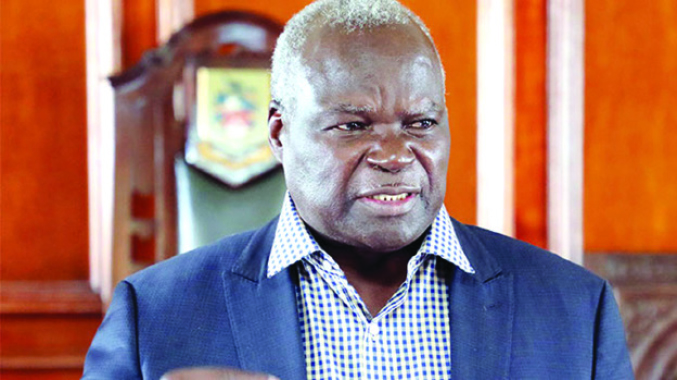
Minister of Energy and Power Development, Honourable July Moyo, who was the guest of honour at the handover ceremony, said the Government has introduced incentives to promote the development of solar projects, including customs duty exemptions on solar products and equipment.
“The Ministry of Primary and Secondary Education provides guidance on which schools require assistance, and Bazha Secondary School is a beneficiary of this project funded by the Zimbabwe Energy Regulatory Authority (Zera), an authority that consistently delivers on such projects while fulfilling its role as a responsible corporate citizen.
“This project makes a significant impact in transforming the lives of more than 300 children. Having electricity at this school will also reduce staff turnover, as improved living conditions will make it easier for teachers to live comfortably,” said Minister Moyo.
Bazha Secondary School headmaster, Mr Allen Dube, said the solar system generates enough electricity to power appliances such as refrigerators in the staff cottages, as well as televisions.
“Each staff cottage has one or two refrigerators, which are all powered by the solar system. Our teachers also have personal gadgets such as laptops that they can now use without worrying about electricity supply,” he said.
“The Wi-Fi will make communication between teachers and their relatives in other parts of the country easier, and it will also assist them in conducting research for school projects,” said Mr Dube.