Online Reporter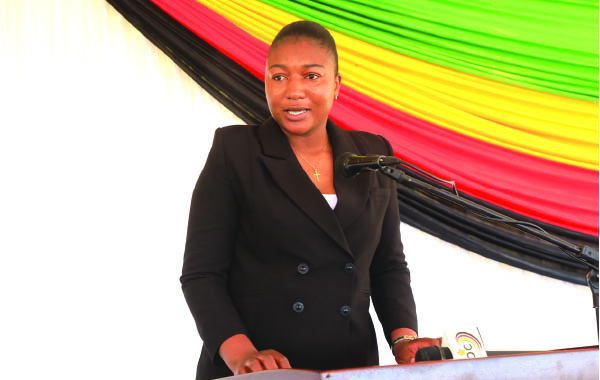
Nqobile Bhebhe,Zimpapers Business Hub
MATOBO District is poised for a major economic and cultural transformation as Government rolls out far-reaching investment plans to ensure local artists, cultural practitioners and creatives are the primary beneficiaries of the 2026 Independence Day celebrations, a landmark event set to unlock lasting development in Matabeleland South.
The 2026 Uhuru festivities, expected to attract thousands of local and international visitors, will not only commemorate Zimbabwe’s liberation journey but will serve as a launchpad for cultural renaissance, rural industrialisation and inclusive empowerment in one of the country’s most heritage-rich regions.
In a bold declaration of intent, Deputy Minister for Sport, Recreation, Arts and Culture, Emily Jesaya, told Parliament on Wednesday that Government’s blueprint was a strategic fusion of national pride, economic stimulus and the devolution agenda aimed at building long-term capacity for Matobo’s creative economy.
“This commitment is central to our policy of equitable development and leveraging national events for local empowerment in line with the devolution agenda,” said Deputy Minister Jesaya.
Rather than treating the Independence Day festivities as a one-off event, the Government has crafted a deliberate legacy programme that will empower local communities long after the celebrations end.
“The 2026 Independence Celebrations present an unparalleled platform. Our plans go beyond merely featuring Matobo artists and sports persons. They are designed to build capacity, create sustainable economic pathways, develop infrastructure and elevate the district’s cultural profile nationally,” she said.
A centrepiece of the 2026 Uhuru Legacy Project is the construction of the Maphisa Culture Centre, a state-of-the-art hub for arts incubation, cultural tourism, creative entrepreneurship and heritage promotion.
The facility will serve as a permanent engine for cultural and economic development, housing rehearsal studios, basic production equipment, training spaces and exhibition areas — a game-changer for local creatives, especially rural youths and marginalised artists.
“The establishment of Maphisa Culture Centre under the 2026 Uhuru Legacy Project will open up a community-driven site for cultural tourism and exhibition, harnessing Matobo’s rich cultural expressions and its landscapes, flora and fauna,” said Deputy Minister Jesaya.
She said the centre would complement iconic institutions such as the Amagugu Heritage Centre and sacred sites like Njelele, enhancing Matobo’s appeal as a must-visit destination on Zimbabwe’s cultural tourism circuit.
“The Maphisa Culture Centre will also serve as a Community Arts Incubator facility providing rehearsal space, basic production equipment and ongoing training capacity beyond 2026,” she added.
Deputy Minister Jesaya underscored that the Government’s commitment extends well beyond 2026, with clear strategies to foster a sustainable, self-reliant and income-generating creative ecosystem in Matobo.
“We are committed to ensuring Matobo’s artistic heartbeat resonates powerfully during the celebrations and continues to thrive long after leaving a genuine legacy of empowered cultural practitioners.
“This is not just an event for Matobo, it is an investment in its creative future,” she added.
The initiative is a strong expression of President Mnangagwa’s devolution policy, which seeks to ensure that every province shares equitably in the national cake.
By decentralising major national events such as Independence Day and deliberately channelling investments into rural communities, Government is redefining the developmental narrative from the grassroots up.