Online Reporter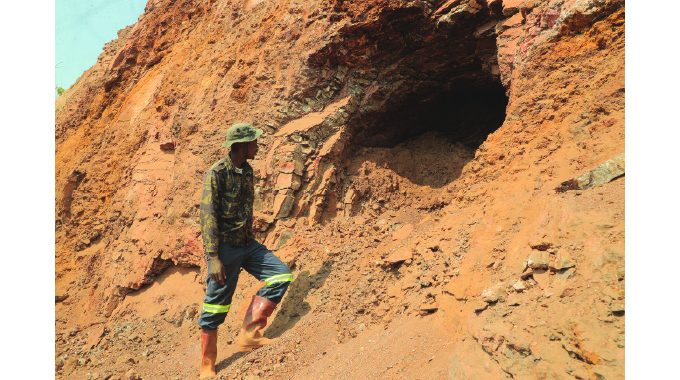
Fidelis Munyoro-Chief Court Writer
In the heart of Mazowe Valley, where the morning mist once clung to golden hills and deep shafts whispered the promise of prosperity, a darker reality now smoulders beneath the soil.
What should have been a fortress of prosperity has become a graveyard of dreams, an ungoverned battlefield where gold is mined not with strategy, safety or sustainability, but with fear, fire and fatal ambition.
Mazowe Mine, one of the older mines in the country, now stands hijacked by chaos. Lease 35, the legal boundary of its operations, has been reduced to a lawless patchwork of crumbling shafts and rogue tunnels, dug recklessly into the earth by hundreds of illegal miners.
These are not just men with picks and shovels: they are syndicates, organised and emboldened, chiselling through rock and regulation alike, defying Government orders with startling impunity.
It began like a whisper in 2018 with a few desperate diggers evading the eye of the State. But the whisper became a thunderclap.
By 2025, the mine had been transformed into a complex network of danger, its surface fractured like broken glass, its depths riddled with crude tunnels that snake too close to each other and into the old workings. Every shaft is a gamble. Every echo could be the last.
For Xolani Mafana, the contested mining ground is more than just earth and stone. It is a pulse, a heartbeat, a last hope for hundreds flocking in from every corner of the country.
“Back in Kwekwe, I used to dig for gold,” says the rugged 43-year-old, his voice carrying the weight of years spent chasing glimmers underground.
“But the veins dried up, and so I moved here. This place is my bread and butter now. I have been in this hustle too long to fear the shadows of death. Dying? That thought does not live in me. I am here to survive, simple as that.”
Not far from him, Tatenda Chabika, another weathered soul from Bindura, leans on his makeshift shovel, his eyes scanning the chaotic sprawl of makeshift tents and smoke curling from illegal fires.
“Life here?” he scoffs, a bitter chuckle escaping. “It is a mixed grill, my friend. We live in a lawless bubble. Fights break out like clockwork, people die without warning, and vices run wild: murder, sex work, theft.
“It is not pretty, but it is our reality. We breathe it. We sleep in it. We have grown roots in the madness.”
He pauses, a flicker of defiance in his eyes.
“I have made peace with the idea that death might find me in a collapsing tunnel. But better that than watching my family starve. I would rather die digging than die doing nothing.”
The stern “suspension of mining order” issued on March 28, last year, and urgent follow-ups from the Ministry of Mines and Mining Development, plus repeated warnings have all been swallowed by the roar of illicit activity and the clatter of ungoverned tools digging through rock.
The Government’s voice was clear, but the ground did not listen. The invaders multiplied.
The mine’s rightful owners, Metallon Corporation, through Mazowe Mining Company (Pvt) Ltd, received the orders but while holding the lease they have no power to enforce their obligations and rights. They have been locked out, watching helplessly as their property became a death trap. The cost is counted not just in gold, but in lives.
On the night of July 11 this year, in the quiet of Mutetwa village, an explosion ripped through the darkness.
Three villagers sat around a fire. Seconds later, silence fell, unnatural and heavy. Kundai Nyatsime, 78, was torn apart by the blast. Her body lay dismembered, her limbs scattered like dry leaves in the wind.
Tatenda Chitimbe, a young man seated nearby, would later die in hospital, his dreams extinguished in the murk of a war he never chose.
Police arrived but could not inspect the scene until dawn. The next morning, Nyatsime’s remains still lay where they fell, waiting for forensic experts to confirm what the community already knew, Mazowe had claimed more.
The death toll climbed again days later. A hoist malfunctioned, sending a bucket, and six men, plummeting down a 45-metre shaft.
Their names read like a national roll call of grief: Sebastian Dzaingwa from Sanyati, Tawanda Nyandoro of Gokwe, Edger Magenya from Kwekwe, Milton Ngonzwe of Nyanga, Elvis Kasaira from Mutoko, and Abel Majangara from Buhera.
Four more were seriously injured, their bodies broken by the same system that broke the law.
This is no longer merely a mining challenge. It is a human catastrophe unfolding in real-time.
The Ministry of Mines and Mining Development, alarmed by the rising death toll, reiterated its position on June 6 this year.
A letter from Chief Government mining engineer Michael Munodawafa did not mince words when writing to the registered holder of Lease 35. “There has been an increase in fatal accidents due to breach of our suspension. The country is losing a lot in terms of production and revenue due to improperly coordinated operations at your mine,” he said.
The ministry called on the police to enforce the suspension. But enforcement met resistance, not with violence, but litigation.
As the police prepared to flush out the illegal operators in June, the syndicates responded with a legal ambush. They filed an urgent High Court application, freezing police action and placing the mine in a judicial limbo.
The law, meant to protect, now binds the hands of those trying to restore order. Meanwhile, the mine remains overrun.
Each day, new shafts are opened. Each night, dynamite echoes through the valley.
Each week, a new report of injury or death is reported. The people of Mazowe are trapped between a Government’s suspended authority and a court’s suspended judgment.
Yet, amidst the dust and despair, the mine owners back the Government moves.
“Namib Minerals fully supports the Government of Zimbabwe’s directive,” says Mr Ranga Mberi, public relations manager for the parent company.
Their vision is structured, strategic and idealistic: a phased return to legal mining, anchored by experienced teams and strong partnerships, aimed at restoring Mazowe’s contribution to the nation’s US$12 billion mining target.
But noble intentions cannot fill collapsed shafts. They cannot erase court delays or silence the syndicates’ drills.
The owners’ lawyers, Alex F and Associates, emphasise the directive’s legal force.
“When a competent Government authority issues a directive grounded in statutory law, such a directive is binding. To date, no court order has been issued to nullify the Government’s suspension,” said the lawyers.
In theory, the law is clear. In practice, the mine is anything but.
Still, the path forward is marked, if not yet cleared. A full site assessment is underway. A restart strategy is being drawn.
Mr Mberi speaks of a future where Mazowe is not only operational, but exemplary, safe, compliant, and a catalyst for local and national growth.
“With our renewed presence on the ground and reinforced operational controls, illegal mining will no longer have space to thrive,” he says.
It is a bold statement, one that hopes to drown out the current noise of illegal hammers and the cries of grieving families.
But hope, like gold, must be mined carefully. Today, Mazowe bleeds. Not just gold, but dignity, law, and life itself. Its silence is no longer peaceful.
It pulses with the groans of collapsing earth, the boom of explosives, and the quiet weeping of a grandmother lost to a war she never saw coming.
Until action matches the urgency, until the law is more than just letters on paper, Mazowe remains not a mine, but a warning.