admin
admin
 Nduduzo Tshuma Political Editor
THE troubled Professor Welshman Ncube-led MDC, reeling under its dismal performance in the 2013 elections, is fast sinking into oblivion as internal fighting and mass resignations take their toll, analysts have said.
A number of senior members of the embattled opposition party have resigned from their posts and quit after MDC’s poor showing in the July 2013 harmonised elections.
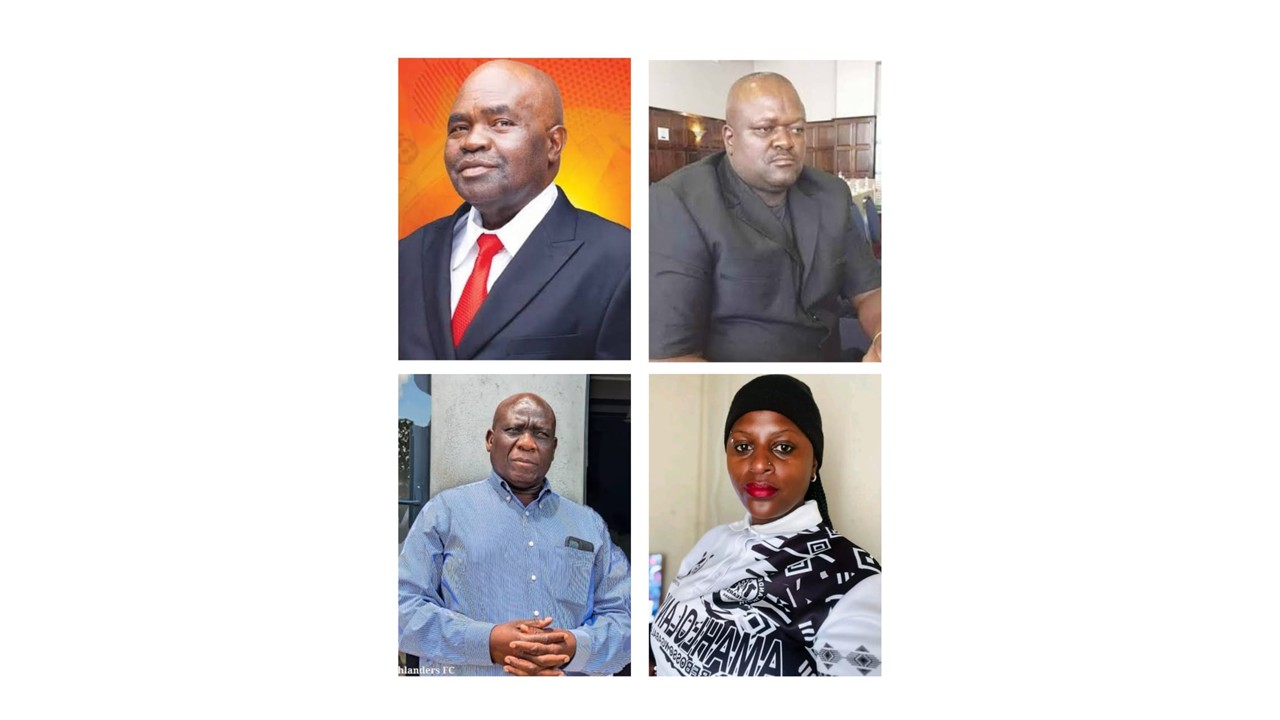
The internal fight has seen allegations of purging particularly on the so-called gang of four, namely former chairperson Goodrich Chimbaira, his deputy Frank Chamunorwa, former spokesperson, Nhlanhla Dube, and former secretary-general Priscilla Misihairabwi-Mushonga, the analysts noted.
Dube, Chimbaira and Chamunorwa resigned from the party while Misihairabwi-Mushonga only resigned from her post to remain a card carrying member of the party.
Last Friday, former Gwanda mayor Lionel De Necker, who was a member of the party’s national executive, also resigned from his position accusing the party of losing focus and calling for Prof Ncube to step down.
Prof Ncube has been at the helm of the party ever since its split with the MDC-T in 2005.
De Necker’s resignation followed that of fellow member of the national executive, Sibongile Mgijima, and another by Dube’s successor, Joshua Mhambi after he allegedly fell out of favour with an influential female member of the party.
Former party treasurer, Paul Themba Nyathi, also resigned from the party in June to pursue personal interests while former director for policy and planning, Qhubani Moyo, also left the party to pursue academics.
The party has since the resignations been focused more on filling gaps of departed members than connecting with the electorate, a situation analysts said would put the final nail on its coffin.
Political analyst, Butholezwe Nyathi, said the party never recovered from the catastrophic performance in the 2013 elections.
“Firstly I think their misery can be traced back to the 2013 elections. Since then, they’ve been peeling like an onion with key members of the party resigning either from their positions or the party. We haven’t seen moves by the party to reconnect with the grassroots. MDC has, instead, been busy filling gaps of officials who left,” said Nyathi.
“There appears to be an activity to unite with the Tendai Biti led People’s Democratic Party (PDP) which I think is a realistic political move failure to which they will be worse off going to the 2018 elections than they were in 2013. They may remain in existence on paper but realistically in terms of winning anything, it’s a non starter. They will maintain presence on social media and write opinion pieces in newspapers but won’t win anything in terms of seats.”
Veteran journalist, Methuseli Moyo, said MDC has had more activity at the top than at the bottom.
“I think most of the activity in the party has been associated with resignations and cooptions. There is someone resigning from a post and another chosen to fill the gap.
“Now there are moves to remove Misihairabwi-Mushonga for no clear or strategic reason. There has been so much action at the top of the party and no activity at the bottom as such it’s hard to see how they’ll survive as a party.
“You get the impression that MDC is not a party anymore but a semblance of a party. Maybe credit should be given to the fact that they created a semblance of a party. However, it’s difficult to feel their presence,” said Moyo.
Political analyst, Lawton Hikwa, said unless the MDC goes on a rigorous rebranding exercise, there was no way they would make an impact in the country’s political field let alone the 2018 elections.
“Unfortunately, they’ve a lot of decimating experience as seen by the resignations in the party. Unless there is rigorous rebranding and turn around, I don’t see them making an impact in the future. With what is happening presently, they’re decimating,” said Hikwa.
Professor Nhamo Mhiripiri from the Midlands State University said it was difficult to predict the future of political movements noting that the MDC depended on the willingness of the voters to rally behind the party.
“The problem with some politicians is that they lack charisma and fail to inspire the people to rally behind them. Zanu-PF has had a large following not only because of the party’s policies but also the charisma of President Robert Mugabe,” he said.
Prof Mhiripiri said MDC tended to have more of a regional outlook than a national one with Misihairabwi-Mushonga confirming the position in her representations that expose regional bias.
He said in as much as MDC leader Prof Ncube has a sound mind and liberal policies, it appears he lacks the charisma that MDC-T leader Morgan Tsvangirai possesses.
Prof Mhiripiri said the numbers of the 2013 elections show that Tsvangirai was still the only notable opposition to Zanu-PF while Ncube like Mavambo Kusile Dawn leader, Simba Makoni, has failed to make an impact.
Joel Mukusha, a lecturer at the Great Zimbabwe University in Masvingo, said the MDC was suffering from serious divisions and a lack of vision in terms of strategy and a strong manifesto to woo supporters.
“The MDC is now more of a pressure group than a serious political party. The problem is that some people want to make politics an occupation. Welshman Ncube may have some good things in him as an individual but the party is failing in as far as their marketing strategy is concerned,” he said.
Political analyst, Cont Mhlanga, said the MDC failed to get over their dismal performance in the 2013 elections resulting in them losing focus.
“The challenge in that party is that they had too many expectations from the 2013 elections in terms of performance but afterwards the leadership failed to come to terms with the results. They failed to discuss how they could restrategise and map the way forward,” said Mhlanga.
“Instead, their confidence sank very low resulting in some of the leaders leaving the party to pursue various things. The party is now clouded with self doubt and even its leader is not confident in terms of how they should move forward.”
Mhlanga said the party had a misplaced belief that they would be stronger after uniting with other parties. He said all the MDC-T break away factions shared the same policies with the parent party and are only separated by personality differences. Mhlanga said the party should have reorganised and taken advantage of its existing structures to accommodate members from other parties instead of merging.


 Online Reporter