

 admin
admin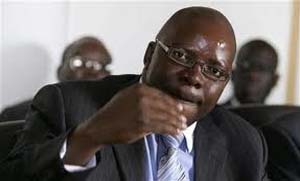
The party had in the past resisted the idea of holding the elections, arguing that there were outstanding “reforms” that needed attention.
The High Court recently gave the nod for by-elections in three vacant seats to be held in March after President Mugabe indicated he wanted to call for harmonised elections in that month.
Mr Biti and MDC-T leader and Prime Minister Mr Morgan Tsvangirai concurred yesterday that elections were inevitable next year.
They were addressing stakeholders during a Government Work Programme budget consultative meeting in the capital.
In his keynote address, PM Tsvangirai said the 2013 national budget would cater for the referendum and elections.
“While the days of the referendum are still not clear, and while the President and myself have not yet agreed on the date of the elections, it is certain that these expensive processes should be held in 2013,” he said.
Mr Biti said he would cater for the elections in the 2013 national budget despite budgetary constraints the country was facing.
He said there was a need to fund constitutional commissions such as the Zimbabwe Human Rights Commission, Zimbabwe Electoral Commission and Anti-Corruption Commission.
“There are things that the budget should address. It should address issues like the referendum and elections and constitutional commissions like the Zimbabwe Human Rights Commission,” he said.
“Why do you create these institutions when you do not support them?”
The Zimbabwe Electoral Commission this month submitted a budget of $220 million to Treasury for both the referendum and the general elections.
ZEC deputy chairperson Mrs Joyce Kazembe said $104 million was required for the referendum while $115 million was needed for the general elections.
In an interview soon after his presentation, Minister Biti said the fiscus would not be able to make full provision of the money needed for the polls.
He said there was a need to engage development partners to fund the elections, a move that has been heavily criticised by stakeholders.
“If these partners can assist us in funding our population census and constitution-making, what is wrong for them to helping us with money for elections?” said Minister Biti.
“This will not affect one’s right to choose people of their choice.”
During his presentation, Minister Biti said the 2013 national budget’s immediate challenge was to fund civil servants’ bonuses.
He appealed to the political leadership to ensure that the country held elections in a peaceful environment.
“This is the most difficult budget, but one variable we can’t control is that of politics,” he said.
Minister Biti slammed the State Procure-ment Board whose adjudication decisions he said were costing the Government.
He said the SPB was settling for the most expensive tender bids ahead of the cheaper ones.
Minister Biti gave an example of a tender to buy curtains for the Ministry of Education, Sport, Arts and Culture which he said the SPB settled for an award that was more than $140 000 ahead of bids of around $40 000.
“If there is one creature that is making Zimbabwe lose money, it is the SPB. The issue of SPB reform is very important,” he said.
Government, he said, had arrears of more than $350 million to service providers like the Zimbabwe Electricity Supply Authority and the Zimbabwe National Water Authority.
Minister Biti is set to present the 2013 national budget next month.


 derick.khumalo
 Online Reporter