admin
admin
Takunda Maodza Senior Reporter
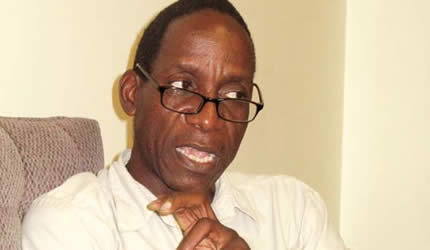
THE new Constitution dictates that a mayor must be selected from elected councillors and MDC-T’s reading of the Supreme Law is wrong, constitutional law expert Professor Lovemore Madhuku has said.In an interview with The Herald yesterday, the National Constitutional Assembly chairperson, expressed shock at the ignorance of the Constitution by MDC-T, which has several lawyers in its rank and file.
MDC-T vigorously campaigned for a “Yes” vote in the referendum and even boasted of being the brains behind the new Constitution whose provisions it does not seem to understand.
The party selected outgoing Justice and Legal Affairs deputy minister Obert Gutu, a lawyer, as nominee for Harare mayor.
It also hand-picked National University of Science and Technology lecturer Mr Mandla Nyathi as the new Bulawayo mayor.
MDC-T went further and appointed its Chitungwiza deputy spokesperson Mr Isaac Manyemba mayor for the town.
“Under the new Constitution, you cannot be a mayor if you are not an elected councillor. The Urban Councils Act still provides that any person may be elected as mayor like what happened with Mr Muchadeyi Masunda, but that position has now been invalidated by the new Constitution in Section 265 (2),” Prof Madhuku said.
Mr Masunda was elected Harare mayor when he was not an elected councillor using provisions of the Urban Councils Act because the new Constitution was not yet promulgated and after MDC-T had fielded people with no capacity to run the affairs of the city.
Reads Section 265 (2) on general principles of provincial and local government: “All members of local authorities must be elected by registered voters within the areas for which the local authorities are established.”
Prof Madhuku said the interpretation of the above section hinges on the meaning of the word “member”.
“A person cannot be a member of a local authority without having been elected. The only persons elected currently are councillors and only one of the councillors may become a mayor. Section 265 (2) admits of no other interpretation except that which says a mayor is a member and therefore must be elected by elected voters,” he said.
Prof Madhuku said lawyers within MDC-T were either ignorant of the Constitutional provision or were deliberately being dishonest.
“I was deliberately keeping quiet in the hope that some lawyers in the relevant political circles could raise that key provision. They were neglecting or choosing to be dishonest and we have to set the record straight,” he said.
In appointing mayors, MDC-T argues that Section 272 of the new Constitution allows it to do so.
Section 272 (1) states that, “At its first sitting after every general election, a provincial council must elect a chairperson from a list of at least two qualified persons submitted by – the political party which gained the highest number of National Assembly seats in the province concerned”.
Prof Madhuku dismissed the MDC-T argument, saying Section 272 “has nothing to do with councils” as it applies to a different layer of governance.
“For you to be a mayor, the initial step requires you to be an elected councillor. Section 265 (2) is one of the elements in the new Constitution designed in the spirit of devolution.
“No one should exercise power without some input from voters,” he said.
Prof Madhuku said the “little devolution in the Constitution” would militate against the decision by the MDC-T leadership to impose a mayor in Bulawayo who is not from the people.
Outgoing Local Government, Urban and Rural Development Minister Dr Ignatius Chombo has since indicated that he will block any efforts by the MDC-T to appoint mayors outside elected councillors.
But last week Mr Tsvangirai’s office was adamant arguing its position on the matter was the correct one quoting Section 272.


 Online Reporter