Tinaye Agere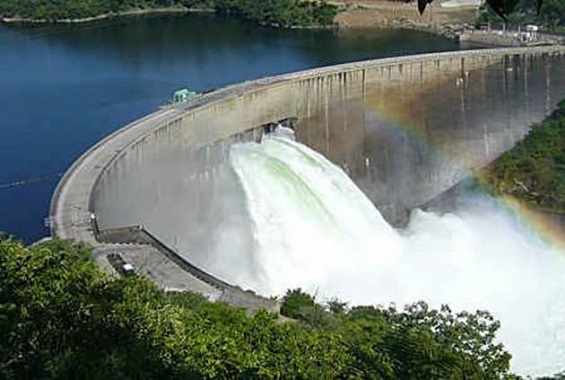
Selusiwe Moyo
THE Zambezi River Authority (ZRA) is a bilateral organisation mandated to operate, monitor and maintain the Kariba Dam and its reservoir.
It is also expected to develop additional water storage infrastructure along the stretch of the Zambezi River, located along the common border between Zambia and Zimbabwe; that is the stretch from Kazungula to Luangwa on the Zambian side and from Kazungula to Kanyemba in Zimbabwe.
As reported, the water levels in Kariba Dam have been continuously decreasing due to low inflow and below-normal rainfall received in the 2023/2024 season.
As of July 26, the Lake Kariba reservoir water level stood at 477,07 metres (m), with 10,84 percent, or 7,02 billion cubic metres (BCM), of water available for power generation.
The reservoir is designed to operate at between 475,50m — the minimum operating level, which is the level at which the intakes drawing water into the power stations are located — and 488,50m, the maximum operating level near the top of the dam.
The difference between today’s lake level and the dam’s minimum operating level, therefore, means there is 1,57m of usable water — also referred to as live storage — available for power generation during the remaining period of 2024.
If the level falls below the minimum operating level of 475,50m, no water will flow into the power stations, as this would only leave water below the intake levels (dead or unusable storage), thereby leading to stoppage of power generation operations.
Due to the location or position of the power station water intakes within the lake, the water in the reservoir is divided into two sections: live storage and dead storage.
Live storage is water that is located above the position of the intakes and can thus flow into the intakes and be used for power generation.
It consists of 65BCM of water when the lake water level is at the full supply point; that is the maximum storage capacity of 181BCM.
Dead storage is water located below the power station water intakes and may not ordinarily easily flow into the power stations to support power generation operations.
Dead storage is thus not usable for power generation.
Once the water level recedes to 475,50 metres above sea level — the minimum operating level for Kariba Dam — water cannot be drawn into the power station, as the live or usable storage would have been exhausted, leaving the water below the power station intakes, making it dead or unusable storage, thereby leading to a shutting down of electricity generation at Kariba Dam in a case where this arises.
However, the measures in place are such that efforts are being made to ensure the continuity of power generation operations to the end of the year.
These include limited utilisation of the available usable water through reduced water allocation and associated reduced power generation levels at the power station in a case where the amount of usable water is relatively low, as the case is currently, where the ZRA allocated 8BCM of water to each of the two power utilities when compared to other previous years, when each utility was allocated as much as 20BCM of water for use in power generation operations for the years in question.
The water allocation is influenced by the rainfall profile and associated river flow levels into Lake Kariba.
Projections
The Zambezi River Authority and the two power utilities — Zesa (Zimbabwe Electricity Supply Authority) and Zesco (Zambia Electricity Supply Corporation) — are cognisant of the need to ensure that water is consumed within the remaining allocations in a bid to sustain power generation operations to the end of the year. The 2024/2025 rainfall season is set to commence in the last quarter of 2024 and will thus contribute to continuity of Zambezi River flows into Lake Kariba during the year 2024 and into the year 2025.
Both Kariba power utilities are engaged during the weekly joint technical committee meetings to ensure they adhere to their approved generation schedules for 2024.
If both utilities operate as guided by the authority, the remaining water should sustain power generation operations at the Kariba Complex until the close of the year, with the 2024/2025 rainfall season then enabling continuity of electricity generation at Kariba Dam during the last quarter of 2024 and into the year 2025.
Future projects
The authority intends to put in place additional hydroelectric schemes along the stretch of the Zambezi River that lies within its jurisdiction as this strategy offers a comprehensive solution to the current challenges.
The development of the Batoka, Devil’s and Mupata Gorge hydroelectric schemes will ensure maximisation of water harvesting and reuse along the Zambezi River, contributing to optimal utilisation of the water resources in the basin.
Further, once additional water storage infrastructure is established, more benefits will be derived through the conjunctive or cascading reservoir operations even during periods of reduced inflows into the respective reservoirs.
The operations will take advantage of the large storage capacity of the Kariba reservoir in storing part of the inflows into Lake Kariba after the same water would have provided generation output at the upstream reservoirs at Devil’s Gorge and Batoka Gorge, with the last element of reuse of the water at Mupata Gorge after the flows leave Kariba Dam.
Overall, the three additional sites, once developed, will add 4 800 megawatts (MW) of power that will be shared equally between Zambia and Zimbabwe. The breakdown is: Devil’s (1 200MW), Mupata Gorge (1 200MW) and Batoka (2 400MW). This will be over and above the 2 130MW at Kariba.
This national investment will help in increasing the energy mix for Zimbabwe and Zambia, in addition to contributing to a level of reduction in the evaporation of the surface water of Lake Kariba.
Selusiwe Moyo is the Zambezi River Authority public relations and communications manager. She was speaking to The Sunday Mail’s Emmanuel Kafe.



 Online Reporter