Online Reporter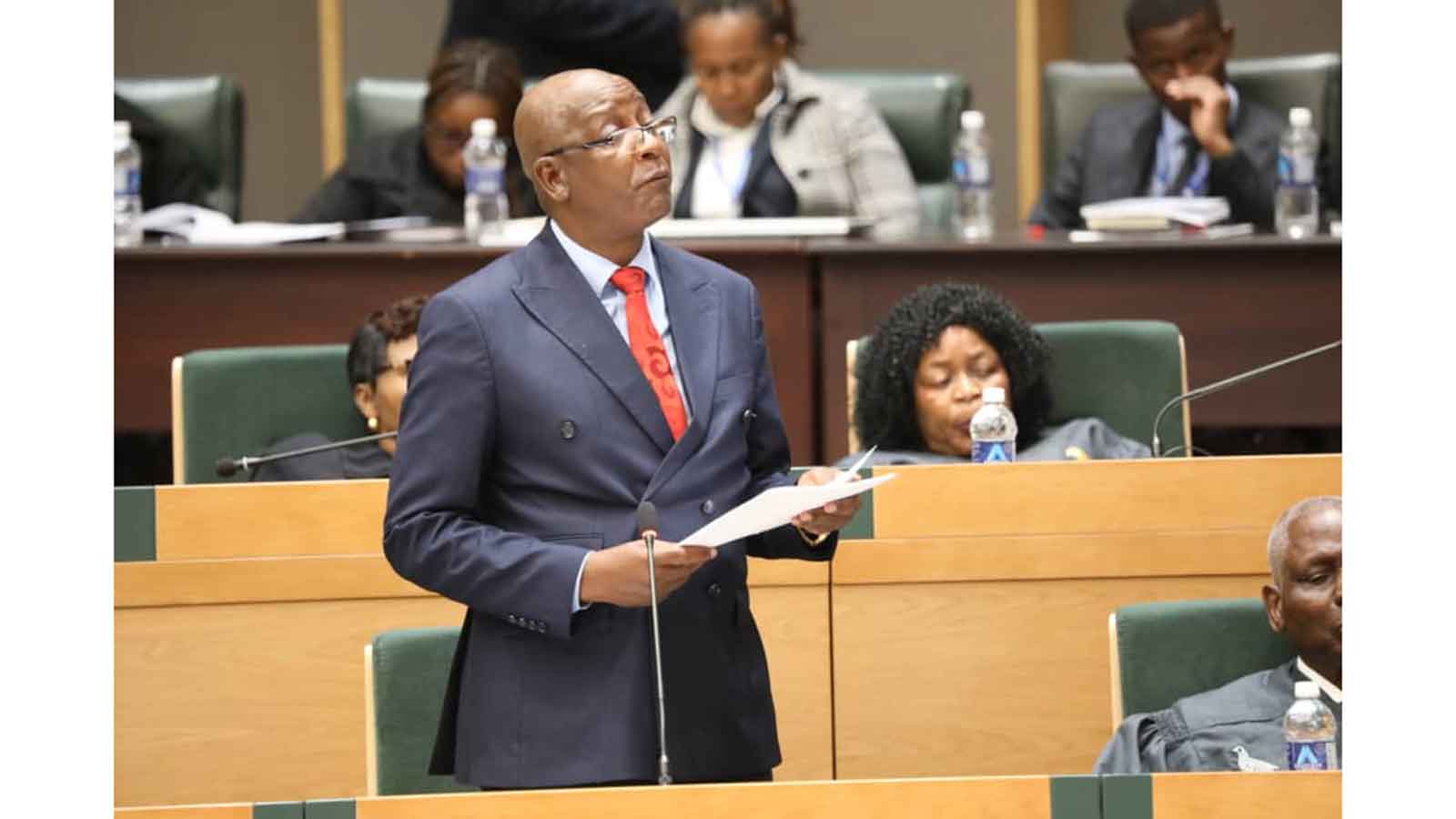
Farirai Machivenyika
Senior Reporter
Zimbabwe has lost up to US$200 billion since 2000 due to political toxicity and disputed polls as a result of a short electoral cycle that has seen the country in a constant election mode, Justice, Legal and Parliamentary Affairs Minister Ziyambi Ziyambi told the Senate yesterday.
Minister Ziyambi said this while presenting his Second Reading speech of the Constitutional Amendment No. 3 Bill to the Senate.
The five-year electoral cycle was adopted in 2008 to harmonise the parliamentary, presidential and local authorities’ elections, and the Minister said the move has failed to address some of the issues it was meant to resolve.
“That five-year cycle, useful as the harmonisation was, has proved too short for the work of building and developing the nation, and so what this Bill proposes is the correction of a correction.
“The power that shortened that electoral cycle then is the power that lengthens it now. These two routes that I have outlined, Madam President, the divisive method of electing the President and the restless electoral cycle within which we have done that, do not stand apart.
“They reinforce one another to the detriment of the national interest in general and the development of the country in particular. That is the mischief which Parliament has a constitutional duty to remedy,” Minister Ziyambi said.
He added that there were five faces of one structural ailment, and each electoral cycle has deepened them.
“The first, Madam President, is the perennially disputed presidential election. Every contest for the highest office this nation has held since the turn of the century in 2000, 2002, 2008, 2013, 2018 and 2023 has been trailed by allegations of political violence, allegations of rigging and of lack of transparency, eroding public trust in the result and the standing of the nation in the eyes of those who would invest in it. This is not my characterisation.
“It is documented in the election observer reports of the African Union, of SADC, of the Commonwealth, which have tied these electoral disputes to economic sanctions against our country and to investment flight estimated by some accounts at between US$50 billion and US$70 billion in opportunities lost across those years.
“The second is the paralysis of governing that a permanent campaign produces. Our short five-year term traps those in office in a continuous election mode, delaying and derailing long-term programmes a developing nation depends upon, our national development strategies and our Vision 2030 among them.
“The Commonwealth and SADC reporting across the years have identified post-election polarisation as a major brake on development and estimated, in some analyses, at a further US$30 billion to US$40 billion in foregone productivity,” he said.
Minister Ziyambi said the third affliction was the corruption that instability breeds, where political survival is in perpetual question and weakens accountability, while the conditions in which graft flourishes are renewed with every cycle.
“In 2023, Transparency International estimated that corruption costs Zimbabwe between US$1 billion and US$2 billion every year that passes, and local election monitors have documented the predictable spikes in irregular tenders that accompany every poll. The fourth, Madam President, is the politicisation of a public service that should be neutral, professional and continuous.
“A service disrupted by the turbulence of perpetual contest cannot serve the citizen who simply needs the State to work, and the Election Resource Centre has put the resulting losses in productivity at some US$600 million a year.
“The fifth and last, Madam President, is the polarisation of our society, asked again and again to divide itself against itself, with unrest and the emigration that division carries in its wake,” he said.
“It is traceable and well documented that the cumulative cost to this nation has been estimated conservatively at between US$150 billion and US$200 billion in lost output, productivity and human capital and, Madam President, we are neither alone in this affliction nor the first to act against these afflictions linked to the direct election of the president,” Minister Ziyambi said.
He said Zimbabwe was not alone on the continent in extending its election cycle, with Guinea lengthening the term of office of its president from five years to seven in September last year and adding an upper chamber to its Parliament.
Minister Ziyambi dismissed assertions in some quarters that the Bill sought to extend the term limit of the President, saying this was not the case, as it was extending the electoral cycle while the two-term limit remains untouched.
He said for those reasons, there was no need for a referendum, as the amendments being made did not require a referendum.