Chronicle Editor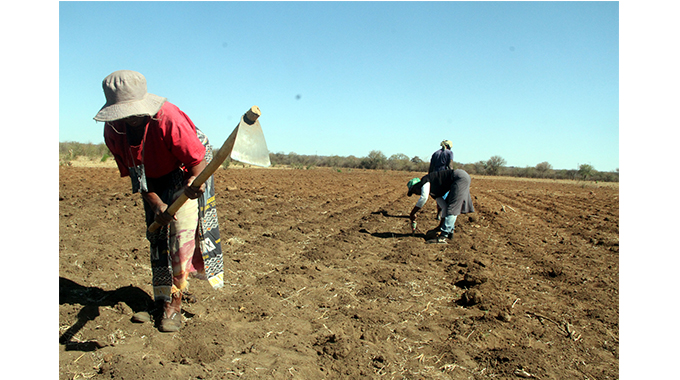
Business Reporter
THERE is a need to mechanise the Intwasa/Pfumvudza farming model to increase food production and incomes for rural people, according to 2021 Zimbabwe Rural Livelihood Assessment report.
The conservative Intwasa/Pfumvudza concept is a crop production intensification approach under which farmers ensure the efficient use of resources (inputs and labour) on a small area of land in order to optimise its management. It has been largely credited for good cereals crop production especially maize yields this year.
The model has also been successful in helping farmers to produce small grains including sorghum and millet and encourages the rotation of legumes such as beans and cowpeas and now the Government wants to extend the concept to other crops such as cotton.
The country is expecting to harvest 2,7 million tonnes of maize this year, the highest yield in 20 years, according the Second Round Crop and Livestock Assessment report. The report by Zimbabwe Vulnerability Assessment Committee (ZimVAC) said many rural small-scale farmers have embraced the concept and Government on its part should now focus on mechanisation.
“The Pfumvudza programme recorded a significant adoption rate at its inception,” said ZimVAC.
ZimVAC is a consortium of Government, development partners, the United Nations, NGOs, technical agencies and the academia. It was established in 2002 with mandate of promoting a multi-sectorial response to food insecurity and nutrition problems to ensure every Zimbabwean is free from hunger and malnutrition.
“This is an applaudable achievement. The Government is recommended to continue and spruce up the programme by availing a full package on time and move towards full mechanisation of intwasa,” said ZimVAC.
It said Government should also accelerate investment in the setting up of irrigation schemes to ensure communities have improved access to reliable sources of water for agricultural production.
“Generally, there were few communities with irrigation schemes across the country. This means the majority of communities across the country still rely largely on rain fed crop and livestock production,” said the report.
It said an overreliance on rain fed agriculture presents a challenge as farming communities are susceptible to the risks associated with unfavourable seasonal conditions such as drought, waterlogging and prolonged dry spells.



 Online Reporter