Online Reporter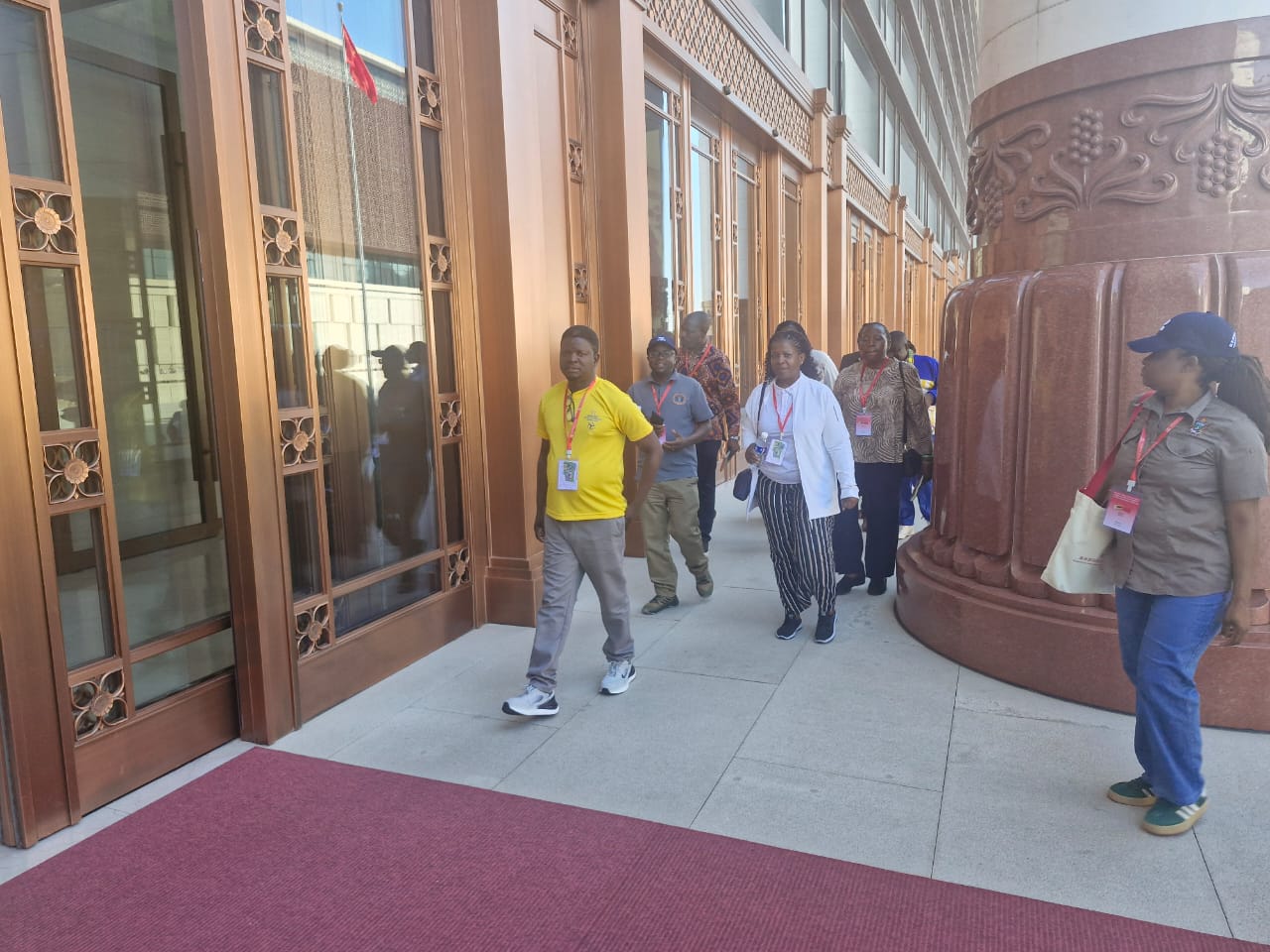
Vusumuzi Dube in Beijing, China
ZIMBABWE’S media industry must urgently evolve beyond its traditional role of merely transmitting information and embrace creative storytelling, innovative media products and stronger convergence with the arts and audio-visual sectors if it is to effectively preserve and communicate the country’s heritage to future generations, Chief Director in the Ministry of Information,
Publicity and Broadcasting Services Mr Jonathan Gandari has said.
Mr Gandari made the remarks on the sidelines of a tour of the Museum of the Communist Party of China and the Great Wall by senior Government officials attending a Ministerial Seminar for Senior Public Management Officials of Zimbabwe.
He said the visit provided valuable lessons on how technology, media and creative storytelling can be integrated to communicate a nation’s history and development in ways that are educational, engaging and accessible to audiences of all ages.
“One of the key lessons I took from the visit is that the media industry is transforming from being primarily concerned with transmitting information to becoming an industry that also focuses on the creation of media products,” said Mr Gandari.
He said Zimbabwe therefore needed to rethink how it packages and communicates its national story by moving beyond conventional methods of communication and embracing media products capable of capturing the imagination of different generations.
Mr Gandari said the way a country’s history and development story is packaged is just as important as the information being conveyed.
He noted that the Museum of the Communist Party of China demonstrated how history can be transformed into an immersive and accessible experience through the effective use of audio-visual content, technology and creative presentation techniques.
“What stood out for me is that the presentation is not limited to adults or historians; even children can engage with and understand the story of the nation,” he said.
The experience, he added, should encourage Zimbabwe to reflect not only on how it communicates its history, but also on whose story is being told through its national institutions.
Mr Gandari called for a re-examination of the role and purpose of national museums, arguing that such institutions should place greater emphasis on Zimbabwean experiences, local heroes and the country’s own historical narrative.
“We need to rethink the concept of national museums. The museums in Harare, in Bulawayo and elsewhere in Zimbabwe, whose story are they telling?” he asked.
“Is it the story of Cecil John Rhodes, the story of David Livingstone? Those are the issues that are in those museums.”
He said the Chinese experience underscored the importance of what he described as media sovereignty and information sovereignty, where nations take ownership of how their histories, achievements and aspirations are documented and presented.
“What we have seen here is media sovereignty, information sovereignty. It is the story of the local heroes,” said Mr Gandari.
He said merely having museums and other institutions that preserve national memory was not sufficient if the narratives they presented did not adequately reflect the country’s identity, values and aspirations.
“That is a very important thing to think about. Because we could say we have got those institutions, but whose narrative are they advancing?” he said.
Mr Gandari said the transformation of the media sector should be accompanied by the restructuring of the broader information and creative ecosystem, which he described as fragmented.
“We also need to think about the information architecture of audio-visual. We are disconnected. The audio-visuals are on their own. The media industry is on its own,” he said.
He noted that filmmakers, painters and other creative practitioners often operate in isolation, limiting opportunities to combine different disciplines in the telling of Zimbabwe’s national story.
According to Mr Gandari, greater convergence between journalism, audio-visual production, film, visual arts, museums, education and other creative fields could lead to the development of innovative media products capable of communicating complex national messages in simpler, more engaging and widely accessible formats.
He further challenged universities and institutions of higher learning, particularly innovation hubs, to play a more active role in transforming the way national narratives are packaged and communicated.
Mr Gandari stressed that innovation should not be viewed solely through the lens of technology, but should also encompass creativity, storytelling, media production and new approaches to audience engagement.