admin
admin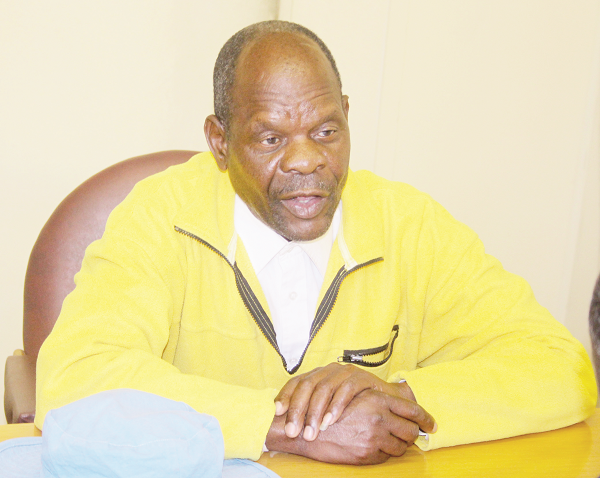

IN our last two editions we have been publishing stories with villagers giving accounts of the war of liberation.
In the first story the villagers gave an account of the battle at Ratanyana in Kezi where the Zipra commander for the Southern Front 3, Cde Adam Dube alias Cde Mphini and 10 of his men were killed when they were cornered by the Rhodesian forces.
Four children were also killed by the Rhodesians who in frustration after seeing their chopper gunned down turned to the innocent children. In the second story the villagers related how 11 enemy forces were gunned down by a unit of guerillas at Tjewondo also in Kezi. This week our Assistant Editor Mkhululi Sibanda traced one of the guerillas who operated in Kezi during that time, Cde Abel Nsewula pseudonym Cde Sifiso Njalo or Disco. Below are excerpts of the interview:
MS: Cde Nsewula, you operated in Kezi or Matobo district during the armed struggle and we have been told how tense the situation was during that time, may you please tell us what happened when you got into Kezi?
Cde Nsewula: I arrived in Kezi in 1978, but my unit was going to Gwanda. However, when we got to Kezi specifically in the Silonkwe area, it was decided that I remain in Kezi. That was because the comrades there were in need of people who had specialised in hitting moving targets. What happened is that after completing my military training at CGT 1 I was one of the people who were chosen to undergo a specialised crush course in snipping. So I would not be beating my chest to say I was regarded as a sniper.
MS: Interesting. Maybe before we go on please tell us how you joined the armed struggle. Your brief background.
Cde Nsewula: Ok. I was born on 6 February 1951 in the Manama area of Gwanda District, which is in Matabeleland South. I attended the local Bhenko School. After school I worked for a number of companies such as Blanket Mine, Gulliver, the then Cold Storage Commission (CSC) based at West Nicholson. But it was at Gulliver that I managed to work at various parts of the country such as in Shangani where we constructed a big dam there. After completing the construction of that dam we moved to then Gwelo (Gweru) where we did part of the construction of the Dabuka Marshalling Yard at the railways. I then left Gulliver to work at CSC in West Nicholson. It was while I was at CSC that the urge to join the armed struggle grew. I also noticed that some people were leaving the country to join the armed struggle.
MS: What had happened?
Cde Nsewula: At CSC we had a soccer team and I was one of the dependable players, playing in the midfield. Then it happened that six of my teammates just disappeared and we were to learn later that they had crossed the border into Botswana to join the war. That was in 1973. They had been recruited by a member of Zapu who worked closely with the football team. I then later left my job and returned to my rural home. While at home the revolutionary spirit caught up with me. I then started putting into motion plans of joining the armed struggle. There was also the Manama High School incident in January 1977 where school children there were led by the guerillas to Botswana en-route to Zambia. All those incidents fuelled my urge to leave the country as well. So in March 1977 I left the country with my brothers and cousins for Botswana. However, those guys did not want to go with me.
MS: Why were they avoiding you?
Cde Nsewula: I was married and they were not, so they felt I should not leave my family. I had a son who was born in 1974 and my wife was expecting our second child. Their feeling was that I should stay at home and look after my family, but I was determined, so I managed to eavesdrop and learn about their plans. I overhead them saying they were going to meet at a certain spot. I then went ahead and climbed up a tree where they were to gather. Indeed they were leaving on that day and I was prepared as well. So after realising that there was no way they could avoid me, we travelled together to Botswana. We left during the Easter holidays of 1977. On our way we passed through Mapate, Mlambapeli and across the border we got to Gobajango and Bonongo. At Bonongo that is where we were transported to Selibe-Phikwe. At Selibe-Phikwe we were kept in prison for our safety. However, we did not stay long there as we were flown to Lusaka. On our arrival in Zambia we were taken to Nampundwe Transit Camp.
MS: How was the situation at Nampundwe?
Cde Nsewula: The camp was overflowing with people. Kwaku ngasumuntu laphana. The trained comrades there such as Teddy, Foromera and Tonderai were tough. As for Tonderayi that man was brilliant in moving the recruits and giving morale with the way he chanted the slogan. However, as for food supplies it was terrible. It was at Nampundwe that people were taken to different training camps. The first group of 2 001 to Angola was taken when we were there. Then there was a group that was taken to Mwembeshi and I went to CGT1. The camp commander at CGT1 was called Maseka with comrades like Velaphi, Sipho, Attempt, Tshiki and Godfrey as instructors. The camp commissar was Goronga and the recruits liked him because despite the energy sapping training he spiced the situation with his broken SiNdebele. When we completed our training the party President Joshua Nkomo came to address us during the pass-out parade.
MS: Then after that where did you go?
Cde Nsewula: I was chosen to be in a group that went for a crush programme where we were taught how to hit moving targets. It was a course for snipers.
MS: During your training were you not taught how to hit moving targets? May you please explain what was involved in that course.
Cde Nsewula: The Zipra military training was of high standard and we were taught every facet of military operations. However, for this course that I was chosen to undergo it was a specialised programme. We were being taught to be specialists on how we could use the bazooka or launcher to hit moving targets like the enemy vehicles and so on. You find that in every unit during our operations there were some people who were called upon to hit the enemy either by using the bazooka or launcher during battles. So this is what some of us were taught. We were being taught to be snipers. I was a sniper. After that I was deployed to the front and that was in 1978. I was in a group of 20 that was deployed to the Southern Front 3, an operation area that covered districts such as Mangwe, Kezi, Gwanda, Filabusi and Beitbridge.
MS: Tell us about how you travelled.
Cde Nsewula: It was very difficult moving around the Pandamatenga, an area around Victoria Falls to Matabeleland South. The Rhodesians were all over that area and at one point we had to move into Botswana to avoid them. Our goal was to avoid contact at all costs, remember we were carrying all our supplies. At some point we would also lose each other. I remember I spent a week with another comrade, Chiredzi looking for other comrades. We ended up crossing into Botswana and we had to get a lift from a haulage truck and although it was a risky move we had no choice, but to do it. To our surprise the man, who was driving the South African registered truck later told us that he usually transported the guerillas. True to his word he left us at some place, which was populated by the San community and that is where we found other comrades. They had gone there because among my group of 20 there was another unit, which was going to Mberengwa and was led by some veteran guerillas such as Baberton who knew how to navigate the area well. They were the ones who then led us to the country.
MS: So which was the entry point?
Cde Nsewula: We entered the country through Mangwe District, koKhame. That was the first place where we had contact with the villagers. Baberton and his group had already left. From koKhame we moved inland until we reached Silonkwe area in Kezi. We were still 20.
MS: What happened when you arrived in Silonkwe?
Cde Nsewula: When we got Kezi we were all dressed in the brownish Soviet military gear and because the villagers were used to seeing guerillas wearing jeans and khaki Sting they became suspicious. They probably thought we were Selous Scouts, so they pretended to be organising food for us when in actual fact some of them had gone to inform the guerillas about our presence. We had split into groups of five, so we were not on the same position. While we were still waiting the villagers were moving out of their homesteads in anticipation of a heavy contact where they foresaw a situation where we were going to be slaughtered.
MS: Tell us more.
Cde Nsewula: After some time we then saw five guerillas, but they did not come where I was with four others. Part of the group that I had come with saw familiar faces among the local group and there were shouts of joy. The villagers were surprised.
To be continued next week, with Cde Nsewula talking about his operations in Kezi and usually covered areas such as Manyane, Mkuwa, Mt Edgecombe, Donkwe-Donkwe, Mankala, Malindi, Sontala, Gubula and Zamanyoni.



 Online Reporter