

 admin
admin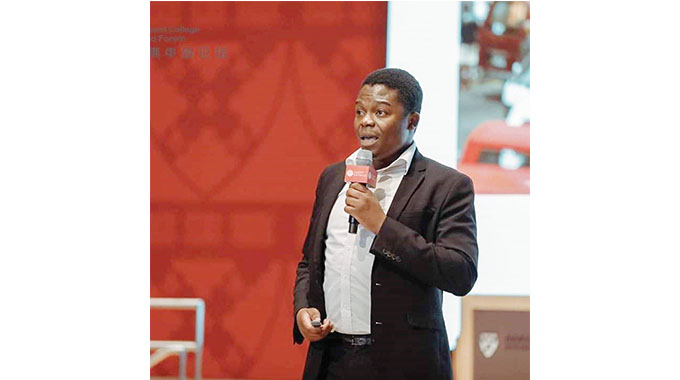
You have probably heard about Hope Tariro Ndhlovu, the boy genius from Bulawayo, who went to Harvard University and created a transport application that has won him numerous awards in the United States of America.
What you probably haven’t heard is the backstory that shaped him into the man and entrepreneur that he is now.
Acting B-Metro Editor Stanford Chiwanga sat down with the whiz kid and made him open up about his past, his personal and business life…
Who is Hope Ndhlovu?
My name Is Hope Tariro Ndhlovu. I am the founder and the CEO of Tuverl Inc and Tuverl Private Limited. I am an avid amateur chess player who holds a BA in Electrical Engineering and Computer Science from Harvard University.
As a Full stack Software Engineer, I am always looking for ways to leverage technology and Data Science to solve challenges faced by people in Zimbabwe and Africa as a whole.
How old are you?
I am 28 years old.
Tell us about your childhood — where did you grow up, schools you attended and how did you find yourself at Harvard?
I was born and raised in Bulawayo. I did my primary school at three different schools namely, Mtshane Primary in Nkulumane, Masase Primary School at Masase Mission in Mberengwa and Sigombe Primary in Nkulumane. Before receiving a scholarship to study at Harvard University, I did my A-Levels at Mpopoma High School and my O-Levels at Ihlathi High School in Bulawayo, Zimbabwe. I also had short stint at Founders High School when I was Form 1.
I was selected into the United States Students Achievers Programme, then an US Embassy funded NGO that helped high potential students from Zimbabwe apply to top tear universities in the USA. This was a very competitive and selective process, as they selected some of the top students from around Zimbabwe.
Students were selected based on their academics, prowess extra-curricular activities, leadership potential and an ethos for giving back to the community. I was one of 32 students from around Zimbabwe in our cohort. The programme provided financial assistance, coaching and training as we prepared to apply to American institutions.
With lots of hard work and a bit of luck I applied to Harvard University and received a full scholarship. I had excellent grades and participated in numerous extracurricular activities. I received 20 points for my A-Levels in Mathematics, Physics, Chemistry and Further Mathematics.
I was Zimbabwe National Scholars Chess Champion in different age categories for several years while in high school. I was in junior Parliament as a Child Member of Parliament representing Mpopoma/Pelandaba Constituency and I was selected as a Child Minister of Legal and Parliamentary Affairs. All these exploits compounded and helped in advancing my application to Harvard University.
Is your story a rags to riches story?
Am I from rags? For sure. However, I just haven’t arrived at the riches yet. There is still plenty to accomplish and achieve.
Tell us about Tuverl. What is it all about and what is its purpose? How did you set it up? Whose idea was it?
Tuverl is an app that seeks to make public transport cheaper and more accessible to millions of commuters across Africa by helping public transport operators optimise their routes, reduce operational costs and increase revenue. Tuverl seeks to promote smart, resilient and sustainable cities and communities by improving urban mobility and public transportation.
Tuverl leverages Data Analytics, Geolocation, Fintech, and Machine Learning to improve and optimise public transport and fundamentally change how commuters in African countries pay for it, starting with Zimbabwe.
Commuters and drivers can download the Tuverl App on Google Play Store.
Using the Tuverl App, commuters book intercity carpool trips, book long distance or intercity buses, and pay for their public transportation using local fintech solutions.

The Tuverl App empowers drivers and operators connect with commuters faster and easily, sell their tickets online, manage their fleets, and process fares digitally. This helps these two stakeholders to increase the number of commuters per trip, increase the number of trips per day and reduce usage of resources like fuel and man hours that are wasted by randomly searching for commuters.
In most African countries, public transport is an industry that is run by private companies; millions of small to medium enterprises whose buses and minibuses drive around cities and rural areas without any timetables or schedules. This makes public transport very unreliable to commuters, who are often late to work or school as a result, losing valuable productive time worth billions of dollars per year. Commuters struggle with locating buses and minibuses as they are often piled up at “Taxi” ranks or docked at inconvenient locations. On boarding public transport, commuters often experience delays as drivers search for passengers to fill up the vehicle. Public transport commuters lack a convenient way to purchase bus tickets as they don’t have a central repository of information about bus timetables.
Without any schedules and timetables, public transport driver wastes time and fuel, trying to locate commuters along their designated routes or park in one place waiting for commuters to find them. This is highly inefficient, as they do not maximise on the number of commuters they pick or the number of trips they do in a day. This often leads to very low revenue, and low pay for drivers who are often paid on commission by operators.
I came up with the idea while at university, after taking an elective class in Social Entrepreneurship at the Harvard Kennedy School. I have always been someone who is easily irritated and annoyed by the inefficiency of public transport in Zimbabwe. Minibus drivers, conductors and touts are notorious for poor customer service. Buses are almost always late and commuters don’t have control over their time when they travel.
Combining my personal experiences with public transportation while growing up with my newly acquired software development skills and the mind-set of a social entrepreneur, I co-founded Tuverl with a college friend from Lesotho. We incorporated the company as Tuverl Inc in the United States in May 2019 and eventually registered the company in Zimbabwe as Tuverl Private Limited in July 2019.
You now have offices in Zimbabwe. Why Zimbabwe and Bulawayo in particular? And how has been the reception to your company?
We are currently fully operating in Zimbabwe. The Covid-19 pandemic slowed down our product launch but we launched our product in August 2020 when the Government eased lockdown regulations.
Bulawayo has always been an industrial hub for Zimbabwe. I am particularly keen to help revive industry, manufacturing and technology in Bulawayo. I am one of many entrepreneurs from Bulawayo, pushing for this agenda. It won’t be easy without support from Government but we will do what we need to do as young tech entrepreneurs.
Are you now based here for good or you will be flying in and out?
I am not yet fully based in Zimbabwe. I will most definitely be flying in and out of Zimbabwe. However Covid-19 has obviously limited by ability to travel frequently. We are currently sourcing foreign direct investment for our company and we are making plans for how we will scale the Tuverl App to neighbouring countries that include South Africa, Namibia, Zambia, Botswana and Mozambique.
You have won a number of awards. Tell us more about them.
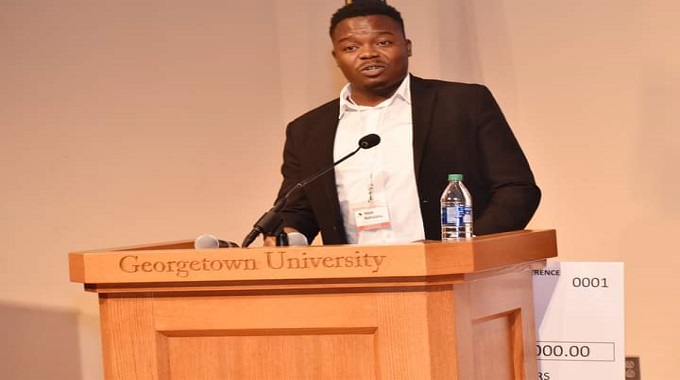
In the past Tuverl has received several awards and recognition. We won the Georgetown Africa Business Conference Pitch Competition, winning the first prize. The competition was held in early February 2020 at Georgetown University in Washington DC.
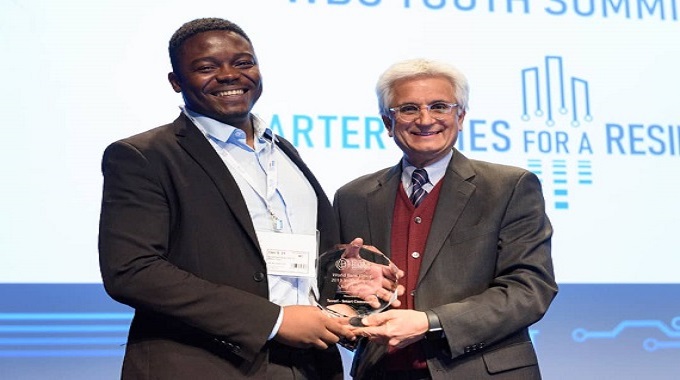
Tuverl won the World Bank Youth Summit Pitch Competition in early December 2019 held at the World Bank Headquarters in Washington DC. In mid-December 2019 Tuverl won the YouthConnekt Sustainable Development Goals Video Competition.
We have participated in several pitch competitions, winning the Fan Favourite prize at the RevRoad Pitch Competition in Provo, Utah, and finishing third place at the Harvard China Forum Pitch Competition in Cambridge, Massachusetts in early April 2019.
We participated in the MassChallenge Accelerator Boston Cohort in 2018 and we were part of the 10th cohort of Halcyon Incubator Programme from January–June 2019. Tuverl was recently a Start-up Battlefield 2020 finalist.
The pitch competition was held virtually in September 2020.
What do your parents and loved ones say about your achievements?
People at home are excited about my journey and they are very supportive in helping me soldier through some of the challenges I experience as an entrepreneur. Founding a startup, developing a product and launching it on the market is not a spectator sport and neither is it for the faint hearted. You always have to be hopeless optimist. Seeing a solution to an endemic problem that some may not think is a big deal is most often an isolating experience.
However I have received tremendous amount of support from friends, family, mentors, business incubators and accelerator programmes. We are looking forward to more engagement with some key stakeholders like Public Transport Unions, City Councils and the Central Government.
Five years from now where do you see Tuverl at?
We hope to scale our product to most countries in Southern Africa. In the next five years I see Tuverl as the primary Public Transportation App for people in Southern Africa. We hope our region will be spring board for our company to scale to the rest of the continent and other developing economies around the world.
Any special lady in your life? Where is she from? Where did you meet? Walking down the aisle anytime soon?
Yes, I do have a special lady in my life. Her name is Shamiso Masunga. We initially met when we were in Form 1 at Founders High School, but started dating later on in life. We are making plans and arrangements for marriage; it all makes sense.


 Online Reporter