Chronicle Editor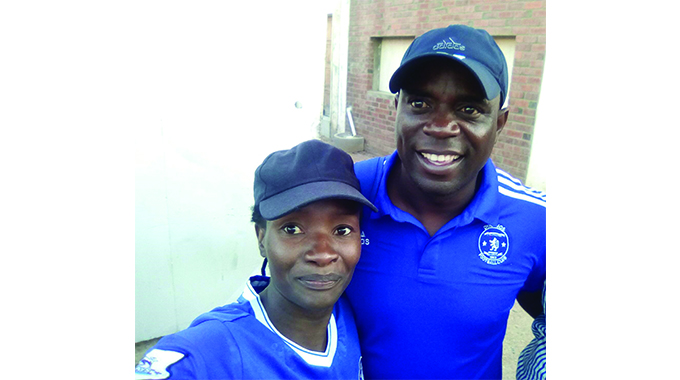
Sikhumbuzo Moyo, Senior Sports Reporter
SHE stays just a stone’s throw away from the city’s biggest stadium, which is home to the city’s biggest and most followed football club in Bulawayo.
The stadium is Barbourfields, also known as Emagumeni while the team is Highlanders, Bosso, Tshilamoya or Amahlolanyama.
While it is not a written thing, Mzilikazi suburb is generally viewed as the home of Highlanders, a football club that is like a religion compared to being a sporting institution to many.
The club also owes its origins to royalty. It was founded by King Mzilikazi’s grandsons Rhodes and Albert Khumalo in 1926.
By virtue of proximity to Emagumeni, one would expect that the majority, if not all residents of Mzilikazi, to be either Bosso fans or somehow relate to it.
If not, one would be either a Zimbabwe Saints sympathiser or simply not a football person, as the other teams were formed recently.
Supporting a team is by choice, anyone is free to support any team he or she feels like, but generally speaking some choices are not expected.
You cannot expect to see a black and white flag flying at a house in Mbare, Harare, just like you cannot expect to see a Barcelona kit or flag in Madrid or a Real Madrid flag in Catalonia, the home of Barcelona. It’s more of a taboo than anything. Not to say it cannot happen.
This is the story of one Sindiso Ndlovu.
Her residence and Barbourfields Stadium are separated by a single road just close to the Mpilo Central Hospital main entrance.
“I am an unapologetic Dynamos fan,” she tells Chronicle Sport at her J Square Mzilikazi home.
As the interview is going on, kids are playing street football and busy talking about Highlanders’ players, past and
present; an indication that the Bulawayo giants are the only thing they know when it comes to football.
“I grew up in Hwange and as you know it’s a small town with nothing much when compared to bigger cities like Bulawayo and Harare. I had a friend who went on to play for Dynamos, Tofireyi Sambo. He is the one who made me fall in love with DeMbare,” said Ndlovu.
She said even though Hwange were also playing in the Premier Soccer League, she never fell for them despite the fact that some of her friends were either Chipangano supporters or players like Joseph Mwansa and Chenjerai Dube.
“When I relocated to Bulawayo, there was always that urge to go with the tide and support Highlanders because their fans are just something else. Bayayithanda iteam yabo, but that did not move me. I am a one man band, like an antelope in a lion’s den.
Every time Dynamos come here I put on my regalia and just cross the road to the stadium. If we are playing against the city owners (Highlanders), I will be the only one clad in blue and white in the community,” said Ndlovu.
Asked if she has not faced some abuse or ridicule, Ndlovu said sometimes she gets the wrath of some die hard Bosso neighbours.

“I remember this other day Highlanders had lost on a Saturday and Dynamos were playing against Bantu Rovers I think, and as I was leaving home. Someone shouted on top of her voice telling me to leave the neighbourhood and never come back because ngingumthengisi, but it never deterred me.
To me football is not about tribe and people must be free to support any team they feel like supporting,” said Ndlovu. Asked if besides the abuse, she occasionally faces for supporting Dynamos while being a resident of Mzilikazi, she had faced any other ridicule from male chauvinists while attending football matches, Ndlovu said she has sometimes been called a whore by merely being a football fanatic.
“It’s just unfortunate that some people believe that ladies who attend soccer matches are of loose morals. I really don’t know where they get this foolish idea from. You hear people calling us all sorts of names simply because we are ladies; it’s not fair at all.
Personally I have told myself that whatever these fools say, I will not stop attending football matches, especially when my favourite team Dynamos is playing. I also want to encourage other ladies out there to fight this stigma. They must be their own persons and do what they feel like doing,” said Ndlovu.



 Online Reporter