Online Reporter
MONITORING, Evaluation and Learning (MEL) has become an increasingly important pillar of the Second Republic’s approach to governance, implementation, accountability and results-based development.
Under the leadership of President Mnangagwa, the Second Republic has continued to strengthen the MEL architecture to ensure that policies, programmes and projects are not only implemented, but also deliver measurable results and tangible improvements in the lives of citizens.
The 2026 MEL Week, which started on Monday and ends today in Masvingo Province, provides a national platform to reflect on progress, interrogate implementation challenges, share experiences and lessons, and strengthen the use of evidence in decision-making.
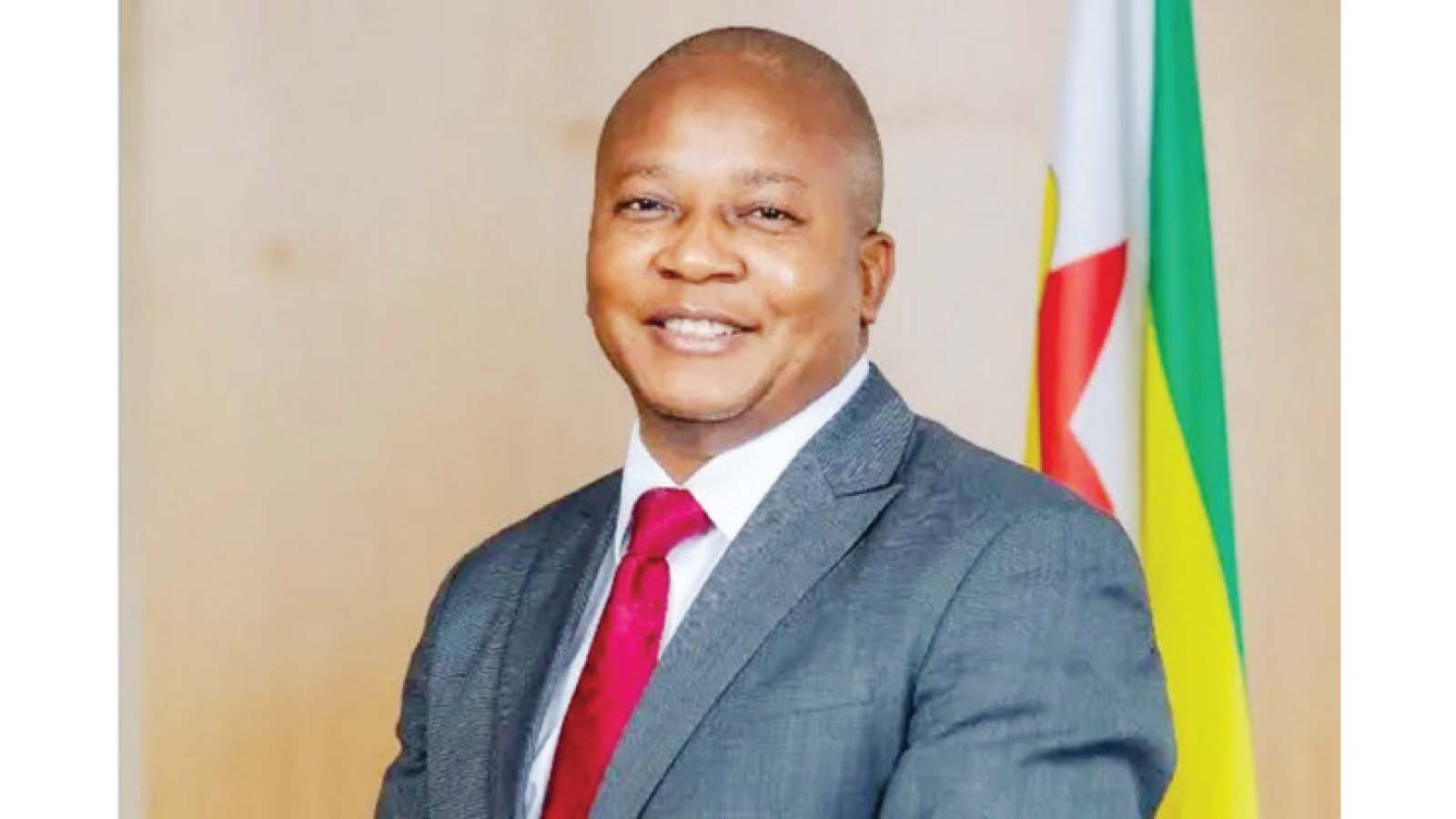
Herald Deputy National Editor Africa Moyo yesterday sat down with the Special Advisor to the President on Monitoring the Implementation of Government Programmes and Projects, Dr Joram Gumbo, to gain a deeper understanding of the significance of MEL Week, the progress made, emerging lessons, and how a stronger Whole-of-Government and Whole-of-Society approach to monitoring and learning can accelerate the delivery of National Development Strategy 2 (NDS2) targets and Vision 2030.
Q: Dr Gumbo, may you start by telling us the core purpose of the 2026 MEL Week?
A: The MEL is the country’s premier platform for policymakers, Government officials, development partners, researchers, academia, private sector and MEL professionals to exchange knowledge, share experiences and advance evidence based informed decision making for sustainable development in pursuit of Vision 2030. The core purpose is to strengthen Monitoring, Evaluation and Learning as a strategic instrument for accelerating national development and improving public service delivery.
MEL Week seeks to:
– Strengthen evidence-based decision-making across Government;
– Accelerate implementation of programmes and projects under NDS2;
– Track progress towards the aspirations of Vision 2030;
– Strengthen Zimbabwe’s contribution towards the Sustainable Development Goals (SDGs);
– Identify implementation bottlenecks early and support timely corrective action; and
– Ensure that Government investments translate into tangible improvements in livelihoods and socio-economic development.
Ultimately, MEL is about ensuring that Government plans, policies and investments deliver measurable results for citizens.
Q: In your view, to what extent is MEL critical to achieving Vision 2030?
A: Vision 2030 is about transforming Zimbabwe into an empowered and prosperous upper-middle-income society. Achieving this aspiration requires more than developing policies and programmes; it requires us to rigorously track whether these interventions are producing the intended results.
MEL provides the evidence needed to:
– Measure progress against national development targets;
– Identify what is working, what is not working and why;
– Accelerate programmes that are delivering results;
– Correct implementation gaps before they become major obstacles;
– Demonstrate the impact of public investments on citizens.
In simple terms, MEL helps Government move from planning for development to measuring, learning from and accelerating development.
Q: What does “transformative and adaptive MEL” mean for the ordinary citizen?
A: Transformative MEL means moving beyond simply asking whether an activity was completed to asking whether it changed people’s lives for the better. Adaptive MEL means using timely evidence and emerging information to adjust policies, programmes and projects when circumstances change.
For an ordinary citizen, this should ultimately mean:
– Better healthcare services.
– Improved roads and infrastructure.
– More efficient schools and public institutions.
– Greater access to water, energy and other essential services.
– More productive agriculture and employment opportunities.
– Reduced wastage and better use of public resources.
The ultimate test of MEL is not the number of reports produced, but the improvements that citizens experience.
Q: May you tell us how MEL contributes to the implementation of NDS2?
A: NDS2 provides the national development framework for the next phase of Zimbabwe’s transformation. MEL provides the feedback mechanism that keeps implementation on course.
It helps Government to:
– Track NDS2 milestones and performance indicators;
– Monitor implementation across sectors and provinces;
– Identify bottlenecks affecting priority programmes;
– Generate evidence for policy and resource-allocation decisions;
– Strengthen accountability for results; and
– Capture lessons and good practices that can be scaled up.
MEL, therefore, helps ensure that NDS2 does not remain a policy document, but becomes a measurable programme of transformation with visible results on the ground.
Q: On the issue of Zimbabwe’s Sustainable Development Goals, how does MEL come in to support?
A: MEL provides the evidence required to determine whether national development interventions are contributing towards the SDGs.
It enables Zimbabwe to measure progress on issues such as:
– Poverty reduction.
– Food and nutrition security.
– Health and education.
– Water and sanitation.
– Employment and economic growth.
– Infrastructure and innovation.
– Gender equality and social inclusion.
– Environmental sustainability.
Importantly, MEL helps ensure that national development priorities and global commitments reinforce each other, while keeping the focus firmly on Zimbabwe’s development priorities and the welfare of its people.
Q: Last year, the MEL Week was held in Harare and this year, it is in Masvingo. May you tell us what has informed this choice of venue?
A: Taking MEL Week to Masvingo reinforces the principle that national development dialogue must reach all parts of Zimbabwe.
Masvingo provides an opportunity to:
– Decentralise national policy and development dialogue beyond Harare.
– Showcase development initiatives and innovations at provincial and local level.
– Bring national stakeholders closer to communities and implementation sites.
– Promote learning across provinces.
– Demonstrate that effective MEL must capture realities on the ground, where development is being implemented and experienced by citizens.
Q: So, Dr Gumbo, who have been the participants in MEL Week?
A: MEL is a Whole-of-Government and Whole-of-Society responsibility, as such, the event has brought together a broad range of stakeholders, including:
– Government: Ministries, Departments and Agencies;
– Provincial and local authorities: As frontline implementers of development programmes;
– Academia: Universities, researchers and policy think-tanks;
– Private sector: Businesses, investors and technology innovators;
– Development partners: UN agencies, NGOs and international development institutions;
– Civil Society and Communities: To strengthen citizen-centred development; and
– Monitoring and evaluation professionals: To advance professional standards and practice.
– Foreign Organisations, Delegates and Presenters: Including from Tanzania, UK, South Africa, Kenya, Uganda among other countries. Zimbabwe has also sent delegations to MEL events in other countries, to equally learn from their experiences and draw lessons for implementation, adaptation, refinement and for the enhancement of our MEL frameworks, tools, performance indicators and other critical areas for improving performance,
– And other key sectors.
The objective is to create a platform where evidence, experience, innovation and policy converge to improve development outcomes.
Q: And how many people are participating in MEL Week 2026?
A: We have 1 201 participants! This overwhelming interest and participation from stakeholders reflect the growing recognition of MEL as a critical tool for strengthening accountability, evidence-based decision-making and public sector service delivery.
– The event’s oversubscription further demonstrates the strong demand for knowledge-sharing, innovation and collaboration around Monitoring, Evaluation and Learning.
– The diversity of participants and sectors represented has enriched the dialogue, bringing together different experiences, perspectives and practical approaches to using data and evidence to improve development outcomes.
– The strong provincial and multi-sectoral participation affirms that the MEL platform has been laid for all these stakeholders to share, connect, learn and translate evidence into action and commit to a results-oriented public sector that delivers tangible outcomes for citizens.
Q: So, as the event draws to an end, what have been the major highlights of MEL Week 2026?
A: The week has emerged as a resounding success, with overwhelming participation. Highlights have been rich and diverse, reflecting both technical learning and public engagement. They include:
– The commencement of the event with an overwhelming participation across sectors;
– MEL awareness march to raise public awareness of both the practice and the conference;
– Presentations, panel discussions and clinics fostering interaction, training and knowledge sharing;
– Thematic focus on local governance, data driven decision making, AI driven MEL, adaptive MEL systems, data visualisation and digitalisation as tools for supporting decision making and learning;
– Deep dives into theory of change, accountable service delivery, empowerment mechanisms and multiplier effects, and institutionalising MEL;
– The official launch of the event by Guest of Honour Hon. Vice President K.C.D. Mohadi;
– The launch of the National Key Performance Indicators Handbook;
– Exhibitions showcasing innovations and good practices;
– Awards for the best abstract, best exhibitor, country with the highest number of delegates among others;
– A learning visit to Tugwi-Mukosi Dam to connect MEL with real implementation sites;
– More events are lined up to reinforce the culture of evidence based decision making and learning.
Q: What takeaways will participants gain from the training sessions on offer?
A: Participants will gain practical capabilities to strengthen the quality and usefulness of MEL within their institutions, including:
– Modern data collection and analytics skills;
– Results-based monitoring approaches;
– Transformative and adaptive evaluation methodologies;
– Use of real-time monitoring and dashboard technologies;
– Techniques for measuring outcomes and impact;
– Approaches to identifying implementation bottlenecks; and
– Methods for converting evidence into actionable policy recommendations.
The broader objective is to develop a stronger national MEL culture in which data is not merely collected, but actively used to improve decisions and accelerate results.
Q: The ordinary person would want to know how MEL Week helps accelerate Government projects and programmes. How do you react to this?
A: MEL provides an early-warning and problem-solving mechanism for implementation. Through effective monitoring, Government can identify:
– Delays and stalled projects;
– Resource and procurement challenges;
– Institutional capacity gaps;
– Quality and compliance issues;
– Policy and coordination bottlenecks; and
– Projects that are not delivering their intended outcomes.
This enables decision-makers to take corrective action early, unblock implementation and accelerate delivery.
MEL, therefore, supports a shift from reactive problem-solving to proactive implementation management.
Q: Related to the above, how does MEL ultimately improve the lives of ordinary people?
A: MEL connects Government expenditure and interventions to the real outcomes experienced by citizens. When MEL works effectively, it helps Government determine whether investments are resulting in:
– Better healthcare.
– Better education.
– Improved roads and public infrastructure.
– Increased agricultural productivity.
– Greater access to water and energy.
– More jobs and economic opportunities.
– Better public services.
– Reduced wastage and improved value for money.
At the centre of all these efforts is one fundamental question is: Are Government interventions making a meaningful and measurable difference in the lives of our people?
Q: From the way MEL has been structured, it looks like it only focuses on monitoring Government performance. How far true is that view?
A: No. Modern is about learning, adaptation, innovation and continuous improvement.
It asks: What did we plan? What have we achieved? What changed? Why did it change? What is working? What is not working? What should we do differently? And how can successful interventions be scaled up?
This makes MEL a strategic management and development tool rather than simply an administrative reporting function.
Q: What makes the 2026 MEL Week particularly important?
A: The 2026 MEL Week comes at a critical stage in Zimbabwe’s development journey as the country implements NDS2 and works towards the Vision 2030 aspiration. It provides an opportunity to strengthen the national capacity to:
– Track development milestones;
– Accelerate implementation;
– Improve accountability and performance;
– Strengthen evidence-based policymaking;
– Enhance value for money;
– Institutionalise learning and innovation; and
– Ensure development outcomes reach communities.
MEL Week is therefore not simply a professional conference. It is a national platform for strengthening the machinery that turns development commitments into measurable results.
Q: As we conclude, Dr Gumbo, what key message should Zimbabwe take from MEL Week 2026?
A: The central message is that development must be measured by results and, ultimately, by the difference it makes in people’s lives. As Zimbabwe advances the aspirations of Vision 2030, NDS2 and the SDGs, effective MEL will help ensure that every programme, project and public investment is continuously monitored, evaluated, improved and accelerated.
MEL is therefore not simply about measuring progress. It is about using evidence to accelerate development, strengthen accountability and ensure that no community is left behind. The 2026 MEL Week should therefore leave us with renewed commitment to a culture where evidence informs decisions, learning improves implementation and results remain at the centre of national development.