admin
admin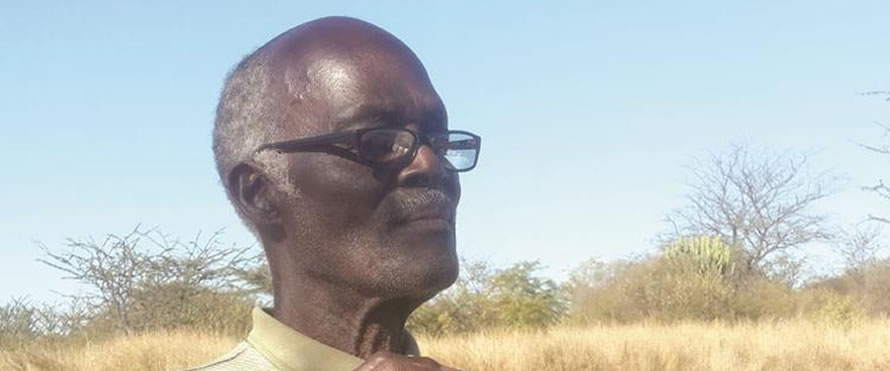

Vusumuzi Dube Sunday News Reporter
Those who were born after independence probably know Dr Nkomo as the country’s vice president and one of the main instigators of the famous Unity Accord, together with President Mugabe, on 22 December 1987, this bringing together Zanu-PF and PF-Zapu, which were led by these two great leaders. However, there are a few individuals who knew, lived and were part of Dr Nkomo’s life during the days when the nation was still fighting for its liberation, the days when nationalism was still at its infancy, days when, to many nationalism was by then regarded as merely a labour movement.
Days of the late heroes such as Cde Benjamin Burombo and Cde Edward Ndlovu, days of the famous railway strikes and the Zhi uprisings in Bulawayo. Cde Aaron Ndlovu was not only a key figure in the labour movement but says he is one of the two surviving Zapu national executive members when the country achieved independence in 1980. The national executive had 25 members and only Cde Cephas Msipa (former Midlands Governor) and him are still alive. Cde Ndlovu was the Zapu national executive secretary for labour and in 1980 was offered the position of Minister of Labour, which he says he turned down due to political differences.
Sunday News managed to track down Cde Ndlovu to his Elangeni Farm in Kensington, where he lives with his wife and grandchildren.
In the following interview, Cde Ndlovu (AN) tells Sunday News reporter Vusumuzi Dube how he joined the liberation struggle, his fond memories, his training as a soldier and influence in the labour movement the world over.
VD: What can you tell us about yourself, who is Cde Aaron Ndlovu?
AN: I am a very young man born on 9 March 1929; if you do your calculations you will discover that I am just 85 years (chuckles). I am the third born in a family of 12 and I am so proud to say that up to this day my elder sister and brother are both alive, which I consider to be quite a blessing. I am married to Cumile Mkhwananzi and we have two children, Mlondolozi and Ngqabutho. To be frank I wouldn’t know where to begin if I am to tell you about myself as I have experienced a lot in this short life. I will tell you that I was part of the Second World War when the whites took us to go fight against (Adolf) Hitler. There is a lot that even a day will not be enough for me to chronicle my life experiences. I have never drank in my life and I have never fallen sick save for a slight headache.
VD: Maybe tell us how you entered the labour movement, politics and eventually the struggle for independence?
AN: From long back I was quite radical against the way we were treated by the whites. I never used to keep a job for too long as I did not appreciate being shouted at by these colonialists.
I remember at one point there was something called the Master and Servant Act, which spelled out how we as blacks were supposed to conduct ourselves around the white masters, and note that every white person was considered a master.
Things were just not conducive back then, blacks were not allowed to walk on the pavements with whites or get into hotels or restaurants with the “masters”. One thing which I, however, greatly despised was that we were also not allowed in the same churches as the whites.
A fond memory in that regard was that at one point together with my colleagues we organised ourselves, went to get some reporters at the Chronicle, carrying our Bibles entered a whites-only church along 12th Avenue. What I remember is that the pastor, who saw us coming in shouted something referring to us as kaffirs. What followed was great commotion, with the whites struggling to push us out.
The Chronicle reporters were also busy taking pictures of this and I remember that the following day on Monday there was a huge headline that read: “Even in church there is discrimination.” By then I was already actively involved in the labour movement and eventually I decided to cross to Tanzania after the formation of Zapu, under the command of Dr Joshua Nkomo. It is here that I initially got my military training. I went to various countries in the world all to get my training, these included mainly the socialist countries, inclusive of Cuba, the Soviet Union and the then East Germany. When I returned I was now a commander but they put me in charge of the labour front and hence represented the party all over the world lobbying labour movements to support our cause.
I will tell you that of all the continents I have never been to Australia only, I interacted with the likes of former Zambian President Frederick Chiluba, who was under my leadership in terms of labour movements in Southern Africa.
My duties were to get in touch with the world and tell them the truth of what was happening in Rhodesia.One of my greatest achievements was that I also managed to source a number of scholarships for our cadres in countries that were friendly to us.
I can tell you that there are a number of doctors, lawyers and other professional people out there who are what they are today because of the scholarships I personally sourced.
VD: I know you have mentioned a few events and activities of note which you were part of but in your lifetime which event did you spearhead, which you rank as the fondest, which you will never forget?
AN: That is very easy; the 1960 Zhi uprisings, it is unfortunate that this has been constantly ignored but trust me when I tell you and you can even confirm this with the few cadres who are still alive; Zhi was spearheaded by me. I had a more than central role. It actually started in the morning at Stanley Square at a rally organised by a number of labour movement leaders including Cde Burombo. You must understand that to hold such meetings people had to apply from the police and in this case this had been overlooked. I was in Njube then and was told that there was violence during the rally with the workers clashing with the police, and some leaders having been arrested. I rushed to town looking for Cde Jason Moyo and Cde Edward Ndlovu.
They informed me that things were bad at Stanley Square, warning me not to go there as some leaders had been arrested. I deliberately went to Stanley Square before proceeding to the corner of Lobengula Street and First Avenue where the police had mounted a road block with their armoured vehicles.
One of them, who seemed to be in charge, asked me whether I was in charge, of which I agreed. He then told me that the crowds that had been following me should disperse, he then gave me a letter with this instruction.
I then got on top of his car and addressed the crowd in Ndebele, so they could not understand, saying; “kuthiwa sihambe siyekwenza umhlangano wethu” while waving the letter.
We went back to Stanley Square where I started addressing the crowd, it is then that the same officer came to me asking why I was now addressing the rally but by then people were now in a temperate mood with some now shouting Zhi, which means throwing a spear to attack in Ndebele. It is on that very evening that the Zhi uprisings took place.
VD: Come 1980, what happened?
AN: By 1980 I had been very busy in the labour movement worldwide that for a number of years I was being retained as the ZAPU national executive secretary for labour. After elections I was offered the position of Minister of Labour, which I declined due a number of political differences but I remained active in Zapu for a number of years before I quit politics. I remember when we came from the bush we were 25 Zapu national executive members and of those all are now dead except myself and Cde Cephas Msipa.
VD: Of all your years globe-trotting to drum up support for the liberation struggle what lessons did you learn that can be applicable today?
AN: I remember at one time I visited Cuba under Fidel Castro and he had one policy which roughly translated to, don’t ask someone to do what you cannot do. By all standards I have never seen a leader like Castro, he would wake up like any other person go to the farm drive the tractor and till the land. He would take lunch breaks like everyone, without pushing for any preferential treatment. His predecessor had left a house whose inside was gold coated but Castro rejected it and preferred to stay inside an army barrack.
VD: Cde Ndlovu thank you for opening your home to us may God bless you with many more years so that you share your stories with future generations.
AN: My pleasure and thank you for coming.


 derick.khumalo