Chronicle Editor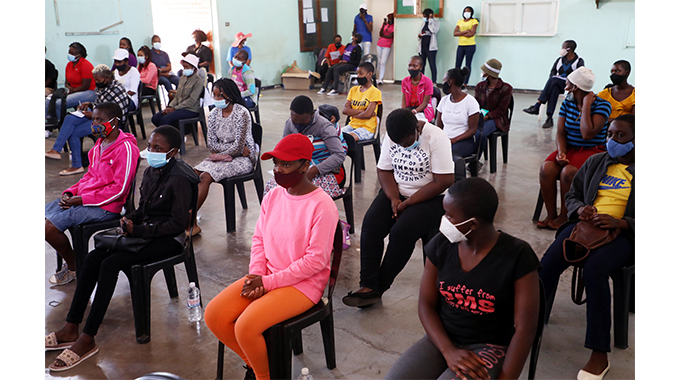
Eliah Saushoma, Chronicle Reporter
THERE is an urgent need for inclusive conversations on menstrual health and hygiene with all genders to dismantle the stigma around periods, activists have said.
The activists called for Government and private sector subsidies to enable free distribution of pads at schools.
Limitless Women Zimbabwe on Saturday held a belated World Menstrual Day commemoration with stakeholders where it donated packs of sanitary pads and soap to girls and young single mothers from Ward 6 in Bulawayo. The community identified where there was a need then the organisation came in to assist.
No woman or girl should live in a world where they are limited by something as natural and normal as menstruating, was the resounding message from the event.
Limitless Women Zimbabwe director Mrs Busisiwe Brown said it was every citizen’s duty to ensure sisters, mothers, and wives in the community did not “suffer quietly” due to failure to access sanitary pads.
“We have worked with the community and they actually alerted us of the issues that were there concerning the pads and prices and everything, so as Limitless Women Zimbabwe we are actually doing reusable pads and teaching the girls how to use them,” she said.
Mrs Brown said the Covid-19 pandemic exposed menstrual inequities which continue to deepen across communities. The measures imposed as a response to the pandemic resulted in economic stress in families that are putting girls and women at a disadvantage while many have been cut off from essential sexual and reproductive health services and social networks.
Menstrual Hygiene Day is an annual global event to raise awareness about the challenges women and girls face due to menstruation and to highlight solutions that address these challenges. It is celebrated to mark the importance of menstrual hygiene, break the stigma around periods, raise awareness and change the negative mindsets. It is observed on May 28. The date was chosen because on average the menstrual cycle for most women is 28 days and the menstruation period for most women is for five days. Hence, the date was kept as 28/5.
The theme for this year is: “Action and Investment in Menstrual Hygiene and Health.”
Mrs Patience Dube of Hope Alive Child Network, whose organisation was part of the celebration, said failure to access something as basic as clean water and sanitary pads during menstrual periods can strip women of decency and self-esteem, thereby compromising their ability to fully participate in bettering communities and countries they reside in.
“We as an organisation urge Government to at least increase the budget towards adolescent girls and women, especially at schools, to ensure girls were given sanitary pads at all schools,” said Ms Dube.
She also said without menstrual products, women and girls are forced to use improvised materials to manage their periods, including torn pieces of clothing and rags, which can cause infections and cancer.
The celebrations saw girls breaking into discussion groups where the true horror of failure to access sanitary ware was laid bare.
The cost of sanitary pads ranges from $100 to about $250 per packet depending on the brand and an average woman may need up to three packs monthly.
Some families, especially in rural areas, cannot afford the expense.
Mary Zvidzai (17) said girls who couldn’t afford sanitary pads were often unable to go to school because they were teased by boys if their clothes became stained. She said some girls lack knowledge due to ignorance of personal hygiene.
A 14-year-old who chose to remain anonymous said: “We are struggling financially and are unable to buy sanitary pads and soap to wash the reusable pads. Sometimes we do not even have soap to bath to keep ourselves clean. Sanitary pads must be provided at schools particularly for the underprivileged. Imagine during your period you rush to a shop and the money is short to buy the sanitary pads when you need them most. Who do you ask for assistance? When you try to explain people start making fun of you. This is a painful experience.
By the end of the day, we just end up using pieces of cloth which might endanger our health.”
She said men must take note of changes in their girl children and to some extent take the role of mothers by being approachable and empathetic when their children start menstruating.
Ward 21 Councillor Tawanda Ruzive who was also in attendance said it is time for stakeholders to act instead of having similar discussions every year without change. He mooted the use of part of the councillor ward retention funds to buy pads. The councillor urged stakeholders to come together and involve men as the menstrual issue cuts across genders.
Participants said it was sad to note that the subject of menstruation is still considered taboo and shameful and is rarely open for discussion.
They said society needed to help break the silence, raise awareness, eradicate period poverty, and change negative social norms surrounding menstrual hygiene so that women and girls feel empowered to manage their periods hygienically with confidence.
In a separate interview, Chief Sikhobokhobo from Nkayi said communities are still stuck to traditions, some of which are a danger to women and children.
“I urge developmental partners to engage us chiefs in order to disseminate information to our people. Such situations need a holistic approach,” said Chief Sikhobokhobo.
“Zimbabweans cannot press development agendas without involving a chief. I for one, am not blinkered by tradition. I am open-minded and I am willing to empower women at every turn. You know a villager might hide something from a police officer but can share the secret with the chief. We don’t know what the belief is. You leave a chief, you leave a community member with concerns behind. Hence I urge be it teachers, health officials or NGOs dealing with such issues to involve chiefs.”
In 2019, Government scrapped import duty on sanitary ware and availed a budget of $200 million through the Ministry of Primary and secondary Education to cater for the provision of sanitary ware for girls in schools. — @Saush


 Online Reporter