

 Chronicle Editor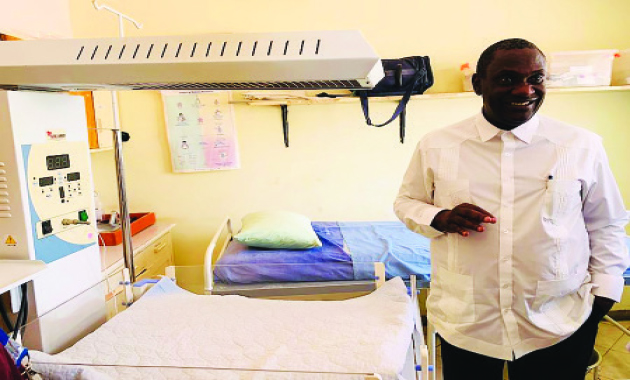
Patrick Chitumba, [email protected]
OVER 50 clinics have been constructed by local authorities using devolution funds in Midlands Province, as the Second Republic walks the talk in terms of enhancing universal health coverage in communities.
There has been a notable improvement in service delivery by local authorities since the disbursement of the Inter-Governmental Fiscal Transfers (IGFT), commonly known as devolution funds.
The model has been able to fill a huge gap, as it has shifted the development landscape, as well as corrected colonial imbalances of skewed development.
Through devolution funds, the Government has improved community participation in development planning and infrastructural development.
Midlands Province has achieved key milestones in the health sector, which include the Gweru Provincial Hospital High Dependency Unit, Gweru Infectious Disease Hospital and the private ward at the Zvishavane District Hospital.
Kwekwe Town Council has an infectious diseases hospital, which will benefit the people of Mbizo and surrounding areas.
Other health centres that the Government has commissioned include Mapfungautsi Polyclinic under Gokwe Town Council and Chimbindi and Hwata clinics under Chirumhanzu Rural District Council (RDC).
In Mberengwa, there is Mataga Mini-hospital that will be commissioned soon by President Mnangagwa at Mataga growth point among other clinics that have been constructed by Mberengwa RDC using devolution funds.
Vungu RDC has Impala Clinic, which will reduce travelling distances to the nearest health facility for communities in the Chief Sogwala area by about 10 kilometres.
Gokwe South RDC commissioned Ganye Clinic and in Shurugwi District, Tongogara RDC worked on the Tongogara Polyclinic and Gamwa Clinic.
Shurugwi Town Council has Sebanga Polyclinic.
Addressing delegates and Government officials after a recent tour of Zhombe Mission Hospital in Kwekwe District, the Minister of State for Midlands Provincial Affairs Owen Ncube said over 50 clinics had been constructed by the Second Republic in the province.
He said there were high-impact projects undertaken by the New Dispensation worth noting, which include the acquisition of 133 fire tenders for local authorities from Belarus, the construction of the Cowdray Park Hospital in Bulawayo, the acquisition and installation of the Magnetic Resonance Imaging Centre at Mpilo Central and Parirenyatwa Group of Hospitals and the refurbishment of Gweru Provincial Hospital High Dependency Unit.
“There is also the Gweru Infectious Disease Hospital, Kwekwe Infectious Disease Hospital, Mataga Mini Hospital, installation of solar power and drilling of solarized boreholes at health institutions were completed, among others,” said Cde Ncube.
“The MSU Pathology Centre, delivery of 18 medical air search and rescue helicopters from Russia to enhance timely healthcare service delivery and construction of more than 50 devolution-funded clinics in Midlands Province, among them Tongogara Poly Clinic, Mapfungautsi, and Sebanga Poly Clinic to ensure no one and no place is left behind.”
The minister said the Second Republic under the stewardship of President Mnangagwa was dedicated to the provision of improved health services for all Zimbabweans.
“To achieve this, the Second Republic is seized with industrialisation and modernisation of infrastructure in all sectors of the economy.
“State-of-the-art medical equipment for some health institutions has been procured and installed,” said Minister Ncube.
He said the Government has also identified land in a yet-to-be-identified location for a modern NatPharm Warehouse, which will supply drugs to hospitals and clinics.
“We are also attending to the challenges of medical equipment by working closely with the private sector and the Ministry of Health to resolve these issues as a matter of urgency.
“As we strive to improve health provision, let us be mindful of sustaining the gains that we have achieved so far in the community as we fight to contain the cholera outbreak recently reported in Mberengwa and Shurugwi,” said Minister Ncube.
He said Zhombe Mission Hospital is special to the Midlands Province, as it provides both essential health services and spiritual guidance that promotes moral values of love, hope, and unity.
The Mission Hospital was established by the church in 1963 and has remained strong as a referral centre for 10 clinics, directly serving a population of more than 27 000 people.
“In this regard, allow me to applaud and commend the Roman Catholic Church, in particular the Gweru Diocese, for complementing Government efforts towards the attainment of an upper middle-income economy earlier than 2030 ,through the provision of health education and other social services as contained in NDS1 and Sustainable Development Goals,” he said.
To address the issue of doctors’ residences and nurses’ houses, Minister Ncube donated 30 bags of cement, while the Member of Parliament for the area Cde Edmore Samambwa donated 50 bags and Chief Gwesela 20 bags.


 Online Reporter
 Blessing Chizhande