


 Online Reporter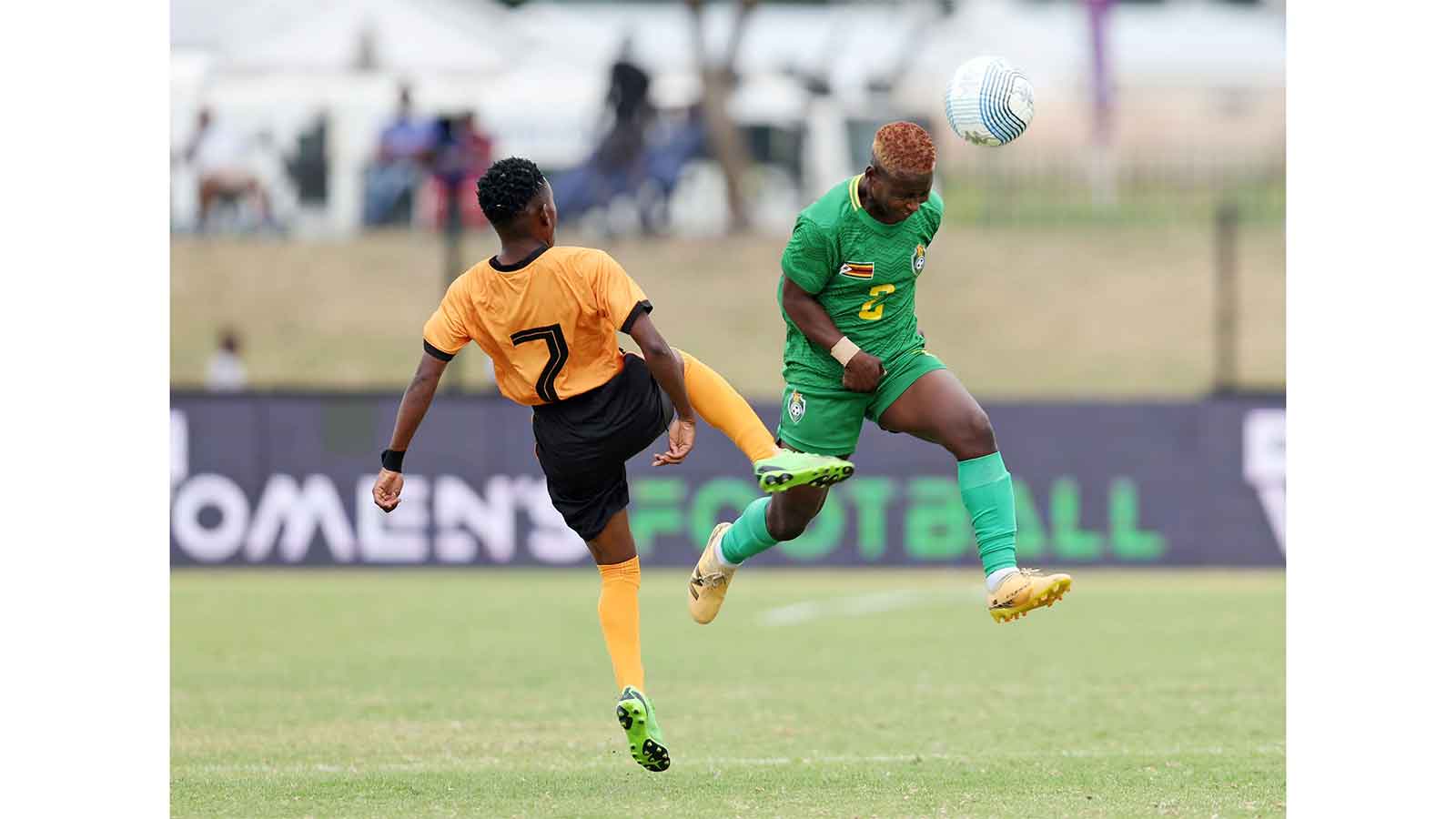
Veronica Gwaze-Zimpapers Sports Hub
FIONA “Chigodo” Kabera already knows what she will do with the money that has just landed in her bank account.
She will buy cattle for her mother.
Around her, the Mighty Warriors dressing room bursts into song.
Phones buzz almost at once as the players receive notifications confirming that their allowances and bonuses from the recent COSAFA Women’s Championship have finally been deposited.
There is laughter, clapping and dancing.
Weeks in camp and on the road have ended with a small reward. For many of the players, it means new clothes, a good meal or something to take home.
Kabera sits quietly for a moment, looking at the message on her screen.
Her thoughts are already travelling north, beyond the capital and past the long stretches of farmland that lead to Guruve.
“All I want is to go home and buy cattle for my mother,” the 28-year-old defender says, her voice steady.
“I watched her struggle to take us through school. This is my chance to change her life story.”
Kabera grew up in Guruve, about 150 kilometres north of Harare, where families depend on small fields and hard work to get through each season.
She is the second-born in a family of three children raised by a single mother.
Her father left when she was still young.
At first the children believed he had simply travelled to Harare for work, something he had done before.
Weeks passed, then months, and slowly the truth settled over the household.
He was not coming back.
Life changed quickly.
The family survived on occasional farm work and whatever small jobs their mother could find around the community.
Some days meant going without meals. School fees became a constant worry.
Kabera still remembers watching her mother carry that burden alone. “Those years were very difficult,” she says.
There were times when she and her siblings missed classes because the money simply was not there.
Whenever their mother found work on distant farms, the eldest child travelled with her. Kabera remained behind to look after the youngest.
Those long hours at home slowly pulled her towards football. Boys from the neighbourhood gathered on rough open ground to play social football with plastic balls tied together with string. Kabera would sit nearby watching the games.
Soon she began asking if she could join.
“We used plastic balls and it was fun chasing that precious thing on the rough pitch,” she says, smiling at the memory.
“People started telling me I had potential and that is when I decided to take football seriously.”
Teachers and coaches at Kondo Primary School noticed her ability and encouraged her to join the girls’ team.
From that moment the game became part of her daily life. Football also helped keep her in school.
Even when the family fell behind on fees, teachers often allowed Kabera to remain in class because of the promise she showed on the field.
Her mother soon understood what football meant to her daughter. Instead of discouraging her due to the long afternoons she spent on dusty pitches, she began supporting her.
At Kondo Secondary School, Kabera continued to grow as a player and in Form Two, she earned a football scholarship to study at St Francis High School.
The move opened a new chapter.
At St Francis, she quickly became known for her fearless defending, and teammates soon gave her the nickname “Chigodo”, a name that captured both her compact frame and the stubborn way she fought for every ball.
It was also during this period that she signed her first contract with Zimbabwe Women’s Premiership side Conduit.
For the first time football brought income into her life.
“I could help my mother with some of the things we needed at home,” Kabera says.
“It was not much but it meant a lot to us.”
Despite playing in rural Guruve, far from the attention of the capital’s football circles, Kabera’s progress continued.
She earned a call-up to the Zimbabwe Under-17 national team and later moved into the Under-20 squad.
Then life off the pitch took another turn.
Soon after finishing secondary school, she got married and became a mother. Football was paused while she focused on family life.
A year later she returned to the game.
Balancing football and motherhood proved difficult and tensions began to grow at home.
Kabera says her husband did not support her continuing career and arguments became frequent.
Eventually the marriage broke down.
Kabera returned to Guruve with her child and moved back into her mother’s home.
It could have ended her football journey.
Instead it gave her the chance to start again.
“My mother helped take care of my child so that I could focus on football,” she says.
She later joined Harare City Queens and spent two seasons with the club before making a decision that surprised many observers.
Kabera chose to return to Conduit in Guruve.
For her, the explanation was simple.
“All I wanted was to be close to my mother and my child,” she says.
“The memories of what she went through to raise us are still fresh in my mind.”
Last year she was finally rewarded for her determination.
Kabera received her first senior call-up to the Mighty Warriors and won two caps at the Three Nations Tournament in Malawi.
She was also part of the squad that competed at the recent COSAFA Women’s Championship, where Zimbabwe finished fourth among 11 teams.
Kabera featured in four of the five matches played by the national side.
The allowance from that tournament is the money that now sits in her bank account.
For many players, it is simply payment for work done on the field.
For Kabera, it carries a deeper meaning.
“I feel like breaking down when I think about it,” she says.
“This is the moment I have been waiting for.”
Back in Guruve, her mother still works the land the same way she has done for years, sometimes by hand and sometimes by borrowing draft animals from neighbours.
Kabera wants to change that.
“We used to struggle even to plough our fields,” she says.
Soon, when the ploughing season returns to Guruve, she hopes things will look different.
In the fields where her mother once worked alone, cattle will move slowly across the soil.
And this time, they will belong to her.



