admin
admin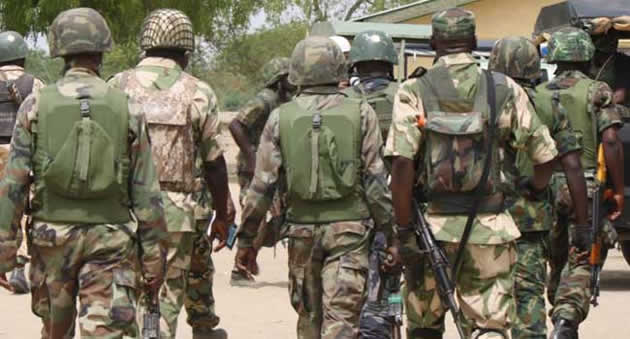
 Kano – Deadly clashes erupted between the military and Shi’ite Muslims in Zaria, northern Nigeria, which also left the group’s headquarters and the home of its leader destroyed, witnesses said on Sunday.
Armed soldiers carried out crackdowns on the pro-Iranian Islamic Movement of Nigeria (IMN) following an incident on Saturday involving the convoy of the chief of army staff.
The IMN, which seeks to establish an Islamic state through an Iranian-styled revolution, has been at loggerheads with Nigeria’s secular authorities, leading to occasionally violent confrontations.
The group’s leader, Ibrahim Zakzaky, has periodically been incarcerated for alleged incitement and subversion.
Northern Nigeria is majority Muslim and largely Sunni.
IMN spokesman Ibrahim Musa claimed dozens of the group’s members were killed when soldiers opened fire and “hundreds more were injured and arrested” when Zakzaky’s home and the sect’s mosque were attacked.
Zakzaky’s deputy and the group’s head of security were among the dead but the whereabouts of Zakzaky and his family was unknown, he added.
There was no independent confirmation of the death toll, although army spokesman Colonel Sani Usman said on Sunday evening there was “loss of lives”, without specifying numbers.
Local residents said soldiers backed by tanks invaded the Gyallesu area of Zaria and fought running battles through the night with hundreds of IMN members trying to block troops from reaching Zakzaky’s home.
Hundreds of sect members had mobilised from different parts of the north in response to an appeal on social media from the IMN leader for protection.
“Throughout the night gunfire rang all over the neighbourhood as soldiers kept opening fire on hundreds of Shia followers who kept trooping to the house of their leader to guard it,” said local Balarabe Gwargwaje.
“The house has since been demolished,” he added.
On Saturday, Shiite faithful blocked the main road outside their Husseiniyya religious centre, where hundreds had gathered for a ceremony.
The crowds obstructed traffic, including the convoy of Nigeria army chief Tukur Yusuf Buratai, witnesses and the military said.
The military claimed the Shi’ites attacked Buratai, which left soldiers no option but to retaliate.
The army said IMN members, who set barricades and bonfires on the road, were armed with “dangerous weapons” in a “deliberate attempt to assassinate the chief of army staff and members of his entourage”.
“The troops responsible for the safety and security of the Chief of Army Staff on hearing explosion and firing were left with no choice than to defend him and the convoy at all cost as well as open up the barricaded road for law abiding citizens,” it added.
Buratai was on an official visit to the city, the statement issued late on Saturday said.
IMN spokesman Musa, however, said there was “no reason” for opening fire and the group was made up of “defenceless people out to perform a religious ceremony”.
Meanwhile, Nigeria expects many of the 2.1 million people internally displaced by Boko Haram’s insurgency to return home in the coming year, amid claims the Islamists are in disarray and a spent force.
President Muhammadu Buhari said the return would begin “in earnest” in 2016 and his government “will do all within its powers to facilitate the quick return and resettlement” of IDPs.
Military commanders and the government believe they are on track to meet a year-end deadline to curb the group’s fighting capacity, despite continued suicide and bomb attacks targeting civilians.
Abuja is, however, appealing for help, with homes and businesses destroyed by six years of fighting and infrastructure, from clean water and electricity to health clinics and schools, severely hit.
Information minister Lai Mohammed said after a recent visit to Bama, in northeastern Borno state, that he was “astounded at the level of destruction and devastation.
“Not a single building was unaffected by the activities of the terrorists and no building is being occupied by its original resident,” he said earlier.
AFP visited Bama with the Nigerian military in March after it was recaptured by troops. Corrugated iron roofs lay ripped off among charred debris and houses were blackened with soot or in ruins.
Decomposing bodies could be seen around the town, 71km south-east of the state capital, Maiduguri.
Babagana Umara, commissioner of the newly established Ministry of Reconstruction, Rehabilitation and Resettlement in Borno, said the violence had left 17 local government areas completely deserted.
As well as Bama and Konduga, reconstruction has also begun in Benisheik, west of Maiduguri, and nearby villages, as well as in Mafa and Gwoza, where Boko Haram proclaimed a caliphate last year. – AFP


 Online Reporter