Sundaymail Editor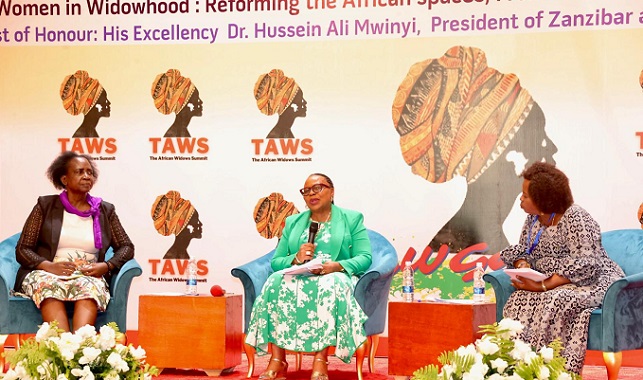
Sunday Mail Reporter
WOMEN Affairs, Community, Small and Medium Enterprises Development Minister Senator Monica Mutsvangwa last week joined other ministers from the region at the African Widows Summit to discuss issues concerning this delicate group.
Sen Mutsvangwa said she had learnt a lot on widows’ issues and made a clarion call for African governments to create conditions necessary for widows to lead dignified lives.
Zimbabwe’s Constitution, she said, provided equal rights for women, including inheritance and property.
Sen Mutsvangwa said while legal frameworks existed, implementation remained a challenge, adding that advocacy, awareness and support were crucial to empower widows and ensure their rights were upheld.
She acknowledged the role First Lady Dr Auxillia Mnangagwa is playing in Zimbabwe to support widows, describing her as an exemplary mother of the nation distinguished by her concern about the welfare of people, especially women and the girl child.
This comes as the ministry, charmed by the First Lady’s work on women’s issues, is courting her expertise to address the welfare of widows and other vulnerable groups.
Sen Mutsvangwa acknowledged that the mother of the nation had made significant strides in that regard, hence the need to complement her works.
“First of all, we are grateful to the organisers of this first-ever African Widows Summit for the continent. It is a very good thing; a lot of good ideas came up. We are seeing a call to action to our governments to come up with safety nets for widows. But mostly, what was very good about it here in Zanzibar was when our First Lady, Dr Auxillia Mnangagwa, showcased the work that she is doing in the country, where she is traversing the length and breadth of the country putting together widows, educating and empowering them because we know that widows have less access to social protection, and we have seen that the work our First Lady is doing has made everyone at this summit feel very envious of what she is doing,” she said.
Sen Mutsvangwa said there was need to create safe spaces for widows.
“We have also seen that as a country there is a lot which we have done at least in terms of making sure that we give more access to women in general, because what we are talking about here is, when you empower women, you have empowered the community, you have empowered the nation.
“As a country, we are making sure that we empower our young girls as they grow so they understand what their rights enshrined in the Constitution are.
“We are unpacking that Constitution for every beneficiary to understand that there are rights which protect them in case their spouse is gone,” she said.
Sen Mutsvangwa emphasised that widowhood is not supposed to be looked down upon, and when a woman loses her husband, it does not mean the end for her.
“That woman, when empowered, can continue to bring up her children in a dignified way and empower her children so that they can be part of the empowered nation,” she said.
Sen Mutsvangwa joined other panellists during a discussion, whose topic was “Holistic approaches to enhancing social security for widows: Insights into education, health and need for baseline data”.
The discussion also touched on peace and security. Minister Mutsvangwa said it was essential for all governments to observe peace and prevent wars so that women, who mostly bear the brunt of war, are not affected.
“Peace is very important because when there are conflicts, women and girls are disproportionately affected, whether it is through human trafficking, whether it is gender-based violence, because it increases in times of wars. Also, when there is no peace, there are displacements that affect mothers and widows.”
She also touched on the importance of women empowerment.
“When we talk of empowerment, we talk about empowering all women. In Zimbabwe, we have got facilities, including the Women’s Microfinance Bank, because we realise that women need to be empowered. When you empower a woman, it means that you have empowered the children of that mother, and it has been said again and again that when you empower a woman, you would have empowered a nation. When you empower a man, you are empowering an individual,” she said.
Minister Mutsvangwa spoke about Zimbabwe’s drive towards co-ownership of properties among married couples to avoid cases where women are disinherited of homes and other assets when their husbands pass away.
“Widows in Zimbabwe are routinely evicted from their homes and land. Zimbabwe’s Constitution provides for equal rights for women, including inheritance and property.
“Widows are viewed as outcasts and they are blamed sometimes for their husbands’ death. Sometimes they face eviction from their homes, so, as Government, we have made sure that when the house is bought, let it be in the name of both the husband and the wife. We want our women to understand and be empowered before they even get married to know the rights which are enshrined in the Constitution which protect our women; so, we are dealing with young girls, we are dealing with those who are in marriage and those who are widowed, especially when it comes to issues of estate.
“The issues of education of the law, the legal framework which is in the country is very critical, issues of land property, issues of empowerment in terms of financial inclusion. Training is also very critical,” she said.
The call to action for all governments in Africa, Sen Mutsvangwa said, was to enact and enforce laws that protect women and children. TAWS country host Madam Tabia Makame said the situation of widows in Africa and their challenges were the same.
“Today, I want to thank God for we have people who are helping widows with projects and loans. In Zanzibar, we have two types of widows: Those who lost their spouses and those who are divorced. Though men contribute to divorce sometimes due to cheating, but sometimes us women we fuel divorce. Most women these days do not respect their husbands. Our church ministers must help us on this one. According to statistics, mental health issues are high in widows due to marital problems. We must strategically aim to ensure that women and children are protected,” she said.
This dovetailed with the views of Ms Hope Nwakwesi, president of the Union of African Widows, who said there were oppressive practices that women were asked to do to prove they were not responsible for their husbands’ deaths, which should end.
“Across the continent, there are a number of violations women undergo to prove they did not kill their husbands. Across Africa, widows are regarded mostly as charity, exposing them to victimisation and abuse. We want to build sustainable solutions for African widows. Widows’ rights should be protected and respected. We are grateful for this conference; the issue of widows being neglected exposes them to social vices. We want our widows to be able to afford basic services,” she said.
Ms Prudence Nonkululeko Ngwenya, the director of Women, Gender and Youth Directorate at the African Union Commission, described the conversation around widows as important.
“It’s an honour to take part in this first-ever African Widows Summit. It’s important to understand that we take part in these important conversations that highlight challenges faced by widows. Statistics show that one out of 14 women above the age of 14 is a widow. We know widows face various challenges as they navigate the grieving and loss, they encounter economic and social challenges.
“In addition, they are denied their inheritance and aren’t adequately represented in decision-making processes. We have to make sure that today’s conversation does not stay in this room. AU (African Union) recognises that safeguarding widows’ rights is key in achieving gender equality. We need to ensure every woman is involved in economic development,” she said.
Critical issues faced by widows in Africa, Ms Ngwenya said, were the right to inherit their husbands’ property.
“We also have to look at how our culture impedes on the rights of widows. The call to action to member states that are here is to ask ourselves how to ensure widows’ rights are upheld. Widows should be empowered economically and engaged in all decision-making processes to ensure their concerns are addressed,” she said.


 Online Reporter