admin
admin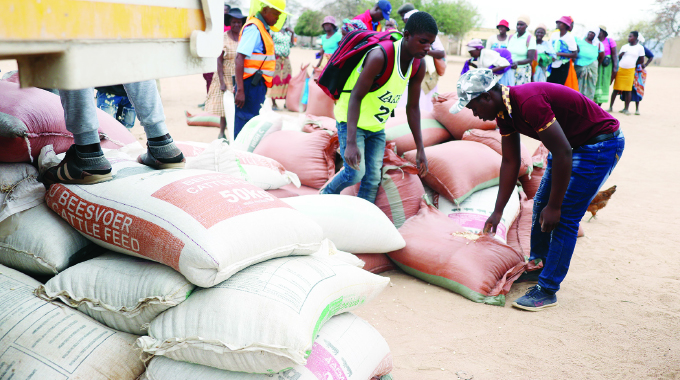
Oliver Kazunga, Senior Business Reporter
Sabi Star Lithium Mine in Buhera District, Manicaland Province, has donated 30 tonnes of maize to 600 vulnerable families in the community where it operates.
The donation is part of the company’s corporate social responsibility in light of the El-Nino-induced drought being experienced.
Buhera North legislator, Cde Phillip Guyo, negotiated with the company to intervene and support the community.
Zimbabwe and other countries in Southern Africa are experiencing drought following poor rains in the last farming season.
President Mnangagwa declared the agricultural season a State of National Disaster and challenged development partners to support the country. The President said no one would starve.
In an interview after the handover of the donation by Sabi Star at Chiweshe Business Centre in Buhera on Saturday, Cde Guyo, said: “I welcome the support that has been extended to the community by Max Mind Investments after my request to assist the vulnerable with food aid.
“We are also excited that through our engagement with Max Mind, they have pledged to start tarring the first 10km of the road connecting to the mine from the Murambinda-Nyazura highway.
“This is the plight of the community as people are presently exposed to dust from this gravel road to the mine,” he said.
Beneficiaries of the maize included widows and the elderly.
Sabi Star is owned by Max Mind Investments Zimbabwe (Private) Limited, a subsidiary of Chinese global giant Shenzhen Chengxin Lithium Group.
The beneficiaries received a 50kg bag of maize each.
In separate interviews after receiving the donation, villagers expressed gratitude over the gesture by the lithium miner.
Said Ms Gertrude Kativhu: “I am so grateful for the food aid that has been extended to us by the mining company because some of us as widows are really finding it difficult to fend for our children and the situation has been worsened by the drought the country has experienced this year. This maize donation has come as a relief.”
Bonde Village headman Mr Gilson Bonde, said the donation complemented the food aid the community was also receiving from the Department of Social Welfare.
“As community leaders we also applaud this mine for the support that it continues to extend to the community. Since the development of the mine, we have benefited a lot through a number of initiatives that include nutrition gardens where we are also generating income and our lives have really been transformed for the better.”
President Mnangagwa last year commissioned Sabi Star, a US$130 million lithium operation, which has started production. It employs over 600 people so far.
Sabi Star mine manager Engineer Oswald Makonese said: “Today we handed over 30 tonnes of maize to less privileged members of our community here in Wards 11 and 12.
“We realise that this year, there is drought and as an organisation through our corporate social responsibility programmes, we saw it fit to come up with measures to alleviate hunger in the community and therefore, decided through community leadership to donate 30 tonnes of maize. This will benefit 600 families for the next two months until the onset of the next rainy season.”
Apart from food support, the miner had established nutrition gardens in five villages around the mine, constructed a state-of-the-art clinic in Ward 12, drilled boreholes and supplied learning and non-learning material to schools.
It upgraded the 40km road that connects to the Murambinda-Nyazura highway from the mine to the tune of about US$2 million.
“We have re-gravelled and widened this road. However, because when we started operations, there were issues to do with dust generation coming from our trucks that carry the product from the mine for export, the community around us raised issues with regards to the dust and we are responding to that issue.
“We have been watering down parts of this road to allay dust, but this has not gone a long way to ameliorate the effects of dust. As management at Sabi Star Mine, we have now taken a concrete decision to start tarring this road in phases,” he said.
The first phase of tarring, Eng Makonese said, would extend 10km and within the next three to five months, the project should begin.


 Online Reporter