Bongani Ndlovu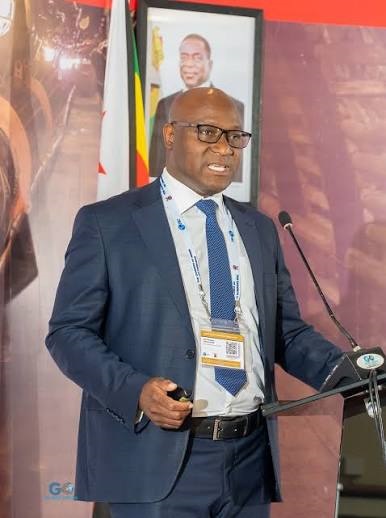
Rutendo Nyeve, [email protected]
THE mining sector must urgently embrace climate finance and invest in cleaner technologies if it is to remain globally competitive as climate change increasingly threatens operations, profitability and access to international markets.
Speaking at the Chamber of Mines Zimbabwe Annual Mining Conference in Victoria Falls, Old Mutual General Manager for Commercial Services, Mr Ben Sithole, warned that climate change has evolved from an environmental concern into a material business risk with far-reaching implications for the mining industry.
He revealed that Zimbabwe lost an estimated US$2.7 billion due to Cyclones Idai and Ana between 2019 and 2022, while up to 40 percent of the country’s Gross Domestic Product (GDP) could be at risk by 2030 if urgent climate adaptation measures are not implemented.
“Climate finance is achieved by mobilising and managing financial resources from public, private and alternative sources to address climate-related financial risks. This capital is specifically allocated towards physical risk mitigation and transition risk management,” said Mr Sithole.
He noted that mining companies are increasingly exposed to both physical and transition risks as climate-related disasters such as droughts, floods and heatwaves become more frequent and severe.
“Climate change has transitioned from a mere environmental concern to a material risk for mining operations. Physical climate hazards directly impair asset values, escalate capital and operating costs and disrupt production schedules,” he said.
According to climate risk assessments conducted by Old Mutual, Zimbabwe’s mining sector faces moderate-to-high physical risks and high transition risks due to tightening global climate regulations and changing market requirements.
Mr Sithole said international policy developments such as the European Union’s Carbon Border Adjustment Mechanism (CBAM) and global net-zero commitments could negatively affect Zimbabwe’s mineral exports if producers fail to decarbonise their operations.
“Mining companies must invest in cleaner technologies, such as electric vehicles and renewable energy for operations, to comply with carbon pricing and emission standards,” he said.
To support the sector’s transition, Old Mutual is expanding its climate finance offerings, providing mining companies with access to green financing solutions aimed at enhancing resilience and sustainability.
The company is offering preferential lending rates for renewable energy projects, sustainability-linked loans tied to environmental performance targets and green bonds to support decarbonisation initiatives and fleet electrification.
Mr Sithole presented a case study demonstrating how climate finance can improve operational efficiency and competitiveness.
He cited a mining company that secured financing for a solar power plant through a green loan facility after experiencing rising production costs and frequent disruptions caused by unreliable electricity supplies.
As a result, the mine achieved a 30 percent reduction in energy costs and improved processing uptime to 99 percent, significantly reducing dependence on the national power grid while strengthening its competitiveness in export markets increasingly influenced by carbon regulations.
Old Mutual estimates that Zimbabwe will require approximately US$12.5 billion in climate finance by 2030 to meet its adaptation and mitigation requirements.
Mr Sithole noted that while the global green bond market has grown to an estimated US$620 billion, Africa currently accounts for less than one percent of the market, presenting significant opportunities for investment and growth.
To help unlock these opportunities, Old Mutual has established a US$100 million Renewable Energy Fund to finance projects such as solar plants, hydropower schemes, mini-grids, biomass energy systems and electric mobility infrastructure.
The fund is backed by commitments from Old Mutual, the United Nations Capital Development Fund and the Government of Zimbabwe.
“Our goal is to turn climate risks into a competitive advantage and become a stable, long-term partner aligned with global financial trends,” said Mr Sithole.
He urged mining companies to act decisively, warning that climate adaptation and decarbonisation are no longer optional but essential for the sustainability, competitiveness and long-term growth of the sector.



 Online Reporter