Online Reporter
Patrick Chitumba, [email protected]
ACROSS the Midlands Province, the promise of mineral wealth is increasingly being weighed against a difficult question: what happens to communities when development forces them from the land that has sustained them?

From Kwekwe and Shurugwi to Mberengwa and Gokwe, mining has transformed landscapes and livelihoods. Land once used for grazing and farming is being swallowed by open pits, heaps of excavated soil and tunnels. For communities living alongside mining operations, displacement is not only about moving from one place to another — it can mean losing grazing land, livestock, water sources, forests and, ultimately, a way of life.
Dr Douglas Munemo, a researcher at Midlands State University, described the scale of environmental degradation in mining areas as alarming.
“When you go around mining areas in the Midlands Province, the land is now like a moonscape covered in deep pits and holes left by mining activities,” he said.
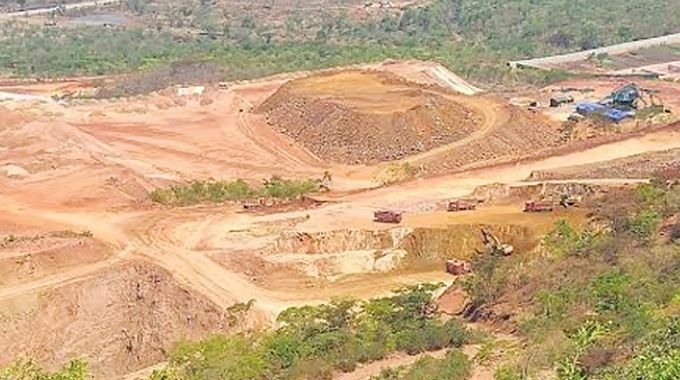
According to Dr Munemo, many of the areas affected by mining were previously grazing lands where communities kept livestock and helped maintain the environment. The expansion of mining has disrupted that relationship.
“Grazing land is gone; there is no more livestock, water bodies are contaminated and there is rampant deforestation. It’s all happening in Kwekwe, Shurugwi, Mberengwa, Gokwe,” he said.
The consequences are visible in rivers and other water sources. Dr Munemo cited the Muchingwe River in Mberengwa, which he said has been severely affected and no longer holds water as it once did. The Dove River in Ward 36 in Mberengwa has also suffered from siltation and soil erosion as chrome and gold mining activities intensify.
“For rural households, the destruction of grazing land and water sources can have an immediate economic impact. Livestock provide food, income and a form of household wealth. When pastures disappear or animals are killed in mining pits, families lose an important livelihood asset,” he said.
Dr Munemo added that in Neta, Mberengwa, villagers have given one particularly dangerous mining pit a grim name — “Slaughter” — as their cattle have repeatedly fallen into the deep excavation and died. He said that during a focus group discussion, residents alleged that a 12‑year‑old girl also lost her life after falling into the pit.
“The situation illustrates how poorly rehabilitated mining areas can become permanent hazards for communities long after mineral extraction has taken place,” he said.
Dr Munemo said the impact is not confined to livestock or rural households. In Kwekwe, he noted that the risks associated with abandoned or poorly secured underground workings reached a primary school.
“Globe and Phoenix Primary School was forced to close in 2023 after part of a classroom floor reportedly collapsed into a tunnel dug by artisanal gold miners. Some pupils were injured. The Government subsequently relocated the school, constructing a new facility at another site in 2025.
“For children and parents, such incidents expose a deeper contradiction in mining‑dependent communities. Mineral extraction is expected to contribute to national development, employment and economic growth, yet the same activities can create dangerous conditions for people living and learning in mining areas,” he said.
In response to the DIDs, a local non‑governmental organisation, the Centre for Conflict Management and Transformation (CCMT), is now working on the development of a
Development‑Induced Displacement Best Practices Handbook.
According to CCMT director Mr Xavier Mudangwe, the initiative aims to deliver a practical, technically rigorous reference framework that provides responsible authorities with evidence‑based guidance for planning and executing development projects with displacement implications, particularly Mining‑Induced Displacement (MID).
“By offering actionable strategies that prevent or reduce harm to affected communities and improve governance accountability, this initiative strengthens the capacity of devolved structures in alignment with the Devolution Policy (DDP 2020) and Zimbabwe’s broader national development agenda,” he said.
Mr Mudangwe said DIDs remain a long‑standing global challenge, carrying severe social, economic, cultural and environmental consequences, particularly in developing contexts where affected communities are least equipped to absorb sudden livelihood shocks.
“In Zimbabwe, and within Midlands Province specifically, communities face compounding displacement pressures from agriculture, urbanisation, infrastructure development and accelerating mineral extraction — pressures that are projected to intensify as the country drives its national development agenda forward,” he said.
To proactively manage these challenges, a multi‑phase process was initiated to establish a standardised regulatory guide.
Following two participatory workshops in 2025 where stakeholders contributed to drafting an initial framework, this third phase convenes a Technical Working Group to undertake a structured validation of the draft DID Handbook.
“The group brings together specialists across land governance, environmental law, resettlement planning, community development and human rights to critically review the handbook, assess the feasibility of its proposed practices, identify gaps and recommend strategic refinements. Building on a first Validation Workshop in June 2026 that covered urbanisation, agriculture and infrastructure, this second validation session focuses exclusively on anchoring the framework around Mining‑Induced Displacement (MID) and its critical, cross‑cutting themes,” he said.
Local authorities acknowledge the need to ensure that communities benefit from mineral exploitation while addressing its environmental consequences.
Mr Thompson Maeresa, chief executive officer of Mberengwa Rural District Council, said the council has a mining policy aimed at ensuring villagers benefit from mining activities. He, however, also pointed to environmental concerns, including afforestation and the effects of mining on land.
“The challenge is therefore not simply to extract minerals, but to ensure that extraction does not permanently undermine the communities and ecosystems surrounding mining operations,” he said.
In Shurugwi, Mr Romeo Shangwa, the district development co-ordinator, said there was a need for proper post‑exploration planning and stronger co-ordination among Government institutions.
“State machinery, including ministries, agencies and departments, must work together to ensure that mining companies fulfil their responsibilities. Companies ought to rehabilitate the environment and try to leave the environment in a better state,” he said.
Environmentalist Mr Peter Makwanya said such rehabilitation is critical in a province where mining has left behind thousands of hectares of disturbed land.
“Without rehabilitation, abandoned pits can remain dangerous for decades, while erosion, siltation and contamination can continue affecting agricultural production and water systems,” he said.
The Government is now attempting to strengthen the legal framework governing the mining sector.
Mrs Rejoice Dzingai, Midlands Province minerals development officer in the Ministry of Mines and
Mining Development, said Zimbabwe’s mining laws are undergoing major changes through the Mines and Minerals Bill, 2025, which seeks to replace the colonial‑era Mines and Minerals Act of 1961.
“Among the proposed reforms is the creation of a digital Mining Cadastre Registry, intended to improve the administration of mining claims. The Bill also proposes the abolition of extra‑lateral rights, meaning mining operations would be confined to the vertical limits of a surface location rather than allowing miners to follow underground reefs beyond their boundaries,” she said.
Mrs Dzingai noted that the proposed “use‑it‑or‑lose‑it” provisions are intended to discourage speculative hoarding of mining claims, while stronger protections for farmers and landowners would include buffer zones and mechanisms for resolving disputes between miners and rural land users.
“These reforms could be significant for communities facing displacement and environmental
degradation, but their success will ultimately depend on implementation and enforcement,” she said.
Headman Jabulani Madubeko Moyo from Bunina Village in Lower Gweru said the debate over mining is not just about minerals — it is about land, livelihoods, safety and the rights of communities that have lived on and depended on the land for generations.
“Development‑induced displacement becomes particularly damaging when people lose not only their homes, but the economic and environmental foundations that made those homes viable. As mining continues to expand across Kwekwe, Shurugwi, Mberengwa and Gokwe, the challenge is to ensure that mineral wealth does not leave communities surrounded by abandoned pits, polluted rivers and degraded land,” he said.
The true measure of development should not only be how much gold or chrome is extracted from the ground, but whether the people living above that ground are safer, more secure and better off when the minerals are gone.