Oliver Kazunga
MINING companies have been encouraged to respond swiftly and transparently to digital misinformation, amid growing threats to corporate reputations, investor confidence and Zimbabwe’s image as an investment destination.
Information, Publicity and Broadcasting Services Minister Dr Zhemu Soda said the speed at which information circulates on digital platforms has transformed crisis management, making timely and accurate communication critical to safeguarding corporate and national reputations.
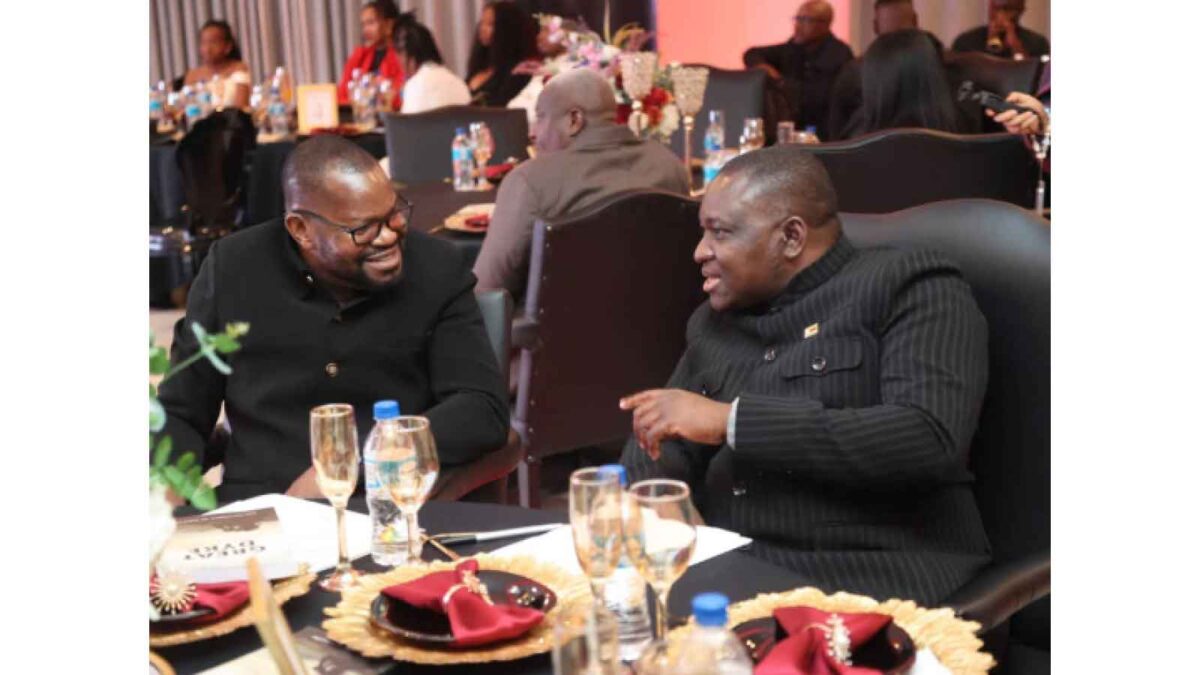
Speaking at the 13th Mining Media Awards in Harare on Friday evening, Minister Soda said a single incident could trigger a rapid information cascade across social media and mainstream news platforms, shaping public perceptions before facts were established.
The awards were held under the theme “Build, protect, sustain media relations in a digital age”.
“In this age, media relations is no longer about press releases. It is about survival; it is about reputation. It is about trust. And trust is built on three pillars: build, protect and sustain,” Minister Soda said.
He encouraged mining companies to communicate promptly and honestly about developments affecting their operations, warning that silence could allow rumours to undermine confidence in individual companies and the country’s investment prospects.
“We should not wait for rumour to become truth. We must speak first, speak truth and speak with courage,” he said.
Minister Soda also challenged journalists to uphold verification, fairness, accuracy and professional ethics, saying the speed of publication should never take precedence over factual reporting, particularly with the emergence of artificial intelligence and manipulated digital content. He urged reporters to broaden mining coverage beyond commodity prices and production statistics to include investment, beneficiation, environmental performance, occupational safety and community relations.
In remarks delivered on behalf of Mines and Mining Development Minister Dr Polite Kambamura, Deputy Minister Dr Caleb Makwiranzou challenged mining companies to open their operations to responsible media engagement. He said the media should be treated as a key stakeholder in the country’s mining development agenda rather than an external observer.
“To the mining companies, I encourage you to open your operations to responsible media engagement. The media should be regarded as a stakeholder in the development conversation, not simply as an external observer,” he said.
Minister Kambamura said sustained partnerships between mining companies and journalists would improve access to credible information and industry expertise, enabling more informed reporting on the sector’s technical and economic realities.
He also called for greater investment in specialist mining journalism, noting that the industry involves complex disciplines such as geology, engineering, finance, environmental management, technology and international commodity markets.
Speaking at the same event, Chinese Ambassador to Zimbabwe Mr Zhou Ding said mining cooperation between Harare and Beijing went beyond capital investment and mineral trade, encompassing skills transfer, local development and shared economic benefits.
China, he said, supported Zimbabwe’s ambition to increase mineral beneficiation and downstream value addition, with Chinese companies investing in processing facilities to help transform the country’s mineral resources locally.
Ambassador Zhou cited Huayou’s Prospect Lithium project that had produced Africa’s first batch of lithium sulphate, with an annual capacity of 50 000 tonnes. Sinomine’s Bikita Minerals and Yahua’s Kamativi Mining Company were also constructing lithium sulphate plants expected to be commissioned next year.
He said Chinese investments were also supporting electricity generation, which was critical for sustainable mining and broader economic growth.
Multiple solar and waste-to-energy projects were expected to add more than 1 000 megawatts of installed capacity, backed by investments exceeding US$700 million, while creating employment and training opportunities for Zimbabweans.
Ambassador Zhou said Chinese lithium companies had contributed more than US$400 million in export-linked tax revenue during the first nine months of this year. Beyond taxation, Chinese companies had channelled more than US$100 million into corporate social responsibility programmes supporting schools, clinics, roads, boreholes and community livelihood projects.
He said responsible investment required companies to comply with Zimbabwean laws and honour their social and environmental obligations.
“Responsible mining partnerships cannot thrive without integrity and compliance,” he said. He also called for stable, transparent and predictable policy frameworks to attract and retain responsible investment, deepen local beneficiation, facilitate skills transfer and ensure mining communities benefitted from mineral exploitation.
He challenged journalists to uphold professional standards and report accurately and fairly on China-Zimbabwe mining cooperation, saying balanced, evidence-based reporting was important in promoting informed public discourse and strengthening the investment environment.
Zimbabwe’s mining industry remains a major contributor to exports, employment, investment and industrial development, with mineral beneficiation and value addition central to the country’s Vision 2030 ambitions.