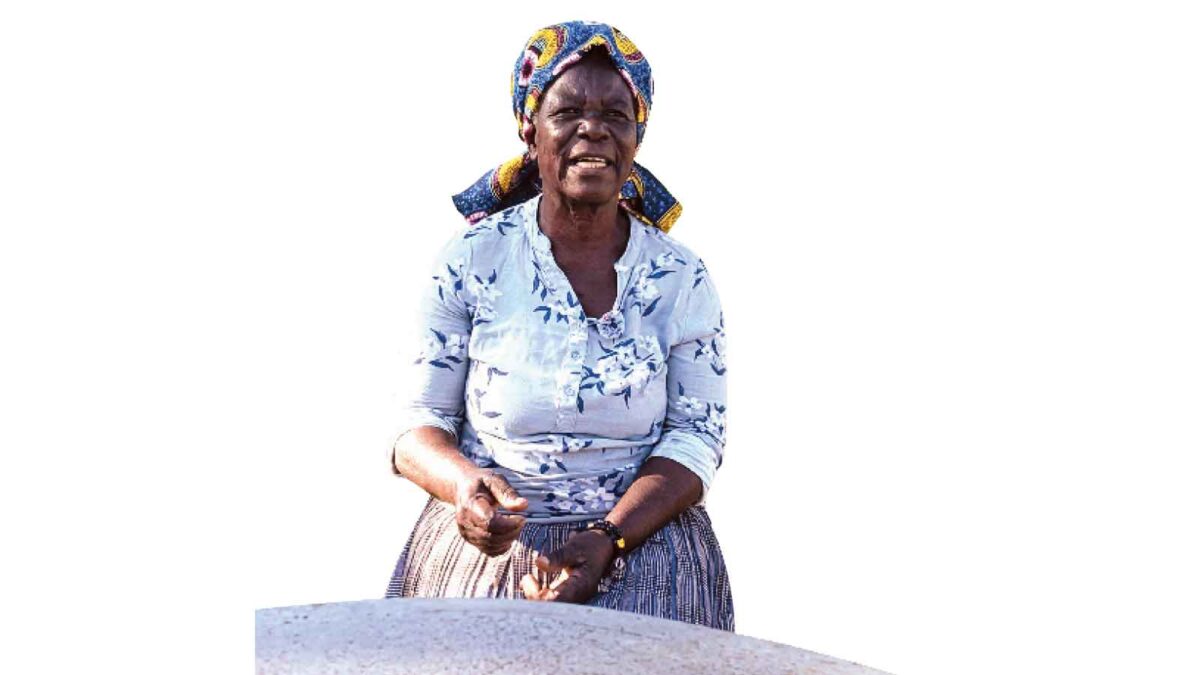
In her account last week, CDE GRACIOUS MUTSATSA, whose nom de guerre was Dorcas Mabhunu, narrated how her all-female unit forced Rhodesian Security Forces to restrategise after unsettling them in the Mount Darwin area. She continues by telling our Society Editor PRINCE MUSHAWEVATO the enemy’s desperate attempts to capture female fighters alive, the devastating air strikes involving napalm and the immense pressure their deployment placed on both the enemy and their fellow male freedom fighters.
***************
Q: In our last discussion, you highlighted that the enemy suffered considerable tactical setbacks following your unit’s deployment. Can you continue from there?
A: The Rhodesian Security Forces were clearly disturbed by the fact that they were facing female fighters.
It was probably a first for them to witness such a large number of women operating professionally in the field, matching their firepower pound for pound.
As I indicated earlier on, they made a huge mistake by trying to capture us alive.
I do not understand what exactly was going through their minds but capturing us alive became a core part of their mission.
Q: Did this affect your operations in any way?
A: What I can say is that they suffered major casualties in their quest to capture us.
However, our presence in the Mount Darwin area drew continuous scrutiny and sporadic raids, particularly from the air.
Takakuvadzisa macomrade aivemo (We got the comrades in the area into trouble).
Because the enemy increased their aircraft deployments to search for female fighters, our male counterparts who had been operating in the area for a while suddenly faced relentless pressure.
We held the fort for a time, but eventually, our commanders felt we needed to strategically retreat to the rear to regroup and restrategise.
After returning to Mozambique, we were redeployed later that same year, in 1978.
During this period, I specialised in operating the AK-47, which I, and many others, liked to call a sub (short for sub-machine gun).
Q: Can you describe what happened right before you went back to the rear?
A: Several fighter aircraft attacked us in what I consider one of the worst airstrikes during the final push towards independence.
I remember one specific day.
One of the planes had a tank-like attachment that unleashed napalm, a devastating substance with a consistency like porridge.
When it hit you, it burnt the skin right off.
During that battle, it injured my back, hand and leg.
My hand and leg still give me trouble today; I feel incessant pain.
That massive battle heavily influenced our commanders’ decision to pull us back to the rear.
What had happened was that when we entered Mount Darwin through Chihoko, local sellouts alerted the enemy that a group of women had crossed into Zimbabwe from Mozambique for a special operation.
The Rhodesian Security Forces responded by mobilising their ground and air forces for a raid, with the primary objective of capturing us alive.
Because we were operating in an area alongside our male colleagues, they suffered the fallout of our presence.
They complained that they no longer had any time to rest since our arrival and pleaded for us to return to the rear.
Unlike in the past, when female fighters primarily transported weapons and supplies for the struggle, we had come to fight on the front lines.
Q: In that vein, can you elaborate on the deployments of these all-female units?
A: Our group was the second all-female squad deployed to the country.
The first group included Linda Mangwende, who shot down an enemy aircraft in Mount Darwin — not Mai Mujuru, as is sometimes claimed.
Mangwende was from Chimanimani and served in the army after independence, though she is now late.
Her unit suffered heavy casualties, yet they left a lasting impact on the battlefield.
The Rhodesians truly felt the weight of their presence, as well as ours.
In total, three all-female squads were deployed to the country.
We had tough, skilled female combatants who excelled in combat alongside Linda and another fighter named Chishaka; I will not hesitate to throw my own name into the mix.
Our impact on the front lines was so strongly felt that enemy forces increased their patrols in our area, eager to see the so-called female combatants who were firing so relentlessly.
They already knew our male colleagues were formidable fighters, so their curiosity focused entirely on us; they wanted to capture us, perhaps to study us.
Q: Biologically, women are different from men in several aspects. Did that not affect you in the field?
A: What was strange about our situation was that whenever we engaged in battle, the sun would disappear and mist would engulf the entire area, making it difficult for the Rhodesians to fly their aircraft.
That always gave us an opportunity to attack and retreat safely.
Furthermore, we could travel long distances through the bush, even alone, without ever being attacked by wild animals like lions, snakes or hyenas.
In fact, wild animals like lions actually warned us of imminent danger.
For instance, if a lion roared, we knew we had to change direction and move away from it.
Our challenges on the battlefield were not much different from those of the men, because the moment we joined the liberation struggle, everything changed.
We became equals.
Our bodies and physical nature ceased functioning like those of ordinary women.
We shared everything with the men, including clothes and uniforms.
One thing I must make clear, however, is that we never operated entirely on our own as women.
Although we entered the country as an all-female squad, we integrated into existing units with our male colleagues, maintaining both front and rear security on the battlefield.
In a section of 12 to 14 male fighters, commanders would deploy two or three women, with four being the maximum per group.
There was no preferential treatment during operations.
If we had to march 50 kilometres, everyone marched 50 kilometres, and the burden of carrying weapons was shared evenly.
I specialised in operating the AK-47, though I later trained on the NATO (FN FAL) — a primary weapon of the Rhodesian forces. We used the rifles we captured from them.
After retreating to the rear, we eventually returned to Zimbabwe once more through Chihoko, in Nyakasikana.
Next week, in the final part of this series, Cde Mutsatsa shares her reflections on the final days of the struggle and the transition into post-independence Zimbabwe.