Online Reporter
THE Association of Mining Journalists in Zimbabwe (AMJZ) has called for increased investment in specialised training to equip journalists with the technical knowledge needed to report accurately on the country’s mining industry.
The call received backing from Government and the Chinese Embassy, which challenged media practitioners to uphold credible, balanced and technically informed reporting as Zimbabwe seeks to grow its mining sector and attract investment.
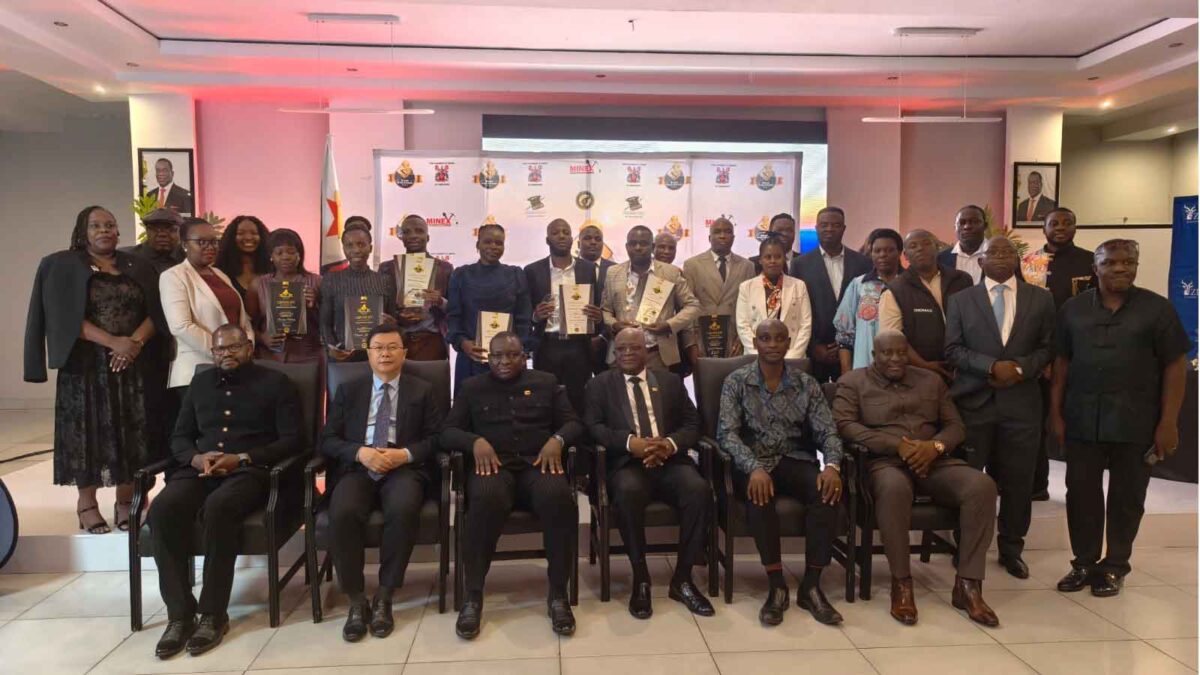
The issue took centre stage at the 2026 Mining Media Awards organised by MINEX on Friday evening, where Government, diplomatic representatives and media practitioners highlighted the media’s role in shaping public understanding of mining developments.
AMJZ president Tafadzwa Dube said the association had established a partnership with the Zimbabwe School of Mines to provide specialised training but needed financial and institutional support to make the programme operational.
“The foundation has been laid. What we urgently require now is the financial and institutional support to transform that partnership into a fully operational training programme,” he said.
Dube said mining journalism required a deeper understanding of the sector, including mineral economics, mining legislation, beneficiation, environmental management and technical operations.
His appeal found support in remarks by Deputy Minister of Mines and Mining Development Dr Eng Caleb Makwiranzou, who said specialist mining journalism was essential given the technical complexity of the industry.
“There is also a need for greater investment in specialist mining journalism,” Dr Makwiranzou said.
“Mining is a complex industry involving geology, engineering, finance, environmental management, technology and international commodity markets.”
Dr Makwiranzou, who represented Mines and Mining Development Minister Dr Eng Polite Kambamura, said accurate communication was important in promoting public understanding, investor confidence and sustainable growth in the sector.
He urged mining companies to improve access to technical information and operational expertise to enable journalists to report more meaningfully on developments within the industry.
“The media should be regarded as a stakeholder in the development conversation, not simply as an external observer,” he said.
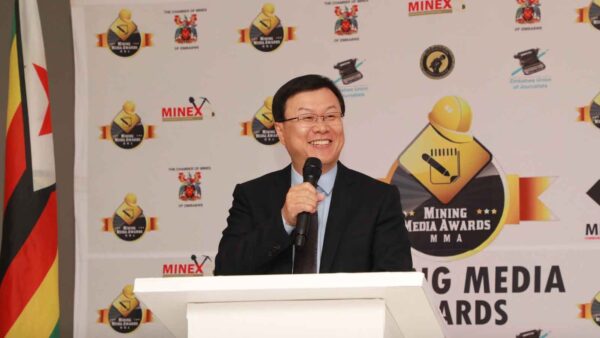
Chinese Ambassador to Zimbabwe Zhou Ding also emphasised the responsibility of journalists to provide balanced and evidence-based coverage of the mining sector, including the country’s growing investment partnerships with China.
He acknowledged the media’s contribution to documenting developments in the industry while bringing attention to challenges requiring public discussion.
“Journalists are key stewards of balanced, evidence-based public discourse,” he said.
Ambassador Zhou urged journalists to maintain high professional standards and report accurately and fairly on China-Zimbabwe mining cooperation.
He said Chinese investment in Zimbabwe’s mining industry extended beyond mineral extraction and capital investment to include value addition, skills development, infrastructure and community development.
He cited ongoing investments in lithium beneficiation as examples of efforts to strengthen the country’s mineral processing capacity.
Dube said journalists needed the expertise to interpret production figures, understand mining legislation, scrutinise technical reports and explain the implications of investment projects to the public.
“The power of the pen must never be underestimated. The media can influence policy, strengthen investor confidence, promote transparency and hold institutions accountable. However, that power must be guided by knowledge, accuracy and professional responsibility,” he said.
He acknowledged Minister Kambamura’s continued support for specialist journalism training, recalling that the Minister had championed the initiative while serving as Deputy Minister in 2024.
Dube also recognised the role of Mines and Mining Development Permanent Secretary Dr Thomas Utete Wushe in translating policy priorities into practical institutional programmes.
He expressed hope that continued engagement with the Ministry would help establish a sustainable training framework that responds to the changing demands of the mining industry.
Dube challenged MINEX to build on its 13-year record of recognising journalistic excellence by mobilising resources to support professional development.
“We therefore make a special appeal to MINEX to take the lead in mobilising sponsorship from mining companies, industry stakeholders and development partners so that this programme can commence without further delay,” he said.
The three addresses highlighted the importance of a knowledgeable media fraternity in reporting on the opportunities, challenges and economic implications of Zimbabwe’s mining industry.
Dube said journalism’s influence depended not only on the ability to communicate information but also on the knowledge required to interpret it responsibly.
“A powerful pen without knowledge can misinform a nation. But a powerful pen guided by knowledge can transform a nation.”